
Real Cost of Saying ‘No’ to Hezbollah in Lebanon
Lebanese citizens face intimidation and legal harassment for publicly supporting their own government's peace negotiations and Hezbollah's disarmament, revealing the militant group's control over political discourse.
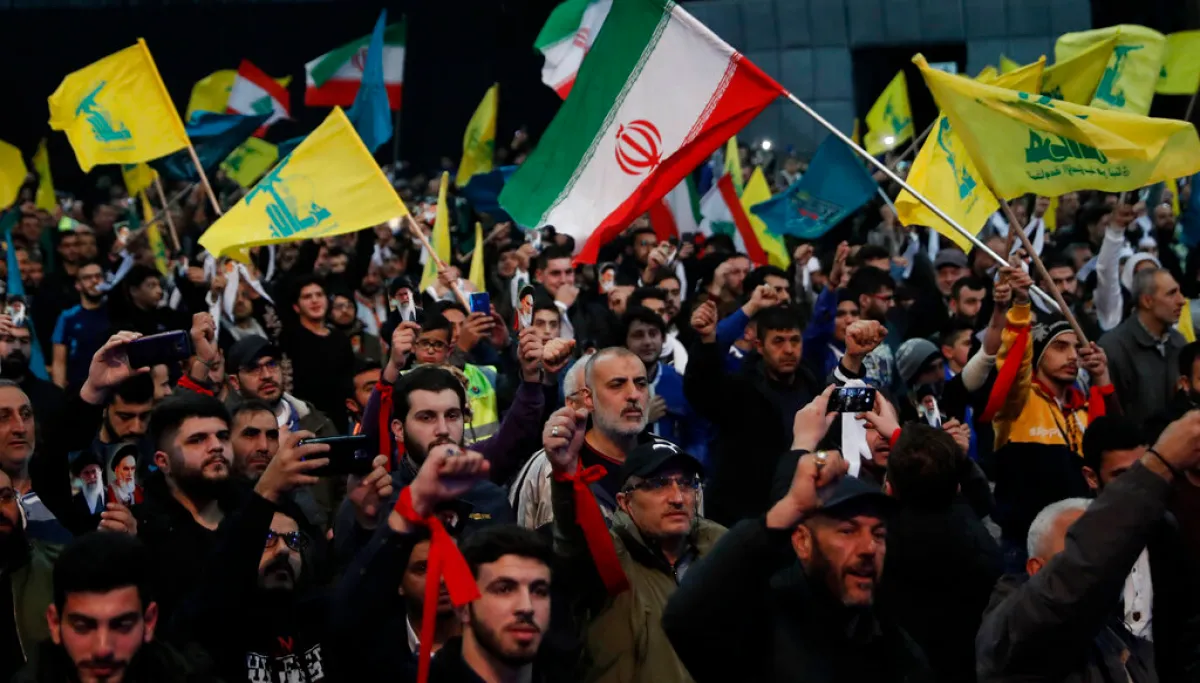

According to Rami Naim, Beirut Bureau Chief for Jusoor News, writing in Washington Examiner, this dangerous contradiction reveals the deep control Hezbollah maintains over political discourse in Lebanon, even as official state representatives negotiate terms that would strip the militant group of its weapons.
The pressure against Lebanese citizens takes two distinct forms, Naim reports. The first involves direct intimidation by Hezbollah supporters and affiliated organizations, including threats against journalists and activists, organized harassment campaigns, defamation, warnings directed at family members, and accusations of treason and collaboration with foreign powers.
These accusations carry lethal weight in Lebanon. The Arabic term takhwin — branding someone a traitor, Israeli agent, or servant of a foreign embassy — can expose individuals to physical violence or death in a country where armed groups operate beyond state control.
The case of Lokman Slim illustrates the deadly stakes. The writer and publisher, a prominent Shiite critic of Hezbollah, was publicly threatened and accused of betrayal before being found shot dead in his car in southern Lebanon in February 2021. His murder remains unsolved.
The second form of pressure involves legal harassment through the judicial system. Complaints are filed and security institutions are weaponized to transform peaceful political speech into criminal or national security matters.
Naim himself was prosecuted, threatened, and sentenced to one month in prison, with an order to pay one billion Lebanese pounds in damages in a defamation case involving two lawyers. He has appealed the ruling. Beyond the formal legal charges, the prison sentence, financial penalty, legal expenses, and threats delivered a clear message to every journalist and citizen: speaking openly carries a heavy personal cost.
He also faced a search warrant following public statements he made concerning Hezbollah and foreign intervention in Lebanon.
Mahmoud Shuaib, a Shiite activist from southern Lebanon, represents another prominent case. Known for opposing Hezbollah and demanding that security authority return to the Lebanese state and army, Shuaib’s significance lies in his speaking from within the Shiite community while rejecting Hezbollah’s claim to represent every Shiite citizen.
He has faced accusations, threats, and legal pressure because of his political positions. The intimidation atmosphere even reached his family when his young daughter was briefly detained while conducting a public opinion survey.
While these cases differ in their legal details, they reveal the same underlying reality: the Lebanese government can negotiate peace terms, foreign diplomats can discuss peace frameworks, and political leaders can meet — but Lebanese citizens who publicly support peace, state sovereignty, and Hezbollah’s disarmament may be threatened, prosecuted, financially punished, accused of collaboration, or placed in physical danger.
These citizens are not opposing their government, Naim argues. They are supporting the principle the government is supposed to represent: one state, one army, and one authority over war and peace. They are not calling for war but for an end to it. They are not asking foreign powers to dominate Lebanon but rather asking for a foreign-backed militia to stop dominating Lebanon.
The international community must support not only the negotiations themselves but also the Lebanese citizens publicly defending them, according to Naim’s analysis. Disarming Hezbollah is necessary not only for security but also to protect political speech, enabling journalists to investigate without treason accusations, activists to call for sovereignty without fearing for their families, and citizens to support peace without wondering whether the next contact will bring a lawsuit, security summons, death threat, or worse.
Peace enjoys real support inside Lebanon, but that support remains difficult to see as long as those who express it are threatened, prosecuted, and silenced.
With information from Washington Examiner





