Necessary Cookies

Required for the site to function. Cannot be disabled.

Analytics Cookies

Help us understand how visitors interact with our site (Google Analytics via GTM).

Marketing Cookies

Used to track visitors and deliver personalised advertisements.

We use cookies to enhance your browsing experience and analyse site traffic. By clicking Accept All, you consent to our use of cookies. Privacy Policy
NewsFire Global
Home News Europe World Christianity Culture Wars Opinion Video
Information
About Us Authors Advertising Terms & Conditions Privacy Policy Contact
R2B Media
R2B NEWSFIRE.GR PAPAFOTIS.GR THRACTION HELLENIC CONSERVATIVES RIGHT2THEBONE YT
News Europe

Poland Shut Out of EU Ambassador Posts, Warsaw Fumes

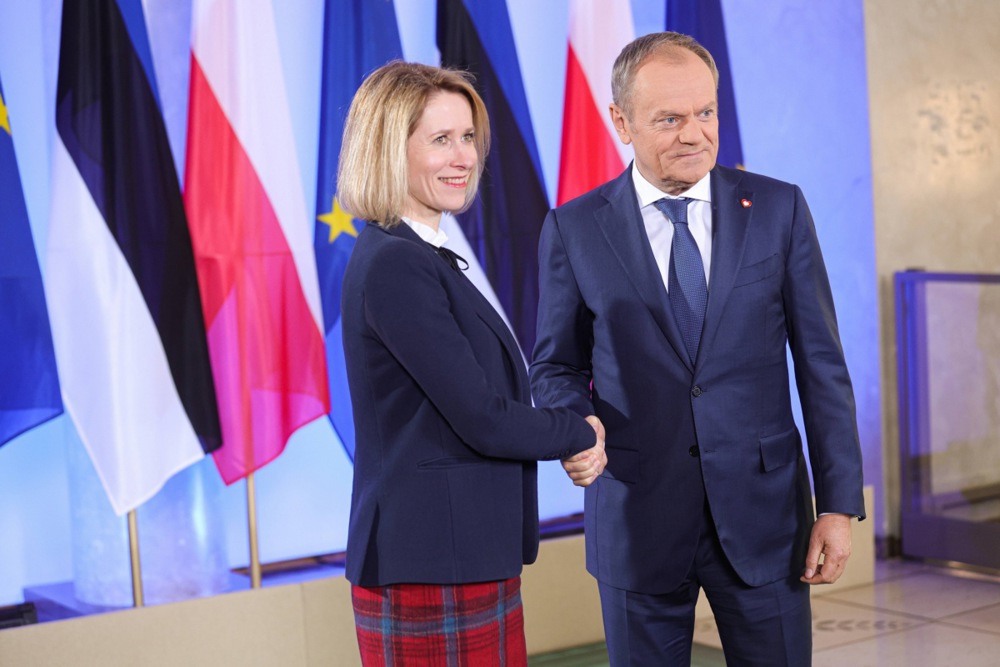
Poland was shut out of the latest EU ambassador appointments despite Prime Minister Donald Tusk's extensive Brussels experience, fueling anger in Warsaw as Central European nations were also excluded.

Dimitris Papafotis
Dimitris Papafotis Editor in Chief
JUNE 10, 2026 AT 6:20 PM

EU foreign policy chief Kaja Kallas announced nominations for 33 ambassadorial posts and seven deputy heads of mission this month, according to Brussels Signal, but not a single Polish diplomat made the list. The snub is particularly stinging given that Poland is the bloc’s sixth largest economy with the fifth largest population among member states.

EU delegations serve as the union’s primary representations abroad across 145 locations worldwide. They play a central role in advancing European interests outside the continent and implementing foreign and security policy objectives.

The appointments require formal consent from host countries and completion of administrative procedures under the 2026 staff rotation exercise before being finalized.

Central European Nations Left Out

Members of the European Parliament from Central and Eastern Europe are reportedly preparing to challenge Kallas over the selection list. Slovakia, Hungary, Romania, and the Baltic states also failed to secure any positions among the EU’s senior diplomatic corps.

The outcome represents an embarrassment for Poland’s center-left government, which is led by two figures with extensive Brussels credentials. Donald Tusk has served as Polish Prime Minister for nearly a decade across two terms—from 2007 to 2014 and again since 2023. Between those stints, he held the position of European Council President from 2014 to 2019 and led the European People’s Party, the European Parliament’s largest grouping, from 2020 to 2023.

Foreign Minister Radosław Sikorski has likewise accumulated almost ten years in his role during the same period as Tusk. He is widely regarded as one of Europe’s most visible and frequently quoted foreign ministers, with influence extending to American and British policy circles through his Oxford education and previous work with U.S. think tanks.

Tusk’s Brussels Boast Falls Flat

When Tusk returned to the prime minister’s office in 2023, he declared that no one would push Poland around in the EU under his leadership. The complete failure to secure any ambassador posts in this round stands in sharp contrast to that confidence.

Poland’s position actually worsened, as Brussels Signal notes: the country lost two recalled EU ambassadors while gaining none.

Former Polish ambassador to the United States Marek Magierowski questioned whether the Tusk-Sikorski leadership should reflect on what went wrong to produce such an embarrassing result. He suggested to Polish portal Wirtualna Polska that the current ruling camp may be no more effective at diplomacy than the previous Conservative government led by the Law and Justice party.

Western European Dominance

Magierowski observed that Germany, France, Italy, Spain, and Portugal demonstrate the greatest success in securing positions within the European External Action Service.

The Spanish diplomat Belén Martínez Carbonell will head to Mexico, replacing Portuguese representative Francisco André, who moves to Brasilia. London went to a Finnish diplomat, Beijing to a Dutch candidate, Moscow to a Swedish representative, and New Delhi to a French official. Italy secured two prestigious postings in Japan and Qatar.

None of these positions were beyond Poland’s reach, Magierowski argued, with the possible exception of the Russian Federation where Warsaw might have faced difficulty obtaining host country approval. The fundamental problem, he concluded, is the apparent lack of a functioning system to identify and promote Polish candidates for these roles.

With information from Brussels Signal

Share:
Dimitris Papafotis
Dimitris Papafotis

Dimitris Papafotis is the editor-in-chief of NewsFire.GR. He was born and raised in Athens. He studied at the Journalism Workshop (1991-1993). He currently lives in Pyrgos, Ilia, where he has been active in radio and various newspapers, while also maintaining his personal blog, Papafotis.gr.

EU foreign policy chief Kaja Kallas announced nominations for 33 ambassadorial posts and seven deputy heads of mission this month, according to Brussels Signal, but not a single Polish diplomat made the list. The snub is particularly stinging given that Poland is the bloc’s sixth largest economy with the fifth largest population among member states.

EU delegations serve as the union’s primary representations abroad across 145 locations worldwide. They play a central role in advancing European interests outside the continent and implementing foreign and security policy objectives.

The appointments require formal consent from host countries and completion of administrative procedures under the 2026 staff rotation exercise before being finalized.

Central European Nations Left Out

Members of the European Parliament from Central and Eastern Europe are reportedly preparing to challenge Kallas over the selection list. Slovakia, Hungary, Romania, and the Baltic states also failed to secure any positions among the EU’s senior diplomatic corps.

The outcome represents an embarrassment for Poland’s center-left government, which is led by two figures with extensive Brussels credentials. Donald Tusk has served as Polish Prime Minister for nearly a decade across two terms—from 2007 to 2014 and again since 2023. Between those stints, he held the position of European Council President from 2014 to 2019 and led the European People’s Party, the European Parliament’s largest grouping, from 2020 to 2023.

Foreign Minister Radosław Sikorski has likewise accumulated almost ten years in his role during the same period as Tusk. He is widely regarded as one of Europe’s most visible and frequently quoted foreign ministers, with influence extending to American and British policy circles through his Oxford education and previous work with U.S. think tanks.

Tusk’s Brussels Boast Falls Flat

When Tusk returned to the prime minister’s office in 2023, he declared that no one would push Poland around in the EU under his leadership. The complete failure to secure any ambassador posts in this round stands in sharp contrast to that confidence.

Poland’s position actually worsened, as Brussels Signal notes: the country lost two recalled EU ambassadors while gaining none.

Former Polish ambassador to the United States Marek Magierowski questioned whether the Tusk-Sikorski leadership should reflect on what went wrong to produce such an embarrassing result. He suggested to Polish portal Wirtualna Polska that the current ruling camp may be no more effective at diplomacy than the previous Conservative government led by the Law and Justice party.

Western European Dominance

Magierowski observed that Germany, France, Italy, Spain, and Portugal demonstrate the greatest success in securing positions within the European External Action Service.

The Spanish diplomat Belén Martínez Carbonell will head to Mexico, replacing Portuguese representative Francisco André, who moves to Brasilia. London went to a Finnish diplomat, Beijing to a Dutch candidate, Moscow to a Swedish representative, and New Delhi to a French official. Italy secured two prestigious postings in Japan and Qatar.

None of these positions were beyond Poland’s reach, Magierowski argued, with the possible exception of the Russian Federation where Warsaw might have faced difficulty obtaining host country approval. The fundamental problem, he concluded, is the apparent lack of a functioning system to identify and promote Polish candidates for these roles.

With information from Brussels Signal

