Necessary Cookies

Required for the site to function. Cannot be disabled.

Analytics Cookies

Help us understand how visitors interact with our site (Google Analytics via GTM).

Marketing Cookies

Used to track visitors and deliver personalised advertisements.

We use cookies to enhance your browsing experience and analyse site traffic. By clicking Accept All, you consent to our use of cookies. Privacy Policy
NewsFire Global
Home News Europe World Christianity Culture Wars Opinion Video
Information
About Us Authors Advertising Terms & Conditions Privacy Policy Contact
R2B Media
R2B NEWSFIRE.GR PAPAFOTIS.GR THRACTION HELLENIC CONSERVATIVES RIGHT2THEBONE YT
News World

Podcast: Iranian Deal Art; Armenia Elections; Xi in Pyongyang; War from Israel

Armenia's Prime Minister Nikol Pachinian won parliamentary elections but lacks the supermajority needed to amend the constitution for a peace deal with Azerbaijan.

Newsroom
Newsroom Staff Writer
JUNE 13, 2026 AT 4:31 AM

The elections pitted two opposing camps against each other: a pro-Russian faction that received backing from Moscow, and a pro-European bloc led by Pachinian. While Russian President Vladimir Putin had long been viewed as Armenia’s protector, the country’s 2023 defeat to Azerbaijan in the Nagorno-Karabakh conflict fundamentally undermined that relationship and bolstered support for the pro-European camp.

Despite this shift in sentiment, forging a genuine alliance with the European Union has proved challenging for Armenia. Pachinian’s half-success on June 7 leaves him in a difficult position: to achieve his goal of a durable peace accord with Azerbaijan, he must first amend the constitution, a task that requires the parliamentary supermajority he failed to obtain.

Xi Jinping Makes Rare Trip to Pyongyang

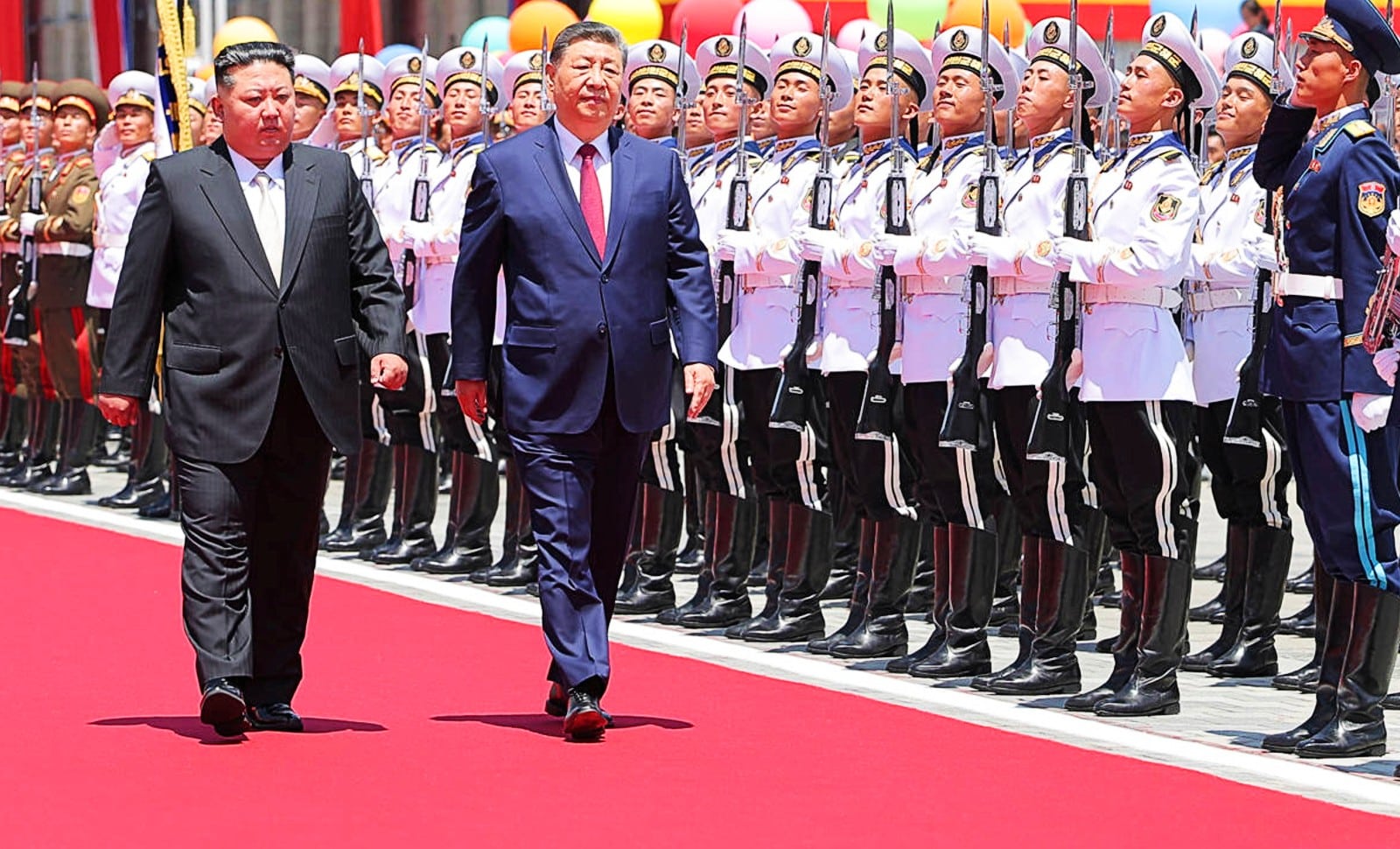
Chinese President Xi Jinping, who seldom travels outside China, made a significant visit to North Korean leader Kim Jong-un in Pyongyang on June 8 and 9. The trip served as a pointed reminder to Kim of Beijing’s central importance at a time when the North Korean leader has demonstrated increasing autonomy through his strengthened alliance with Putin’s Russia.

China’s primary interest in keeping North Korea economically afloat is to perpetuate a situation in which Korean reunification remains entirely inconceivable. Beijing views the divided peninsula as essential to its strategic interests in the region.

Iranian Nuclear Negotiations Drag On

Negotiations between the United States and Iran continue to stall, with what Causeur describes as protracted discussions punctuated by sporadic attacks. While a high-intensity war has given way to muscular negotiations, diplomatic progress is reportedly being made on several fronts including nuclear weapons, missiles, proxy forces, the Strait of Hormuz, and economic sanctions.

Iranian leadership seeks financial benefits to revive their collapsing economy and expanded sovereignty over the Strait of Hormuz. Such gains would allow Tehran to justify to its population the regime’s aggressive posture toward neighboring states.

Initial assessments suggested Iran held the advantage in timing, with President Donald Trump supposedly under pressure to reach an agreement for domestic political reasons. However, Trump appears less rushed than anticipated, and the global economy has shown surprising resilience in absorbing the new oil shock. Meanwhile, Iranian negotiators continue their delaying tactics, essentially negotiating about when to begin talks about a potential timeline for eventual negotiations.

Israel’s New Normal and Cultural Shift

Israelis have adapted to a form of normalcy despite ongoing attacks, viewing the conflict as a technical problem requiring neutralization of persistent threats from Iran and Hezbollah, as Causeur reports. The country is preparing for elections scheduled for October.

A notable development is emerging at the grassroots level, where secular activism is beginning to rival religious militancy in influence and organization.

Gil Mihaely, who recently published a book on Israeli combat culture, argues that European nations seeking to rearm can learn crucial lessons from Israel’s experience. These lessons fall into two categories: first, effective modern warfare requires fundamentally different approaches to war economy, military doctrine, and combat itself, demanding a degree of agility currently foreign to European thinking. Second, the defense industry can serve as a key driver for broader economic development, something the European Union urgently needs.

With information from Causeur

Share:
Newsroom
Newsroom

NewsFire.GR is a website created with the hope that the media will rediscover their true identity, which is none other than informing the public about the real stakes of our times. Journalism and political analysis must hold power accountable, not serve it.

The elections pitted two opposing camps against each other: a pro-Russian faction that received backing from Moscow, and a pro-European bloc led by Pachinian. While Russian President Vladimir Putin had long been viewed as Armenia’s protector, the country’s 2023 defeat to Azerbaijan in the Nagorno-Karabakh conflict fundamentally undermined that relationship and bolstered support for the pro-European camp.

Despite this shift in sentiment, forging a genuine alliance with the European Union has proved challenging for Armenia. Pachinian’s half-success on June 7 leaves him in a difficult position: to achieve his goal of a durable peace accord with Azerbaijan, he must first amend the constitution, a task that requires the parliamentary supermajority he failed to obtain.

Xi Jinping Makes Rare Trip to Pyongyang

Chinese President Xi Jinping, who seldom travels outside China, made a significant visit to North Korean leader Kim Jong-un in Pyongyang on June 8 and 9. The trip served as a pointed reminder to Kim of Beijing’s central importance at a time when the North Korean leader has demonstrated increasing autonomy through his strengthened alliance with Putin’s Russia.

China’s primary interest in keeping North Korea economically afloat is to perpetuate a situation in which Korean reunification remains entirely inconceivable. Beijing views the divided peninsula as essential to its strategic interests in the region.

Iranian Nuclear Negotiations Drag On

Negotiations between the United States and Iran continue to stall, with what Causeur describes as protracted discussions punctuated by sporadic attacks. While a high-intensity war has given way to muscular negotiations, diplomatic progress is reportedly being made on several fronts including nuclear weapons, missiles, proxy forces, the Strait of Hormuz, and economic sanctions.

Iranian leadership seeks financial benefits to revive their collapsing economy and expanded sovereignty over the Strait of Hormuz. Such gains would allow Tehran to justify to its population the regime’s aggressive posture toward neighboring states.

Initial assessments suggested Iran held the advantage in timing, with President Donald Trump supposedly under pressure to reach an agreement for domestic political reasons. However, Trump appears less rushed than anticipated, and the global economy has shown surprising resilience in absorbing the new oil shock. Meanwhile, Iranian negotiators continue their delaying tactics, essentially negotiating about when to begin talks about a potential timeline for eventual negotiations.

Israel’s New Normal and Cultural Shift

Israelis have adapted to a form of normalcy despite ongoing attacks, viewing the conflict as a technical problem requiring neutralization of persistent threats from Iran and Hezbollah, as Causeur reports. The country is preparing for elections scheduled for October.

A notable development is emerging at the grassroots level, where secular activism is beginning to rival religious militancy in influence and organization.

Gil Mihaely, who recently published a book on Israeli combat culture, argues that European nations seeking to rearm can learn crucial lessons from Israel’s experience. These lessons fall into two categories: first, effective modern warfare requires fundamentally different approaches to war economy, military doctrine, and combat itself, demanding a degree of agility currently foreign to European thinking. Second, the defense industry can serve as a key driver for broader economic development, something the European Union urgently needs.

With information from Causeur

