
Panic as AfD Demands Inquiry Committee on Nord Stream
The AfD calls for a parliamentary inquiry into the Nord Stream sabotage, probing government warnings, Ukrainian involvement, Poland's role, and the response to protect Germany's critical infrastructure.
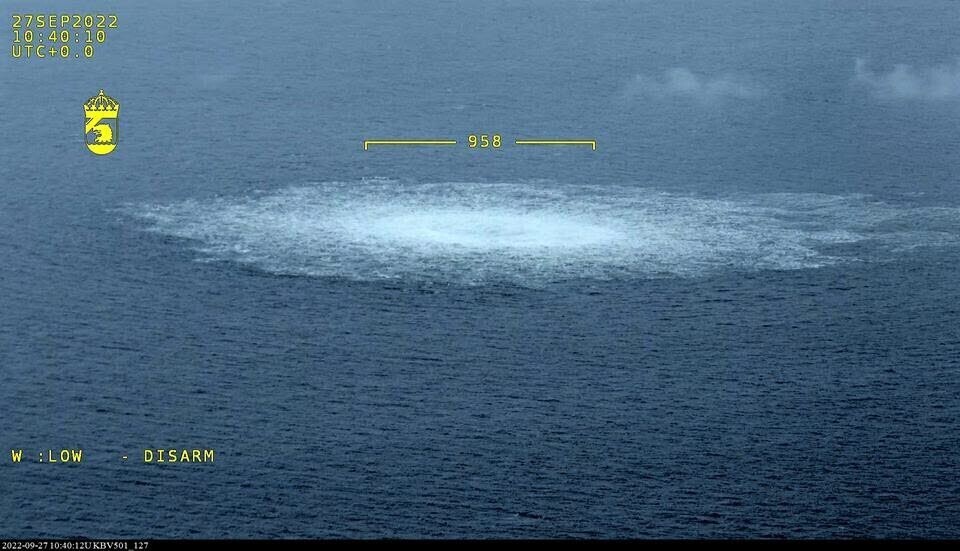

The AfD parliamentary group has requested the establishment of an investigative committee into the attack on the Nord Stream pipelines. The committee should, among other things, examine “whether and when the federal government received indications of specific sabotage plans against the Nord Stream pipelines.”
Furthermore, the AfD parliamentary group wants to know if the federal government followed the warning from the Dutch intelligence service, which had warned months before the actual attack about sabotage plans, as stated in the request obtained by JUNGE FREIHEIT.
Additionally, the committee should clarify what actions have so far been taken by the federal government and authorities to solve the case—and why the results of the investigations “have not been fully disclosed to date.”
The committee should also examine whether the Ukrainian President Volodymyr Zelensky or other members of Kyiv’s government leadership knew about the planned explosion and, if so, whether Berlin intends to seek “compensation for the confirmed damage to infrastructure amounting to at least 1.2 to 1.35 billion euros as well as for the ensuing economic consequences,” as stated in the request.
Serious Accusations Against Poland
The AfD also calls for discussions on the arms exports and financial support Germany provides to Ukraine. Moreover, the committee should examine what measures the federal government has taken since the attack to “permanently improve the security of Germany’s critical infrastructure—submarine pipelines, underwater cables, energy facilities.”
The AfD also wishes to determine whether there are plans to repair the still intact pipelines and, if so, what legal and political obstacles exist. The opposition’s request includes the question “what economic consequences the continuous operability of the pipelines would have on energy security.”
In the federal parliament, the AfD levels serious accusations against the Polish government under Prime Minister Donald Tusk. It is accused of refusing to extradite the suspected Ukrainian Volodymyr Z. and “allowing, if not actively facilitating,” his escape to Ukraine, according to media reports.
Consequently, the investigative committee must examine whether Berlin responded to the conduct of the Polish government. Furthermore, the question arises as to whether “the reliability of the European arrest warrant system continues to function in this politically sensitive environment.”
On its part, the federal government denies any information regarding “whether it has requested the extradition of the five suspects located in Ukraine,” the request notes.
The AfD Depends on Votes from Other Parties
The deputy chairman of the AfD parliamentary group, Markus Frohnmaier, stressed to JUNGE FREIHEIT that Germany “has been attacked, its infrastructure has been blown up, its sovereignty has been violated”—while five of the suspects remain “unbothered in Ukraine”—”a country we support with almost 100 billion euros.” Consequently, this investigative mechanism is absolutely necessary, because such an attack on national sovereignty and infrastructure cannot go unpunished.
The investigative committee requested by the AfD is proposed, according to the right-wing party, to be constituted proportionally to the distribution of seats in the Bundestag as follows: five members from the CDU and CSU, four from the AfD, three from the SPD, while the Greens and Die Linke would each have two members. Additionally, “the necessary number of substitute members” will be organized.
The establishment of an investigative committee in the Bundestag requires the vote of 25% of the members of parliament. With the current 630 seats in parliament, the AfD needs 158 votes—while its parliamentary group only has 152 members, making the actual formation of the committee unlikely. When this happens, it will politically expose the “major” parliamentary parties in the eyes of German voters, who demand to know the truth about such an important matter.
Source: Junge Freiheit





