Necessary Cookies

Required for the site to function. Cannot be disabled.

Analytics Cookies

Help us understand how visitors interact with our site (Google Analytics via GTM).

Marketing Cookies

Used to track visitors and deliver personalised advertisements.

We use cookies to enhance your browsing experience and analyse site traffic. By clicking Accept All, you consent to our use of cookies. Privacy Policy
NewsFire Global
Home News Europe World Christianity Culture Wars Opinion Video
Information
About Us Authors Advertising Terms & Conditions Privacy Policy Contact
R2B Media
R2B NEWSFIRE.GR PAPAFOTIS.GR THRACTION HELLENIC CONSERVATIVES RIGHT2THEBONE YT
News Europe

Over 80% of North African asylum seekers in Switzerland accused of crimes

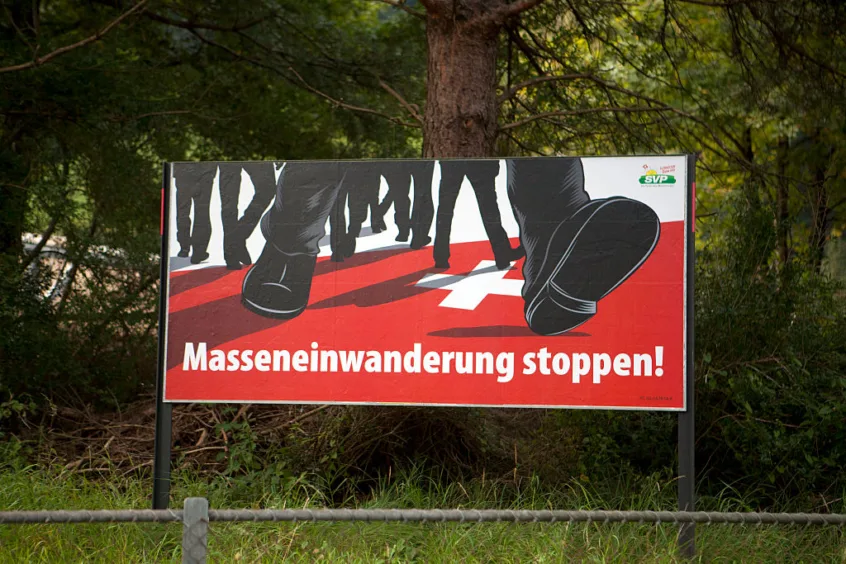
More than 80 percent of North African asylum seekers in Switzerland were accused of crimes in 2024, prompting the Justice Minister to announce tougher detention and accelerated removal procedures.
Dimitris Papafotis
Dimitris Papafotis Editor in Chief
AUGUST 25, 2026 AT 6:26 PM

According to Brussels Signal, asylum applicants from the Maghreb region were named as suspects in one or more criminal cases either during their asylum procedure or following a negative decision at a rate of 80.5 per cent, based on figures from Switzerland’s State Secretariat for Migration (SEM). The document was obtained by Swiss newspaper Blick through the country’s freedom of information legislation.

By contrast, asylum seekers from all other countries of origin faced accusations at a rate of just 12.3 per cent. Public broadcaster SRF, which also reviewed the document, calculated that North Africans were flagged as suspects more than six and a half times as often as other asylum applicants.

The SEM data tracks accusations rather than convictions, though the agency noted that only one-fifth of the North African cohort had avoided contact with prosecutors altogether.

Near-Total Rejection Rate

Asylum seekers from Algeria, Morocco and Tunisia have virtually no chance of gaining protection in Switzerland, with approximately 99 per cent of applications rejected. The Alpine nation, which participates in the Schengen area despite remaining outside the European Union, further tightened asylum regulations in October 2025 by prohibiting foreign travel for applicants.

Justice Minister Beat Jans had introduced a 24-hour fast-track procedure for North African cases in 2024 designed to clear obviously unfounded claims rapidly. In practice, the SEM acknowledged, the process took an average of 22 days.

Deportation Obstacles

Removing rejected applicants has proved even more difficult. The SEM informed Swiss newspaper NZZ am Sonntag that roughly 90 per cent of North African asylum seekers arrived without identity documents, a factor that prevents the issuance of travel papers needed for deportation.

A joint federal and cantonal task force targeting repeat offenders was established in June 2025 and monitored 87 individuals. After six months, 36 had either departed the country or vanished, with a comprehensive assessment expected in late autumn.

Political Response

Damian Müller, a member of the Council of States representing the Free Democratic Party, said the scale of criminality could no longer be dismissed as isolated incidents and constituted a grave security threat. Tiana Moser, another Council of States member from the Green Liberal Party, observed that many young men from the Maghreb travelled to Switzerland with the expectation that the legal system would treat them with leniency.

SEM spokesman Daniel Bach emphasised that 96 per cent of the asylum population in 2025 faced no criminal accusations whatsoever. The comparable figure stood at 0.6 per cent for Swiss citizens and 1 per cent for resident foreigners.

Jans has pledged to strengthen administrative detention powers and block applicants with no realistic prospect of success from filing claims in the first place. A legislative package incorporating these measures is scheduled for public consultation this year, though neither proposal addresses the absence of passports that currently keeps rejected North Africans on Swiss territory.

With information from Brussels Signal

Share:
Dimitris Papafotis
Dimitris Papafotis

Dimitris Papafotis is the editor-in-chief of NewsFire.GR. He was born and raised in Athens. He studied at the Journalism Workshop (1991-1993). He currently lives in Pyrgos, Ilia, where he has been active in radio and various newspapers, while also maintaining his personal blog, Papafotis.gr.

According to Brussels Signal, asylum applicants from the Maghreb region were named as suspects in one or more criminal cases either during their asylum procedure or following a negative decision at a rate of 80.5 per cent, based on figures from Switzerland’s State Secretariat for Migration (SEM). The document was obtained by Swiss newspaper Blick through the country’s freedom of information legislation.

By contrast, asylum seekers from all other countries of origin faced accusations at a rate of just 12.3 per cent. Public broadcaster SRF, which also reviewed the document, calculated that North Africans were flagged as suspects more than six and a half times as often as other asylum applicants.

The SEM data tracks accusations rather than convictions, though the agency noted that only one-fifth of the North African cohort had avoided contact with prosecutors altogether.

Near-Total Rejection Rate

Asylum seekers from Algeria, Morocco and Tunisia have virtually no chance of gaining protection in Switzerland, with approximately 99 per cent of applications rejected. The Alpine nation, which participates in the Schengen area despite remaining outside the European Union, further tightened asylum regulations in October 2025 by prohibiting foreign travel for applicants.

Justice Minister Beat Jans had introduced a 24-hour fast-track procedure for North African cases in 2024 designed to clear obviously unfounded claims rapidly. In practice, the SEM acknowledged, the process took an average of 22 days.

Deportation Obstacles

Removing rejected applicants has proved even more difficult. The SEM informed Swiss newspaper NZZ am Sonntag that roughly 90 per cent of North African asylum seekers arrived without identity documents, a factor that prevents the issuance of travel papers needed for deportation.

A joint federal and cantonal task force targeting repeat offenders was established in June 2025 and monitored 87 individuals. After six months, 36 had either departed the country or vanished, with a comprehensive assessment expected in late autumn.

Political Response

Damian Müller, a member of the Council of States representing the Free Democratic Party, said the scale of criminality could no longer be dismissed as isolated incidents and constituted a grave security threat. Tiana Moser, another Council of States member from the Green Liberal Party, observed that many young men from the Maghreb travelled to Switzerland with the expectation that the legal system would treat them with leniency.

SEM spokesman Daniel Bach emphasised that 96 per cent of the asylum population in 2025 faced no criminal accusations whatsoever. The comparable figure stood at 0.6 per cent for Swiss citizens and 1 per cent for resident foreigners.

Jans has pledged to strengthen administrative detention powers and block applicants with no realistic prospect of success from filing claims in the first place. A legislative package incorporating these measures is scheduled for public consultation this year, though neither proposal addresses the absence of passports that currently keeps rejected North Africans on Swiss territory.

With information from Brussels Signal

