Necessary Cookies

Required for the site to function. Cannot be disabled.

Analytics Cookies

Help us understand how visitors interact with our site (Google Analytics via GTM).

Marketing Cookies

Used to track visitors and deliver personalised advertisements.

We use cookies to enhance your browsing experience and analyse site traffic. By clicking Accept All, you consent to our use of cookies. Privacy Policy
NewsFire Global
Home News Europe World Christianity Culture Wars Opinion Video
Information
About Us Authors Advertising Terms & Conditions Privacy Policy Contact
R2B Media
R2B NEWSFIRE.GR PAPAFOTIS.GR THRACTION HELLENIC CONSERVATIVES RIGHT2THEBONE YT
News World

NYC Charter Schools Surge on State Tests While Public Schools Fail

Success Academy charter schools in New York City achieved 96 percent math proficiency and 91 percent English proficiency, nearly double the rates of traditional public schools.

AUGUST 16, 2026 AT 11:21 PM

Success Academy saw 96 percent of its students in grades three through eight achieve proficiency in mathematics, while 91 percent demonstrated proficiency in English Language Arts. These figures mirror the network’s stellar performance from the previous year.

The results stand in stark contrast to city-run public schools, where reading proficiency dropped to roughly 50 percent—a six-point decline from the prior year. Math proficiency in traditional schools remained stagnant at approximately 57 percent.

Nadienka Morillo, principal at Bronx Success Academy 4, offered a straightforward explanation for the gap in performance. Our curriculum is more rigorous, she told the outlet.

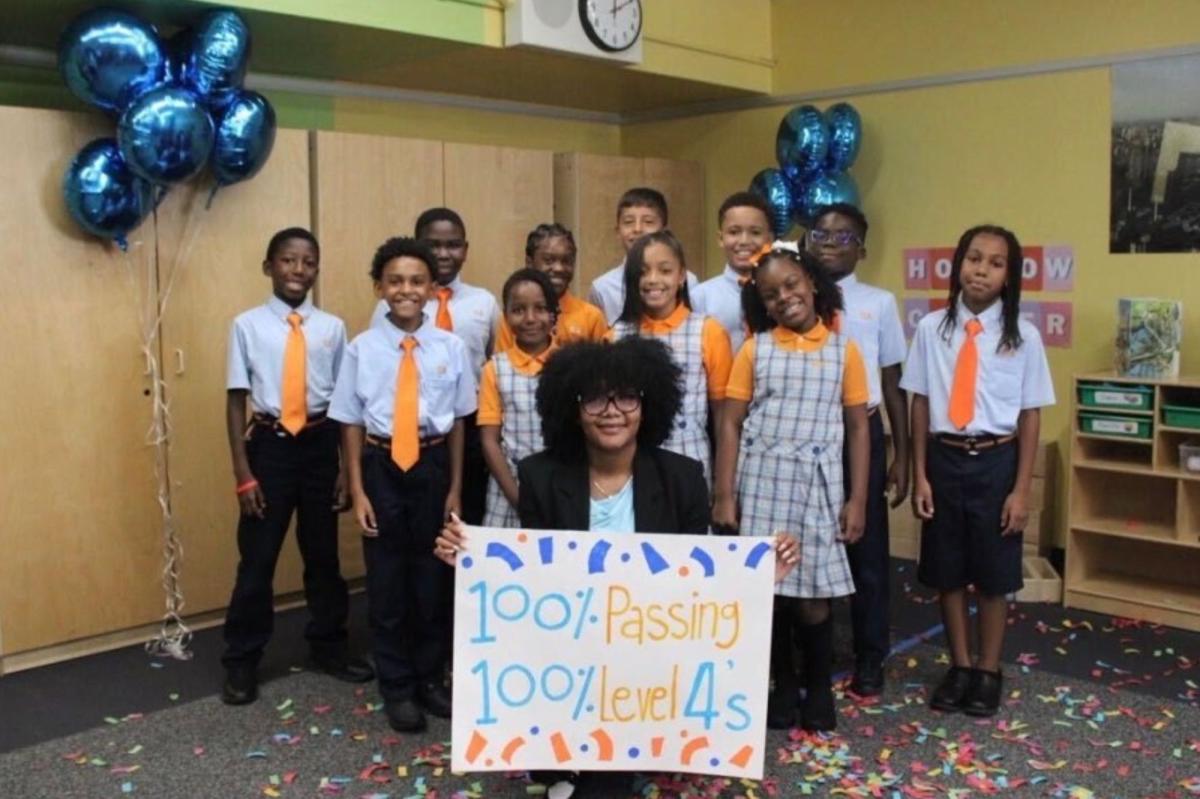
A dozen Success Academy schools achieved perfect proficiency rates, with 100 percent of students scoring proficient in both mathematics and English Language Arts. An additional eight schools recorded 100 percent proficiency in one of the two subjects.

Outstanding Performance Across Demographics

At Bronx Success Academy 4 in the Soundview neighborhood, every one of the 195 students who took the mathematics exam scored at Level 4—the highest designation on the state’s four-tier grading system. Meanwhile, 96 percent of students achieved Level 4 scores in English Language Arts.

The student body at Success Academy schools predominantly comes from challenging economic circumstances. Seventy-two percent qualify for free or reduced-price meals, 13 percent are current or former English language learners from immigrant backgrounds, and 10 percent have special needs. The racial composition includes 42 percent black students, 36 percent Hispanic, 11 percent multiracial, and 11 percent Asian, white, or Native American.

Zeta Charter Schools Also Excel

Zeta Charter Schools, operating 14 campuses citywide, posted similarly impressive results. Ninety-two percent of its students demonstrated math proficiency, while 86 percent achieved proficiency in English Language Arts. Charter school pass rates exceeded traditional public schools by 35 to 40 percentage points on both assessments.

Public Schools Face Scrutiny

The disappointing results from city-run schools, released earlier this month, sparked blame-shifting among education officials and union leaders. Michael Mulgrew, president of the United Federation of Teachers, criticized Mayor Zohran Mamdani’s administration for maintaining the phonics-based NYC Reads program implemented during the Adams administration. Mamdani defended the program as educationally sound.

Morillo rejected excuse-making entirely. We know our students are capable and they rise to the occasion, she said, emphasizing that student success depends on the quality of instruction they receive.

Curriculum Exceeds State Standards

Success Academy’s curriculum surpasses state standards, which Morillo characterized as minimum expectations. Students dedicate an hour daily to reading—30 minutes independently and 30 minutes in small groups. Intensive reading instruction begins in kindergarten, with students expected to tackle chapter books by second grade. The mathematics curriculum emphasizes relentless problem-solving.

Eva Moskowitz, founder and CEO of Success Academy, said her students have demonstrated what is achievable despite economic hardship. Sixty-four percent of test-takers—6,000 predominantly low-income children of color—achieved Level 4 in reading, the highest designation, she noted.

Moskowitz delivered a sharp rebuke to city leadership, stating that the results should serve as a wake-up call for leaders who have accepted failure and cheap excuses. She has repeatedly criticized elected officials and education establishment figures for refusing to lift the cap restricting charter school expansion. In July, she released a scathing assessment of the city-run school system’s failures.

Emily Kim, founder and CEO of Zeta Charter Schools, credited the combination of rigorous academics and unwavering belief in student potential. More than nine out of ten students achieved proficiency in mathematics and science, she said, with nearly half demonstrating the state’s highest mastery level in both math and English Language Arts.

With information from New York Post

Share:
Eleni Papadaki-Van Der Merwe

She was born in 1986 in Johannesburg, South Africa. She is the granddaughter of an immigrant from Crete who settled in the Greek community of Johannesburg (one of the largest in Africa). She holds a bachelor’s degree in International Relations and Political Science from the University of the Witwatersrand (Wits) in Johannesburg and a master’s degree in Journalism from Rhodes University in Grahamstown. She began her career at English-language media outlets in Johannesburg, covering politics and economics, with a focus on issues related to migration and the diaspora. She moved to Athens in 2015 to “return to her roots,” initially to pursue graduate studies, and has remained there permanently. She is married to an Afrikaner; they have two children and live in the southern suburbs of Athens.

Recent News

Success Academy saw 96 percent of its students in grades three through eight achieve proficiency in mathematics, while 91 percent demonstrated proficiency in English Language Arts. These figures mirror the network’s stellar performance from the previous year.

The results stand in stark contrast to city-run public schools, where reading proficiency dropped to roughly 50 percent—a six-point decline from the prior year. Math proficiency in traditional schools remained stagnant at approximately 57 percent.

Nadienka Morillo, principal at Bronx Success Academy 4, offered a straightforward explanation for the gap in performance. Our curriculum is more rigorous, she told the outlet.

A dozen Success Academy schools achieved perfect proficiency rates, with 100 percent of students scoring proficient in both mathematics and English Language Arts. An additional eight schools recorded 100 percent proficiency in one of the two subjects.

Outstanding Performance Across Demographics

At Bronx Success Academy 4 in the Soundview neighborhood, every one of the 195 students who took the mathematics exam scored at Level 4—the highest designation on the state’s four-tier grading system. Meanwhile, 96 percent of students achieved Level 4 scores in English Language Arts.

The student body at Success Academy schools predominantly comes from challenging economic circumstances. Seventy-two percent qualify for free or reduced-price meals, 13 percent are current or former English language learners from immigrant backgrounds, and 10 percent have special needs. The racial composition includes 42 percent black students, 36 percent Hispanic, 11 percent multiracial, and 11 percent Asian, white, or Native American.

Zeta Charter Schools Also Excel

Zeta Charter Schools, operating 14 campuses citywide, posted similarly impressive results. Ninety-two percent of its students demonstrated math proficiency, while 86 percent achieved proficiency in English Language Arts. Charter school pass rates exceeded traditional public schools by 35 to 40 percentage points on both assessments.

Public Schools Face Scrutiny

The disappointing results from city-run schools, released earlier this month, sparked blame-shifting among education officials and union leaders. Michael Mulgrew, president of the United Federation of Teachers, criticized Mayor Zohran Mamdani’s administration for maintaining the phonics-based NYC Reads program implemented during the Adams administration. Mamdani defended the program as educationally sound.

Morillo rejected excuse-making entirely. We know our students are capable and they rise to the occasion, she said, emphasizing that student success depends on the quality of instruction they receive.

Curriculum Exceeds State Standards

Success Academy’s curriculum surpasses state standards, which Morillo characterized as minimum expectations. Students dedicate an hour daily to reading—30 minutes independently and 30 minutes in small groups. Intensive reading instruction begins in kindergarten, with students expected to tackle chapter books by second grade. The mathematics curriculum emphasizes relentless problem-solving.

Eva Moskowitz, founder and CEO of Success Academy, said her students have demonstrated what is achievable despite economic hardship. Sixty-four percent of test-takers—6,000 predominantly low-income children of color—achieved Level 4 in reading, the highest designation, she noted.

Moskowitz delivered a sharp rebuke to city leadership, stating that the results should serve as a wake-up call for leaders who have accepted failure and cheap excuses. She has repeatedly criticized elected officials and education establishment figures for refusing to lift the cap restricting charter school expansion. In July, she released a scathing assessment of the city-run school system’s failures.

Emily Kim, founder and CEO of Zeta Charter Schools, credited the combination of rigorous academics and unwavering belief in student potential. More than nine out of ten students achieved proficiency in mathematics and science, she said, with nearly half demonstrating the state’s highest mastery level in both math and English Language Arts.

With information from New York Post