Necessary Cookies

Required for the site to function. Cannot be disabled.

Analytics Cookies

Help us understand how visitors interact with our site (Google Analytics via GTM).

Marketing Cookies

Used to track visitors and deliver personalised advertisements.

We use cookies to enhance your browsing experience and analyse site traffic. By clicking Accept All, you consent to our use of cookies. Privacy Policy
NewsFire Global
Home News Europe World Christianity Culture Wars Opinion Video
Information
About Us Authors Advertising Terms & Conditions Privacy Policy Contact
R2B Media
R2B NEWSFIRE.GR PAPAFOTIS.GR THRACTION HELLENIC CONSERVATIVES RIGHT2THEBONE YT
News World

No More Lifelines for Iran Regime as Pressure Mounts

The Trump administration is escalating sanctions against Iran's financial networks and allies, targeting oil smuggling and currency operations as the regime faces economic collapse.

AUGUST 26, 2026 AT 4:40 PM

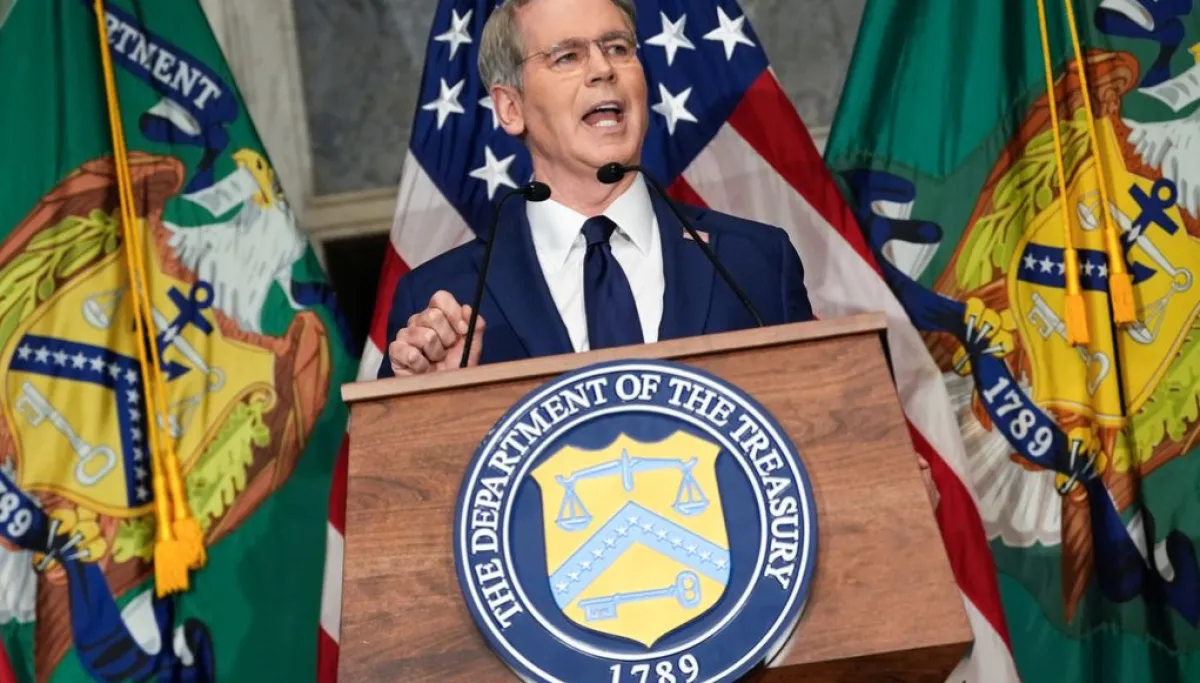
Treasury Secretary Scott Bessent declared on Sunday that the United States is entering what he called the endgame in its confrontation with Iran. His remarks followed President Donald Trump’s warning that the regime faces an economic day of reckoning.
Writing on Truth Social, Trump pledged to launch the most devastating economic operation ever deployed against another country. The president outlined sweeping measures targeting Iran’s oil smuggling networks, currency swap arrangements, cash transfers, exchange houses, ship registries, and front companies used to circumvent existing sanctions.

The timing appears strategic. Iran’s economy is in freefall, presenting Washington with an unprecedented opportunity to apply decisive pressure. The Iranian rial has plummeted to historic lows, trading at 2.02 million to the dollar as of Monday. Basic necessities have become increasingly unaffordable for ordinary Iranians, with rice prices surging 60 percent and beef costs exploding by 150 percent. The International Monetary Fund projects Iran’s GDP will shrink by more than 5 percent.

Abdolnaser Hemmati, governor of Iran’s central bank, acknowledged that crude oil exports have effectively ceased due to American naval operations, severely hampering the regime’s ability to secure foreign currency.

Trump characterized Iran as completely collapsing—an assessment that may prove accurate. The contrast with Iran’s past prosperity is stark. Under the late Shah Reza Pahlavi, who implemented ambitious modernization reforms, Iran achieved remarkable economic expansion and ranked as the world’s 18th-largest economy by 1977.

That progress was obliterated following the 1979 revolution. For nearly half a century, a theocratic dictatorship has ruled Iran, transforming the country into an exporter of petroleum and terrorism while impoverishing its citizens. Today, despite having 93 million inhabitants and being the planet’s 17th-most populous nation, Iran’s GDP trails both Peru and Romania.

The regime understands that economic hardship breeds domestic instability. Inflation and shortages have historically triggered upheaval in Iran, including the constitutional revolutions of 1905 and 1911, and the overthrow of the Pahlavi monarchy in 1979. The current rulers may face a similar reckoning.

Tehran’s seizure of the Strait of Hormuz initially provided leverage, but that advantage appears to be eroding. Oil tanker traffic is increasing, and major producers are developing overland pipeline routes that bypass the Persian Gulf entirely, circumventing Iranian interference. The regime’s gambit may ultimately prove counterproductive, exposing its dangerous overreliance on oil revenues and terrorist activities.

However, the Islamic Republic has demonstrated remarkable endurance under pressure. Previous American sanctions, enacted by both the Trump administration and Congress, failed to deliver a decisive blow largely because other countries—including supposed U.S. partners such as the United Arab Emirates—have provided Tehran with financial lifelines. The UAE has functioned as Iran’s banker, facilitating sanctions evasion while supplying roughly 30 percent of Iran’s imported goods.

The Trump administration now appears determined to sever those connections. The president has demanded that all American allies work to isolate and defeat the Iranian threat. Bessent issued an even starker warning, stating that any nation serving as a financial artery for the regime should expect to share its isolation.

According to Bessent’s formulation, no one is beyond the reach of U.S. sanctions, and any entity participating in the ecosystem sustaining Iran will face consequences.

This expanded approach—targeting Iran’s enablers and financial intermediaries alongside the regime itself—could precipitate Tehran’s collapse or at minimum force significant concessions during negotiations. Success, however, depends entirely on American determination. Washington cannot afford hesitation or inconsistency if this strategy is to achieve its objectives.

With information from Washington Examiner
Share:
Eleni Papadaki-Van Der Merwe

She was born in 1986 in Johannesburg, South Africa. She is the granddaughter of an immigrant from Crete who settled in the Greek community of Johannesburg (one of the largest in Africa). She holds a bachelor’s degree in International Relations and Political Science from the University of the Witwatersrand (Wits) in Johannesburg and a master’s degree in Journalism from Rhodes University in Grahamstown. She began her career at English-language media outlets in Johannesburg, covering politics and economics, with a focus on issues related to migration and the diaspora. She moved to Athens in 2015 to “return to her roots,” initially to pursue graduate studies, and has remained there permanently. She is married to an Afrikaner; they have two children and live in the southern suburbs of Athens.

Treasury Secretary Scott Bessent declared on Sunday that the United States is entering what he called the endgame in its confrontation with Iran. His remarks followed President Donald Trump’s warning that the regime faces an economic day of reckoning.

Writing on Truth Social, Trump pledged to launch the most devastating economic operation ever deployed against another country. The president outlined sweeping measures targeting Iran’s oil smuggling networks, currency swap arrangements, cash transfers, exchange houses, ship registries, and front companies used to circumvent existing sanctions.

The timing appears strategic. Iran’s economy is in freefall, presenting Washington with an unprecedented opportunity to apply decisive pressure. The Iranian rial has plummeted to historic lows, trading at 2.02 million to the dollar as of Monday. Basic necessities have become increasingly unaffordable for ordinary Iranians, with rice prices surging 60 percent and beef costs exploding by 150 percent. The International Monetary Fund projects Iran’s GDP will shrink by more than 5 percent.

Abdolnaser Hemmati, governor of Iran’s central bank, acknowledged that crude oil exports have effectively ceased due to American naval operations, severely hampering the regime’s ability to secure foreign currency.

Trump characterized Iran as completely collapsing—an assessment that may prove accurate. The contrast with Iran’s past prosperity is stark. Under the late Shah Reza Pahlavi, who implemented ambitious modernization reforms, Iran achieved remarkable economic expansion and ranked as the world’s 18th-largest economy by 1977.

That progress was obliterated following the 1979 revolution. For nearly half a century, a theocratic dictatorship has ruled Iran, transforming the country into an exporter of petroleum and terrorism while impoverishing its citizens. Today, despite having 93 million inhabitants and being the planet’s 17th-most populous nation, Iran’s GDP trails both Peru and Romania.

The regime understands that economic hardship breeds domestic instability. Inflation and shortages have historically triggered upheaval in Iran, including the constitutional revolutions of 1905 and 1911, and the overthrow of the Pahlavi monarchy in 1979. The current rulers may face a similar reckoning.

Tehran’s seizure of the Strait of Hormuz initially provided leverage, but that advantage appears to be eroding. Oil tanker traffic is increasing, and major producers are developing overland pipeline routes that bypass the Persian Gulf entirely, circumventing Iranian interference. The regime’s gambit may ultimately prove counterproductive, exposing its dangerous overreliance on oil revenues and terrorist activities.

However, the Islamic Republic has demonstrated remarkable endurance under pressure. Previous American sanctions, enacted by both the Trump administration and Congress, failed to deliver a decisive blow largely because other countries—including supposed U.S. partners such as the United Arab Emirates—have provided Tehran with financial lifelines. The UAE has functioned as Iran’s banker, facilitating sanctions evasion while supplying roughly 30 percent of Iran’s imported goods.

The Trump administration now appears determined to sever those connections. The president has demanded that all American allies work to isolate and defeat the Iranian threat. Bessent issued an even starker warning, stating that any nation serving as a financial artery for the regime should expect to share its isolation.

According to Bessent’s formulation, no one is beyond the reach of U.S. sanctions, and any entity participating in the ecosystem sustaining Iran will face consequences.

This expanded approach—targeting Iran’s enablers and financial intermediaries alongside the regime itself—could precipitate Tehran’s collapse or at minimum force significant concessions during negotiations. Success, however, depends entirely on American determination. Washington cannot afford hesitation or inconsistency if this strategy is to achieve its objectives.

With information from Washington Examiner