Necessary Cookies

Required for the site to function. Cannot be disabled.

Analytics Cookies

Help us understand how visitors interact with our site (Google Analytics via GTM).

Marketing Cookies

Used to track visitors and deliver personalised advertisements.

We use cookies to enhance your browsing experience and analyse site traffic. By clicking Accept All, you consent to our use of cookies. Privacy Policy
NewsFire Global
Home News Europe World Christianity Culture Wars Opinion
Information
About Us Authors Advertising Terms & Conditions Privacy Policy Contact
R2B Media
R2B NEWSFIRE.GR PAPAFOTIS.GR THRACTION HELLENIC CONSERVATIVES RIGHT2THEBONE YT
News Europe

More Germans Reject Firewall Against AfD, Poll Shows

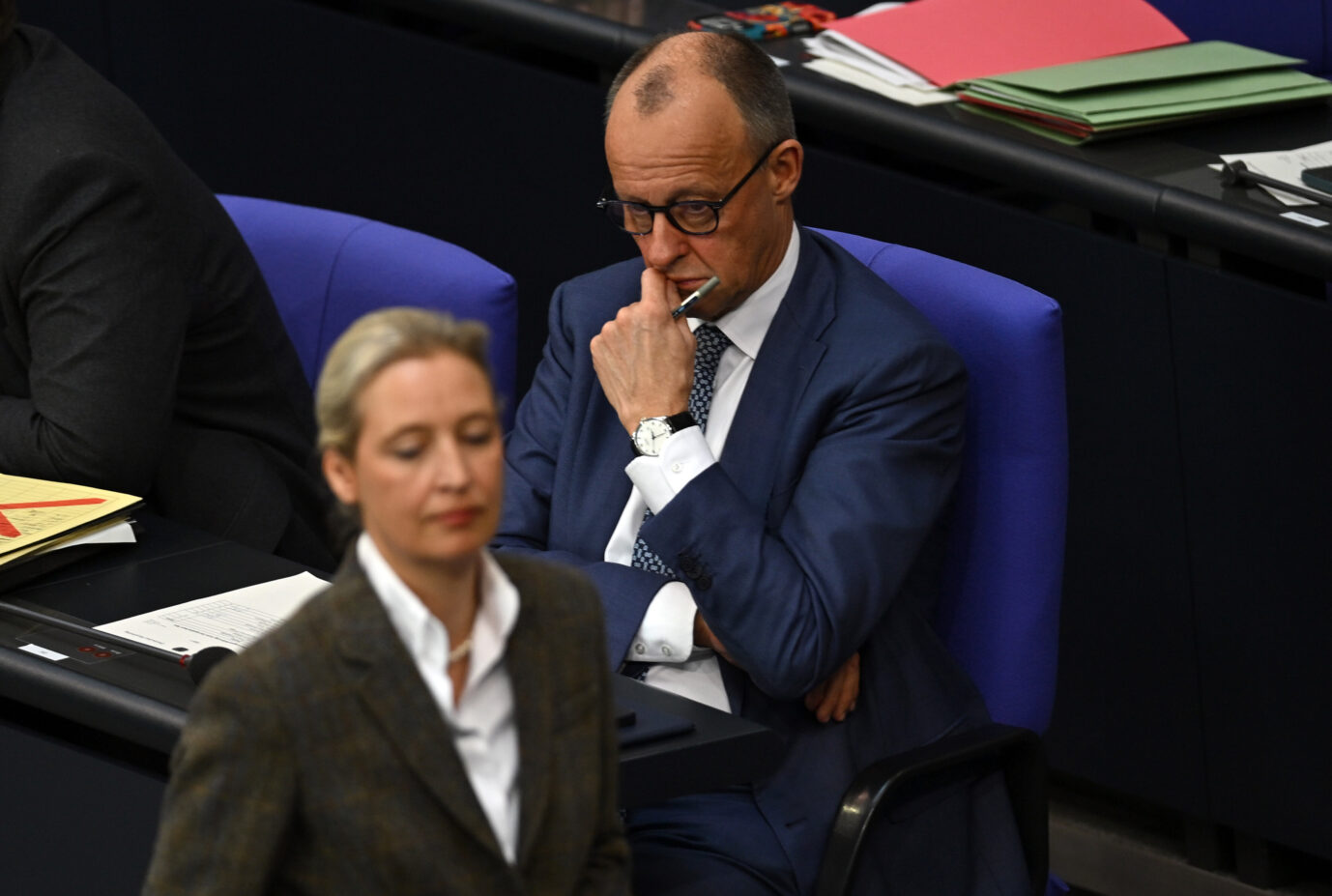
Growing numbers of German voters are questioning the CDU's firewall policy against the AfD, with support for and opposition to the exclusion strategy now tied at 47 percent each for the first time.

Dimitris Papafotis
Dimitris Papafotis Editor in Chief
JUNE 4, 2026 AT 10:42 PM

The latest Deutschlandtrend survey conducted by Infratest Dimap for ARD’s Tagesthemen and Welt reveals that 47 percent of respondents now consider the exclusion of cooperation with the AfD to be “not correct,” as Junge Freiheit reports. This represents a striking increase of twelve percentage points since September 2024.

An equal 47 percent still support the so-called firewall strategy, marking the first time supporters and opponents of the policy stand level. The shift suggests mounting pressure on the CDU’s longstanding position of refusing any collaboration with the AfD under any circumstances.

Union Voters Remain Committed to Firewall

Among CDU and CSU supporters specifically, a clear majority of 62 percent continue to back the exclusion policy against the AfD. However, the broader electorate appears increasingly skeptical of blanket coalition bans as a governing principle.

The survey also examined attitudes toward cooperation with the Left Party, revealing even sharper criticism of that exclusion policy. Only 33 percent of respondents consider refusing cooperation with the Left Party appropriate, while 56 percent view it as wrong.

Eastern Germany Rejects Firewall Strategy

The polling data exposes a dramatic east-west divide on the AfD question. In western Germany, a narrow majority of 50 percent still support excluding the AfD from coalition talks, with 45 percent opposed. In eastern Germany, the picture reverses sharply: 58 percent reject the firewall policy as wrong, with only 34 percent supporting it.

Majorities in both regions oppose the exclusion of the Left Party from potential governing arrangements.

AfD Leads National Polling as Union Hits Three-Year Low

The Sunday question portion of the Deutschlandtrend reveals troubling numbers for Chancellor Friedrich Merz and the Union bloc. The AfD holds steady at 27 percent, maintaining its lead over the CDU/CSU alliance, which has slipped to just 23 percent—down one point from the previous month and the lowest Union result in the ARD Deutschlandtrend since January 2022.

The Greens register 14 percent support, the Social Democrats 13 percent, and the Left Party ten percent. Both the Free Democratic Party and the Sahra Wagenknecht Alliance would fail to clear the five-percent threshold needed for parliamentary representation, polling at four and three percent respectively.

These figures present a mathematical nightmare for government formation given current coalition red lines, with no obvious two-party majority available that excludes both the AfD and the Left Party.

Merz Government Approval Collapses

The federal government’s approval ratings remain mired in historically poor territory. Only twelve percent of those surveyed express satisfaction or high satisfaction with the administration’s performance.

Chancellor Merz personally records particularly weak numbers, with just 16 percent satisfied with his work and 82 percent expressing low or no satisfaction. The figures raise questions about the sustainability of his chancellorship and the viability of current governing arrangements heading into potential early elections.

With information from Junge Freiheit

Share:
Dimitris Papafotis
Dimitris Papafotis

Dimitris Papafotis is the editor-in-chief of NewsFire.GR. He was born and raised in Athens. He studied at the Journalism Workshop (1991-1993). He currently lives in Pyrgos, Ilia, where he has been active in radio and various newspapers, while also maintaining his personal blog, Papafotis.gr.

The latest Deutschlandtrend survey conducted by Infratest Dimap for ARD’s Tagesthemen and Welt reveals that 47 percent of respondents now consider the exclusion of cooperation with the AfD to be “not correct,” as Junge Freiheit reports. This represents a striking increase of twelve percentage points since September 2024.

An equal 47 percent still support the so-called firewall strategy, marking the first time supporters and opponents of the policy stand level. The shift suggests mounting pressure on the CDU’s longstanding position of refusing any collaboration with the AfD under any circumstances.

Union Voters Remain Committed to Firewall

Among CDU and CSU supporters specifically, a clear majority of 62 percent continue to back the exclusion policy against the AfD. However, the broader electorate appears increasingly skeptical of blanket coalition bans as a governing principle.

The survey also examined attitudes toward cooperation with the Left Party, revealing even sharper criticism of that exclusion policy. Only 33 percent of respondents consider refusing cooperation with the Left Party appropriate, while 56 percent view it as wrong.

Eastern Germany Rejects Firewall Strategy

The polling data exposes a dramatic east-west divide on the AfD question. In western Germany, a narrow majority of 50 percent still support excluding the AfD from coalition talks, with 45 percent opposed. In eastern Germany, the picture reverses sharply: 58 percent reject the firewall policy as wrong, with only 34 percent supporting it.

Majorities in both regions oppose the exclusion of the Left Party from potential governing arrangements.

AfD Leads National Polling as Union Hits Three-Year Low

The Sunday question portion of the Deutschlandtrend reveals troubling numbers for Chancellor Friedrich Merz and the Union bloc. The AfD holds steady at 27 percent, maintaining its lead over the CDU/CSU alliance, which has slipped to just 23 percent—down one point from the previous month and the lowest Union result in the ARD Deutschlandtrend since January 2022.

The Greens register 14 percent support, the Social Democrats 13 percent, and the Left Party ten percent. Both the Free Democratic Party and the Sahra Wagenknecht Alliance would fail to clear the five-percent threshold needed for parliamentary representation, polling at four and three percent respectively.

These figures present a mathematical nightmare for government formation given current coalition red lines, with no obvious two-party majority available that excludes both the AfD and the Left Party.

Merz Government Approval Collapses

The federal government’s approval ratings remain mired in historically poor territory. Only twelve percent of those surveyed express satisfaction or high satisfaction with the administration’s performance.

Chancellor Merz personally records particularly weak numbers, with just 16 percent satisfied with his work and 82 percent expressing low or no satisfaction. The figures raise questions about the sustainability of his chancellorship and the viability of current governing arrangements heading into potential early elections.

With information from Junge Freiheit

