Necessary Cookies

Required for the site to function. Cannot be disabled.

Analytics Cookies

Help us understand how visitors interact with our site (Google Analytics via GTM).

Marketing Cookies

Used to track visitors and deliver personalised advertisements.

We use cookies to enhance your browsing experience and analyse site traffic. By clicking Accept All, you consent to our use of cookies. Privacy Policy
NewsFire Global
Home News Europe World Christianity Culture Wars Opinion Video
Information
About Us Authors Advertising Terms & Conditions Privacy Policy Contact
R2B Media
R2B NEWSFIRE.GR PAPAFOTIS.GR THRACTION HELLENIC CONSERVATIVES RIGHT2THEBONE YT
News Europe

Mladic to Receive Highest State Honors at Serbian Burial

Serbia's justice minister confirmed that convicted war criminal Ratko Mladić will receive full state honours at his burial, drawing sharp criticism from neighbouring states and victims' groups.
Dimitris Papafotis
Dimitris Papafotis Editor in Chief
AUGUST 28, 2026 AT 9:28 PM

Nenad Vujić told ATV in Banja Luka that the protocols for a general are established and will be observed, according to Brussels Signal. He confirmed that Belgrade stands ready to collect the body from The Hague as soon as the UN Residual Mechanism provides a timeline, stating that if instructed to come the following morning, authorities would be there immediately.

The family will select the burial location, Vujić said, adding that Republika Srpska will not make that determination. He did not specify whether military units would participate in the ceremony or whether a national day of mourning would be declared. No date or cemetery has been publicly announced.

State-aligned media outlets had already reported, citing government sources, that the funeral would include both state and military honours. Former interior minister Aleksandar Vulin argued that Serbia owes Mladić a state and military funeral along with a day of national mourning.

Death in UN Custody

Mladić died on 27 August 2026 at the age of 84 in the hospital wing of the UN detention facility in The Hague, where he had been serving a life sentence. The Mechanism confirmed his death and announced an inquiry into the circumstances surrounding it.

He had suffered multiple strokes in recent years. A UN medical officer stated earlier this month that death could occur at any moment. Serbia had requested that he be permitted to spend his final days at home, but the court denied the application.

President Aleksandar Vučić had renewed that request a week before Mladić’s death. His legal counsel indicated that he wished to be buried beside his daughter Ana, who died in 1994, in Belgrade.

Conviction for Genocide and War Crimes

The International Criminal Tribunal for the former Yugoslavia convicted Mladić in 2017 of genocide, crimes against humanity, and war crimes. An appeal was rejected in 2021. The central charge concerned the July 1995 massacre at Srebrenica, where Bosnian Serb forces under his command murdered more than 8,000 Bosniak men and boys in what had been designated a UN safe area—the worst atrocity on European soil since 1945.

He was also convicted for his role in the siege of Sarajevo. The Bosnian war of 1992 to 1995 resulted in approximately 100,000 deaths. Mladić commanded the Army of Republika Srpska from 1992 onward.

Indicted in 1995, he evaded capture for years with assistance from elements within Serbia. He was finally arrested in Lazarevo in May 2011.

Regional Reactions

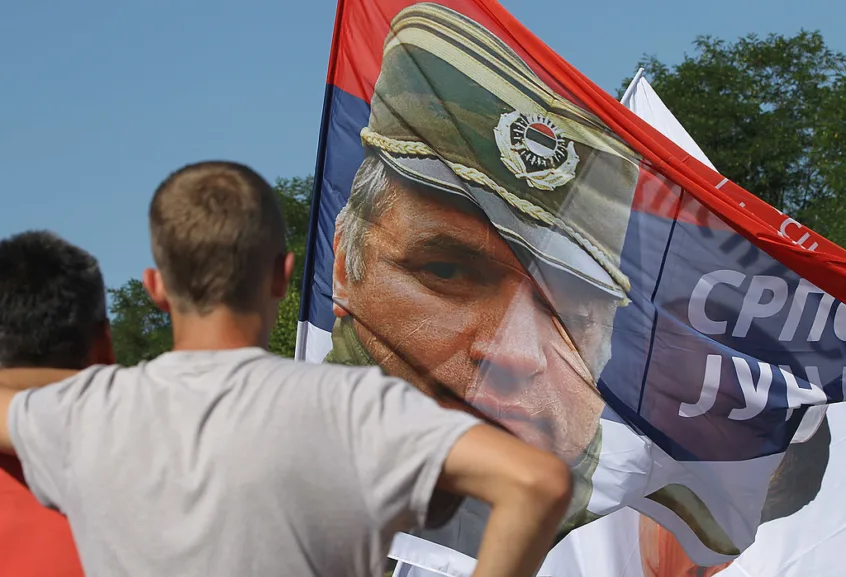
In Republika Srpska, Milorad Dodik and Prime Minister Savo Minić lit candles at the Cathedral of Christ the Saviour in Banja Luka, as Brussels Signal reports. Crowds assembled in Zvornik, Bijeljina, Prijedor, and other towns.

Emir Suljagić of the Srebrenica Memorial Centre said that Mladić’s death does not bring back the victims or alter the judicial verdict.

Croatian defence minister Ivan Anušić stated that discussion of state honours confirms the policies of Aleksandar Vučić and represents a continuation of the politics of the 1990s.

Within Serbia, some opposition parties described Mladić as a convicted war criminal, while others hailed him as a hero.

A state funeral for a man international courts identified as responsible for genocide could place Belgrade in direct conflict with the legal and political requirements underpinning its European Union accession process.

With information from Brussels Signal

Share:
Dimitris Papafotis
Dimitris Papafotis

Dimitris Papafotis is the editor-in-chief of NewsFire.GR. He was born and raised in Athens. He studied at the Journalism Workshop (1991-1993). He currently lives in Pyrgos, Ilia, where he has been active in radio and various newspapers, while also maintaining his personal blog, Papafotis.gr.

Делије шаљу последњи поздрав! 🔴⚪️#fkcz pic.twitter.com/WLzoKDItme

— RedStarFamily (@RedStarFamily) August 27, 2026

Nenad Vujić told ATV in Banja Luka that the protocols for a general are established and will be observed, according to Brussels Signal. He confirmed that Belgrade stands ready to collect the body from The Hague as soon as the UN Residual Mechanism provides a timeline, stating that if instructed to come the following morning, authorities would be there immediately.

The family will select the burial location, Vujić said, adding that Republika Srpska will not make that determination. He did not specify whether military units would participate in the ceremony or whether a national day of mourning would be declared. No date or cemetery has been publicly announced.

State-aligned media outlets had already reported, citing government sources, that the funeral would include both state and military honours. Former interior minister Aleksandar Vulin argued that Serbia owes Mladić a state and military funeral along with a day of national mourning.

Death in UN Custody

Mladić died on 27 August 2026 at the age of 84 in the hospital wing of the UN detention facility in The Hague, where he had been serving a life sentence. The Mechanism confirmed his death and announced an inquiry into the circumstances surrounding it.

He had suffered multiple strokes in recent years. A UN medical officer stated earlier this month that death could occur at any moment. Serbia had requested that he be permitted to spend his final days at home, but the court denied the application.

President Aleksandar Vučić had renewed that request a week before Mladić’s death. His legal counsel indicated that he wished to be buried beside his daughter Ana, who died in 1994, in Belgrade.

Conviction for Genocide and War Crimes

The International Criminal Tribunal for the former Yugoslavia convicted Mladić in 2017 of genocide, crimes against humanity, and war crimes. An appeal was rejected in 2021. The central charge concerned the July 1995 massacre at Srebrenica, where Bosnian Serb forces under his command murdered more than 8,000 Bosniak men and boys in what had been designated a UN safe area—the worst atrocity on European soil since 1945.

He was also convicted for his role in the siege of Sarajevo. The Bosnian war of 1992 to 1995 resulted in approximately 100,000 deaths. Mladić commanded the Army of Republika Srpska from 1992 onward.

Indicted in 1995, he evaded capture for years with assistance from elements within Serbia. He was finally arrested in Lazarevo in May 2011.

Regional Reactions

In Republika Srpska, Milorad Dodik and Prime Minister Savo Minić lit candles at the Cathedral of Christ the Saviour in Banja Luka, as Brussels Signal reports. Crowds assembled in Zvornik, Bijeljina, Prijedor, and other towns.

Emir Suljagić of the Srebrenica Memorial Centre said that Mladić’s death does not bring back the victims or alter the judicial verdict.

Croatian defence minister Ivan Anušić stated that discussion of state honours confirms the policies of Aleksandar Vučić and represents a continuation of the politics of the 1990s.

Within Serbia, some opposition parties described Mladić as a convicted war criminal, while others hailed him as a hero.

A state funeral for a man international courts identified as responsible for genocide could place Belgrade in direct conflict with the legal and political requirements underpinning its European Union accession process.

With information from Brussels Signal

