Necessary Cookies

Required for the site to function. Cannot be disabled.

Analytics Cookies

Help us understand how visitors interact with our site (Google Analytics via GTM).

Marketing Cookies

Used to track visitors and deliver personalised advertisements.

We use cookies to enhance your browsing experience and analyse site traffic. By clicking Accept All, you consent to our use of cookies. Privacy Policy
NewsFire Global
Home News Europe World Christianity Culture Wars Opinion Video
Information
About Us Authors Advertising Terms & Conditions Privacy Policy Contact
R2B Media
R2B NEWSFIRE.GR PAPAFOTIS.GR THRACTION HELLENIC CONSERVATIVES RIGHT2THEBONE YT
News Europe

Lithuanian Authorities Uncover Belarus Border Tunnel Plot

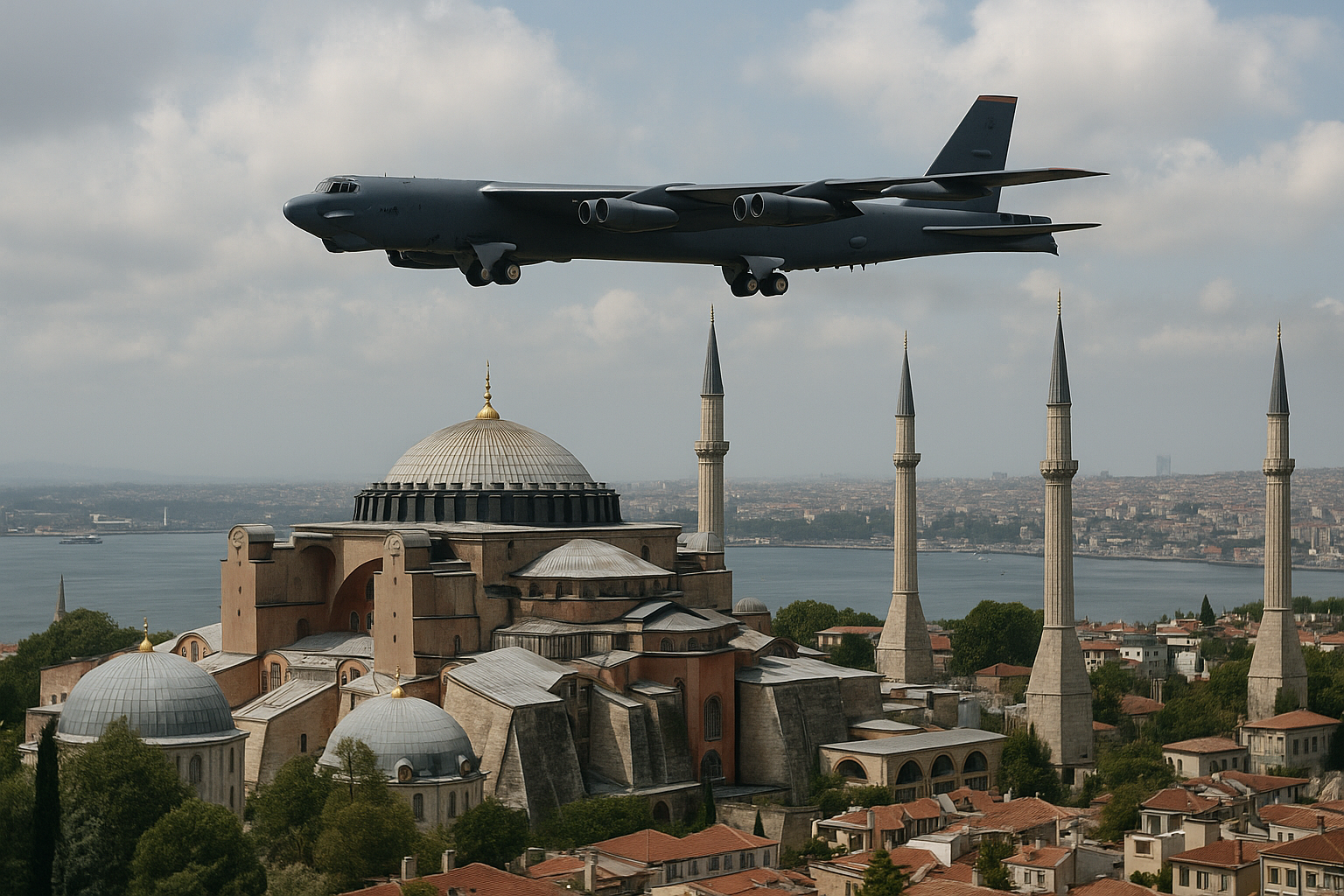
A U.S. Air Force B-52H bomber flew over Constantinople on May 12 in a show of American air power and NATO solidarity with Turkey amid heightened regional tensions.

Dimitris Papafotis
Dimitris Papafotis Editor in Chief
JULY 29, 2026 AT 6:54 PM

The heavy bomber, a cornerstone of U.S. strategic deterrence capabilities, overflew the historic city as part of ongoing military coordination between Washington and Ankara. The flyover comes amid heightened regional tensions and serves as a visible reminder of America’s commitment to its NATO allies in the Eastern Mediterranean theater.

B-52H Stratofortress bombers have been the backbone of the U.S. Air Force’s long-range strike capability for decades, capable of carrying both conventional and nuclear payloads across intercontinental distances. The aircraft’s presence over Constantinople signals continued American engagement in a strategically vital region that serves as the geographic nexus between Europe and Asia.

Turkey remains a critical NATO member despite ongoing political friction with Western European capitals over migration, defense procurement, and regional policy disagreements. The flyover underscores the enduring military-to-military relationship between the United States and Turkish armed forces, particularly in the context of Black Sea security and broader deterrence posture against revisionist powers.

The May 12 operation follows a pattern of increased U.S. bomber presence across Europe and the Mediterranean, part of what Pentagon officials describe as dynamic force employment—unpredictable deployments designed to reassure allies while complicating adversary planning.

Constantinople’s geographic position controlling the Bosphorus Strait, the sole maritime passage between the Black Sea and the Mediterranean, makes any military activity in the area strategically significant. Control of these waterways has historically determined the balance of power in the region.

With information from Telegram @OSINTLive

Share:
Dimitris Papafotis
Dimitris Papafotis

Dimitris Papafotis is the editor-in-chief of NewsFire.GR. He was born and raised in Athens. He studied at the Journalism Workshop (1991-1993). He currently lives in Pyrgos, Ilia, where he has been active in radio and various newspapers, while also maintaining his personal blog, Papafotis.gr.

The heavy bomber, a cornerstone of U.S. strategic deterrence capabilities, overflew the historic city as part of ongoing military coordination between Washington and Ankara. The flyover comes amid heightened regional tensions and serves as a visible reminder of America’s commitment to its NATO allies in the Eastern Mediterranean theater.

B-52H Stratofortress bombers have been the backbone of the U.S. Air Force’s long-range strike capability for decades, capable of carrying both conventional and nuclear payloads across intercontinental distances. The aircraft’s presence over Constantinople signals continued American engagement in a strategically vital region that serves as the geographic nexus between Europe and Asia.

Turkey remains a critical NATO member despite ongoing political friction with Western European capitals over migration, defense procurement, and regional policy disagreements. The flyover underscores the enduring military-to-military relationship between the United States and Turkish armed forces, particularly in the context of Black Sea security and broader deterrence posture against revisionist powers.

The May 12 operation follows a pattern of increased U.S. bomber presence across Europe and the Mediterranean, part of what Pentagon officials describe as dynamic force employment—unpredictable deployments designed to reassure allies while complicating adversary planning.

Constantinople’s geographic position controlling the Bosphorus Strait, the sole maritime passage between the Black Sea and the Mediterranean, makes any military activity in the area strategically significant. Control of these waterways has historically determined the balance of power in the region.

With information from Telegram @OSINTLive

