
Lauterbach Believes Foreign Powers Behind Terror Attacks Before Election
Former German Health Minister Karl Lauterbach drew criticism for suggesting foreign powers orchestrate Islamist attacks before elections, a theory dismissed as "nonsense" by counter-extremism experts.
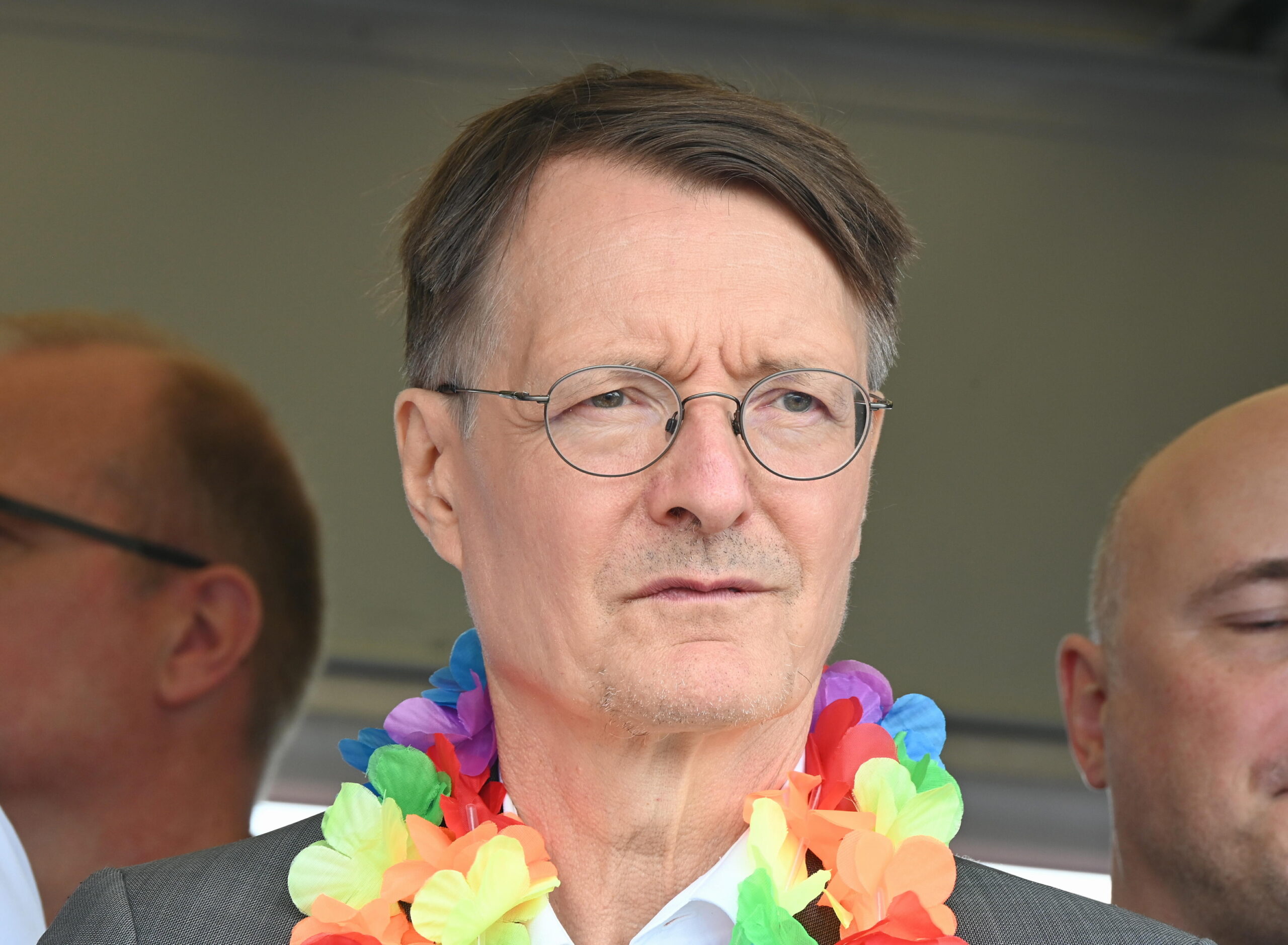
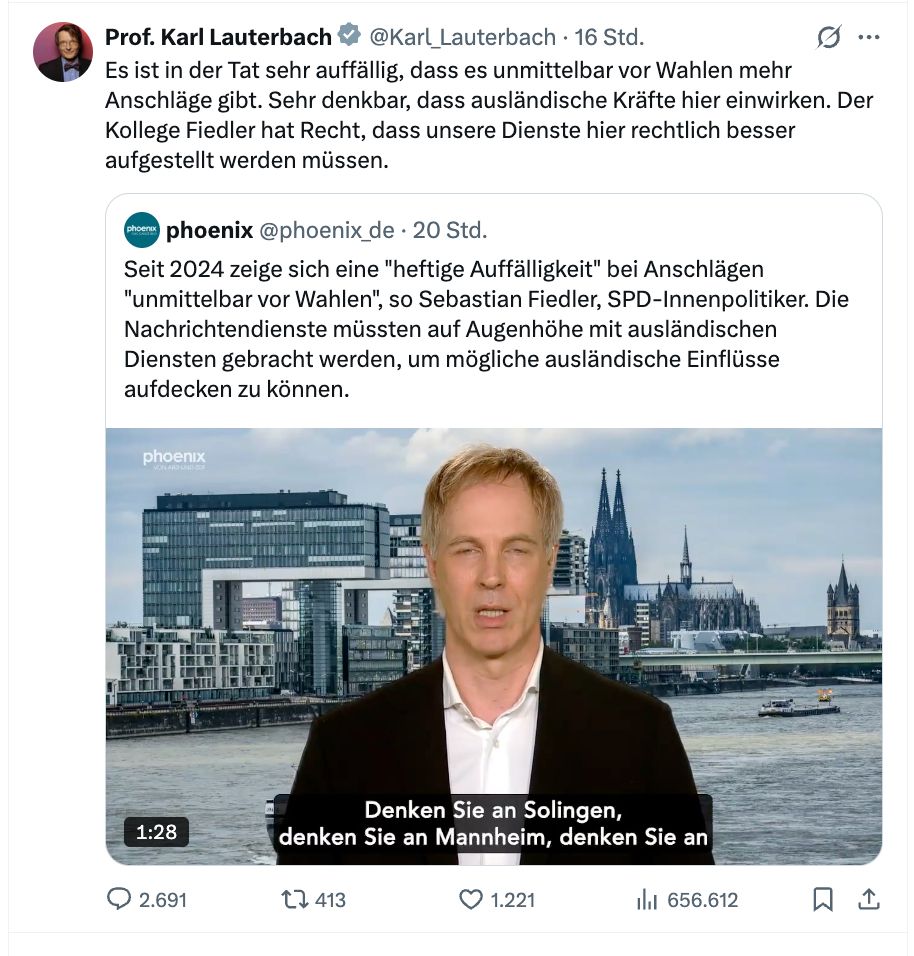
In an opinion piece published by Nius, columnist Jörg Schulz reports that Lauterbach, a Social Democratic Party (SPD) politician, amplified remarks made by fellow SPD member Sebastian Fiedler on the social media platform X. Lauterbach wrote that it was “indeed very conspicuous that there are more attacks immediately before elections,” adding that it was “very conceivable that foreign forces are exerting influence here.”
The comments followed an interview Fiedler gave to German broadcaster Phoenix concerning the recent Islamist attack on Berlin’s Christopher Street Day celebration. The SPD interior policy spokesman claimed to have noticed a “striking pattern” of attacks occurring “immediately before elections” since 2024. He cited as examples the attacks in Solingen, Mannheim, Munich, and the Berlin incident that occurred “two days before the federal election.” Referencing the latest attack, Fiedler also noted that “right now a heated election campaign is underway in Saxony-Anhalt.”
According to Fiedler, investigations have revealed much about the perpetrators’ motivations in many cases. However, he also claimed that “in many cases we have persons in the background who directed the perpetrators,” though authorities know “precious little to nothing at all” about these alleged puppet masters.
The SPD politician drew attention to Russia’s hybrid warfare tactics against Europe and Germany, noting that Moscow is known to conduct influence operations, maintain contacts with jihadist networks, and operate through proxies to conceal its actual involvement. His “biggest question mark,” Fiedler said, was “whether and to what extent all this is coincidence”—a question he suggested only foreign intelligence services could answer.
Fiedler criticized the fact that such processes currently unfold “completely outside our view,” which he said he could not and would not “accept.” He called for expanded powers for intelligence agencies to bring them “to better parity with foreign partner services.”
Counter-Extremism Expert Rejects Theory
Lauterbach explicitly endorsed these statements on X, but his amplification of the conspiracy theory suggesting foreign powers might be behind a concentration of Islamist attacks before elections drew sharp criticism. Among the most pointed responses came from Ahmad Mansour, a recognized expert on extremism, who flatly contradicted the former health minister and accused him of obscuring the real causes of Islamist radicalization.
“How far removed from reality must one be to spread such nonsense?” Mansour wrote. Anyone engaged with studies, security authorities, or the situation in schools and universities knows that Islamist radicalization is “a real and serious challenge,” he stated.
Mansour further argued that anyone examining Islamist attacks in recent years would recognize the significant radicalization potential at play. One must simply be willing to acknowledge the facts, he wrote in his message directed at Lauterbach.
The exchange highlights a deepening divide within German political discourse over how to characterize and respond to the wave of Islamist violence that has struck the country in recent years, particularly around election periods. While some politicians appear willing to entertain theories of foreign manipulation, experts on the ground maintain that homegrown radicalization remains the primary driver of such attacks.
With information from Nius





