Necessary Cookies

Required for the site to function. Cannot be disabled.

Analytics Cookies

Help us understand how visitors interact with our site (Google Analytics via GTM).

Marketing Cookies

Used to track visitors and deliver personalised advertisements.

We use cookies to enhance your browsing experience and analyse site traffic. By clicking Accept All, you consent to our use of cookies. Privacy Policy
NewsFire Global
Home News Europe World Christianity Culture Wars Opinion Video
Information
About Us Authors Advertising Terms & Conditions Privacy Policy Contact
R2B Media
R2B NEWSFIRE.GR PAPAFOTIS.GR THRACTION HELLENIC CONSERVATIVES RIGHT2THEBONE YT
News Europe

Hungary Gains Leverage as Ukraine Gets Fast Track EU Bid

Hungary's veto threats secured language concessions for its Ukrainian minority while Poland's restrained approach left its diaspora without similar relief, exposing EU double standards.

Dimitris Papafotis
Dimitris Papafotis Editor in Chief
JUNE 17, 2026 AT 8:25 PM

The European Union’s handling of Ukraine’s fast-tracked accession process has exposed a double standard that leaves Poland’s historical grievances unaddressed while rewarding Hungary’s hardball tactics, according to a recent analysis.

Hungarian Prime Minister Péter Magyar recently secured substantial concessions from Kyiv regarding the Hungarian minority in Transcarpathia after years of blocking Ukraine’s EU progress, as Brussels Signal reports. The agreement guarantees broader use of Hungarian language in education, public institutions, and local administration.

The concessions came not from any sudden Ukrainian commitment to minority rights, but because Budapest wielded veto power over opening negotiation clusters. The lesson is unmistakable: leverage matters more than principle in Brussels.

Poland Left Out in the Cold

Meanwhile, the Polish minority in Ukraine’s Lviv and Volhynia regions continues to face restrictions imposed by 2017 education reforms, with no comparable legislative relief in sight. Polish organizations have repeatedly raised concerns about limited access to mother-tongue schooling and unresolved historical issues, but these demands receive far less attention in Brussels than Hungarian complaints.

The difference is straightforward. Hungary possessed a practical pressure tool: the ability to block Ukraine’s EU path. Warsaw chose not to apply equivalent leverage. The result is that one minority obtained concrete concessions while another remains under restrictive rules.

Ukraine’s Unprecedented Fast Track

The selectivity becomes even more glaring when compared to other candidate countries. Montenegro has been negotiating since 2012 with all chapters opened yet remains largely stalled. Serbia opened accession talks in 2014 and continues facing long delays. The Skopje State waited years even after resolving its name dispute with Greece. Albania has spent over a decade in the process despite implementing multiple reform rounds. Bosnia and Herzegovina remains far from opening substantive negotiations.

Yet Ukraine received candidate status in June 2022 and saw accession negotiations formally opened by December 2023. Brussels typically justifies this exceptional treatment by citing the ongoing war, but formal membership criteria—functioning democratic institutions, rule of law, minority protection, and fighting corruption—remain applicable. European Commission reports continue highlighting serious shortcomings in these areas.

Glorifying Mass Murderers

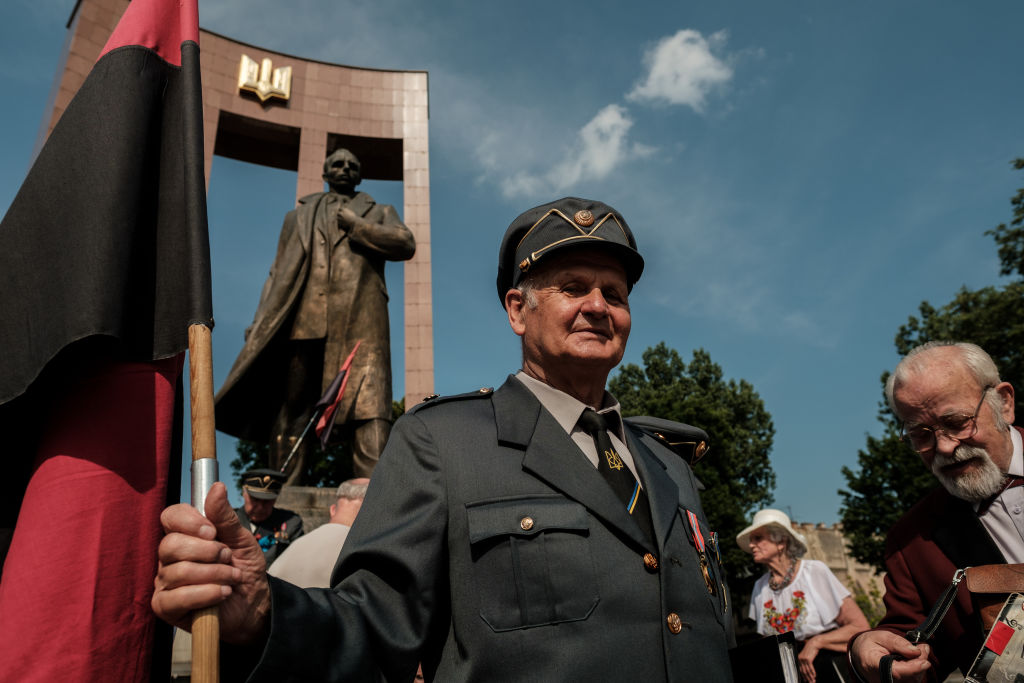
Particularly troubling is Ukraine’s continued state promotion of historical narratives centered on the Organisation of Ukrainian Nationalists and the Ukrainian Insurgent Army, formations responsible for mass killings of Polish civilians during World War II. While Brussels quickly criticizes nationalist tendencies inside the EU, it has shown little willingness to confront this aspect of Ukrainian politics.

For years, the EU presented enlargement as a rules-based process where progress depends on meeting clearly defined criteria. Candidate countries were repeatedly told membership is not a geopolitical gift but the result of sustained reforms and alignment with European standards.

Ukraine’s accelerated treatment undermines that narrative entirely. Geopolitical circumstances are now being used to justify an integration pace never granted to other candidates that invested years in meeting identical formal requirements. The contrast between how Brussels handles countries with leverage versus those without reveals an accession process driven more by political expediency than principled adherence to standards.

With information from Brussels Signal

Share:
Dimitris Papafotis
Dimitris Papafotis

Dimitris Papafotis is the editor-in-chief of NewsFire.GR. He was born and raised in Athens. He studied at the Journalism Workshop (1991-1993). He currently lives in Pyrgos, Ilia, where he has been active in radio and various newspapers, while also maintaining his personal blog, Papafotis.gr.

The European Union’s handling of Ukraine’s fast-tracked accession process has exposed a double standard that leaves Poland’s historical grievances unaddressed while rewarding Hungary’s hardball tactics, according to a recent analysis.

Hungarian Prime Minister Péter Magyar recently secured substantial concessions from Kyiv regarding the Hungarian minority in Transcarpathia after years of blocking Ukraine’s EU progress, as Brussels Signal reports. The agreement guarantees broader use of Hungarian language in education, public institutions, and local administration.

The concessions came not from any sudden Ukrainian commitment to minority rights, but because Budapest wielded veto power over opening negotiation clusters. The lesson is unmistakable: leverage matters more than principle in Brussels.

Poland Left Out in the Cold

Meanwhile, the Polish minority in Ukraine’s Lviv and Volhynia regions continues to face restrictions imposed by 2017 education reforms, with no comparable legislative relief in sight. Polish organizations have repeatedly raised concerns about limited access to mother-tongue schooling and unresolved historical issues, but these demands receive far less attention in Brussels than Hungarian complaints.

The difference is straightforward. Hungary possessed a practical pressure tool: the ability to block Ukraine’s EU path. Warsaw chose not to apply equivalent leverage. The result is that one minority obtained concrete concessions while another remains under restrictive rules.

Ukraine’s Unprecedented Fast Track

The selectivity becomes even more glaring when compared to other candidate countries. Montenegro has been negotiating since 2012 with all chapters opened yet remains largely stalled. Serbia opened accession talks in 2014 and continues facing long delays. The Skopje State waited years even after resolving its name dispute with Greece. Albania has spent over a decade in the process despite implementing multiple reform rounds. Bosnia and Herzegovina remains far from opening substantive negotiations.

Yet Ukraine received candidate status in June 2022 and saw accession negotiations formally opened by December 2023. Brussels typically justifies this exceptional treatment by citing the ongoing war, but formal membership criteria—functioning democratic institutions, rule of law, minority protection, and fighting corruption—remain applicable. European Commission reports continue highlighting serious shortcomings in these areas.

Glorifying Mass Murderers

Particularly troubling is Ukraine’s continued state promotion of historical narratives centered on the Organisation of Ukrainian Nationalists and the Ukrainian Insurgent Army, formations responsible for mass killings of Polish civilians during World War II. While Brussels quickly criticizes nationalist tendencies inside the EU, it has shown little willingness to confront this aspect of Ukrainian politics.

For years, the EU presented enlargement as a rules-based process where progress depends on meeting clearly defined criteria. Candidate countries were repeatedly told membership is not a geopolitical gift but the result of sustained reforms and alignment with European standards.

Ukraine’s accelerated treatment undermines that narrative entirely. Geopolitical circumstances are now being used to justify an integration pace never granted to other candidates that invested years in meeting identical formal requirements. The contrast between how Brussels handles countries with leverage versus those without reveals an accession process driven more by political expediency than principled adherence to standards.

With information from Brussels Signal

