Necessary Cookies

Required for the site to function. Cannot be disabled.

Analytics Cookies

Help us understand how visitors interact with our site (Google Analytics via GTM).

Marketing Cookies

Used to track visitors and deliver personalised advertisements.

We use cookies to enhance your browsing experience and analyse site traffic. By clicking Accept All, you consent to our use of cookies. Privacy Policy
NewsFire Global
Home News Europe World Christianity Culture Wars Opinion Video
Information
About Us Authors Advertising Terms & Conditions Privacy Policy Contact
R2B Media
R2B NEWSFIRE.GR PAPAFOTIS.GR THRACTION HELLENIC CONSERVATIVES RIGHT2THEBONE YT
News Europe

Grooming gangs in Germany: Boys harass girls and follow them

A Nuremberg task force is investigating eleven suspects from Syria, Bosnia, Iraq, Pakistan, and North Africa for drugging and sexually exploiting girls as young as 13 near the main railway station.

Dimitris Papafotis
Dimitris Papafotis Editor in Chief
JUNE 14, 2026 AT 3:22 PM

According to Junge Freiheit, the suspects include Syrian, Bosnian, Iraqi, Pakistani, and North African nationals. The newly established investigation team, known as “EKO Kajal,” is led by the Nuremberg-Fürth Public Prosecutor’s Office under Senior Public Prosecutor Heike Klotzbücher.

Three suspects are currently in pre-trial detention. Among them is a 22-year-old Syrian man accused of administering prescription painkillers to a girl before raping her in his apartment. Four suspects face charges including distribution of narcotics to minors and sexual offenses. The remaining suspects have not yet met the threshold for arrest warrants, Klotzbücher told the outlet.

Police in Middle Franconia confirmed to Junge Freiheit that 16 victims have been identified so far, though this figure remains subject to ongoing investigation. The youngest victim was 13 years old at the time of the abuse. Klotzbücher noted that many of the victims appear to come from difficult home environments and lack stable family support structures.

Girls Describe Entry Into Predatory Network

In interviews with the news portal Nius, affected girls described how the grooming process began. A now 14-year-old victim recounted her first encounter two years ago: she and a friend were approached by an Algerian man at the Nelson Mandela Plaza who offered them marijuana. After accepting, the men began making unwanted physical advances. The perpetrators reportedly waited for girls behind their school, which borders the plaza at the rear of the train station.

The victims described a systematic pattern: initial contact and casual greetings, followed by offers of drugs ranging from cannabis to hard synthetic substances like crystal methamphetamine. The men would then take girls to private locations where they felt protected from scrutiny. The two girls interviewed estimated the criminal network comprises between 60 and 80 individuals, with German nationals playing no role in the operation.

Railway Station Architecture Enables Criminal Activity

Nuremberg’s main railway station, a baroque-style structure built in 1906, handles an average of 130,000 travelers daily. The building’s design features numerous entrances and exits, including connections to the city center, the Königstor passage, multiple subway entrances, and the southern exit toward Nelson Mandela Plaza. This creates numerous corridors, underpasses, and poorly visible areas where suspects can move quickly or disappear unnoticed.

The combination of railway hub, shopping passage, subway junction, nightlife venue, and public gathering space makes the complex extremely difficult for law enforcement to control. With 2,300 criminal offenses recorded, it ranks among Germany’s most dangerous train stations.

Local taxi driver Erkan K., a Turkish-born resident of 25 years in Germany, told Junge Freiheit the situation has never been worse. He described young men aggressively pursuing girls and noted he would never let a daughter walk there alone in the evening.

Surveillance Measures Prove Ineffective

Despite increased police presence following national media attention, authorities struggle to contain the criminal activity. A ZDF documentary revealed officers’ own admission that they can barely control the difficult situation. The southern entrance sees large groups of drug dealers who engage in turf wars, leading to mass brawls involving improvised weapons including wooden slats, broken bottles, and knives.

Mobile camera units have been deployed in adjacent parks to displace the drug scene. However, an 18-year-old victim told Bild newspaper the cameras are useless, as dealers simply move to underpasses or blind spots. Sexual assaults, she noted, take place in private residences.

National Surge in Sexual Exploitation Cases

The Federal Criminal Police Office recorded 364 completed investigations for sexual exploitation in 2024, a 14 percent increase from the previous year and the highest level since 2000. Of the 460 registered victims, 95 percent were female. It remains unclear to what extent the current grooming phenomenon has influenced these statistics. Reports from drug assistance organizations and victim testimony suggest a massive unreported case number, though reliable estimates do not exist.

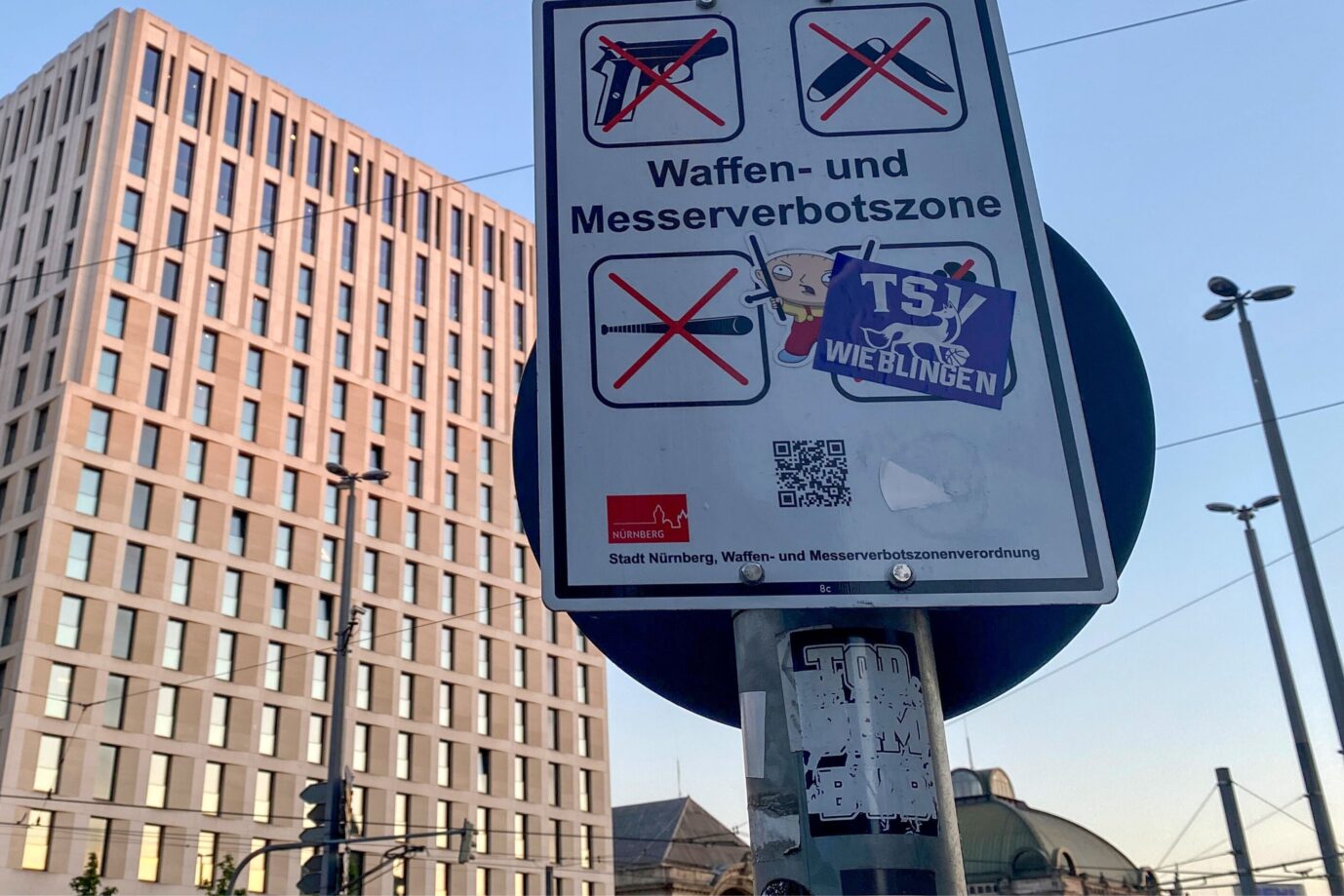
The city of Nuremberg has responded with visible security measures. Police vehicles are now stationed prominently at the main entrance, and officers conduct frequent patrols throughout the station. A weapons ban zone has been established in front of the station toward the Königstor passage, alcohol is prohibited around the building, and a cannabis ban is planned.

With information from Junge Freiheit

Share:
Dimitris Papafotis
Dimitris Papafotis

Dimitris Papafotis is the editor-in-chief of NewsFire.GR. He was born and raised in Athens. He studied at the Journalism Workshop (1991-1993). He currently lives in Pyrgos, Ilia, where he has been active in radio and various newspapers, while also maintaining his personal blog, Papafotis.gr.

According to Junge Freiheit, the suspects include Syrian, Bosnian, Iraqi, Pakistani, and North African nationals. The newly established investigation team, known as “EKO Kajal,” is led by the Nuremberg-Fürth Public Prosecutor’s Office under Senior Public Prosecutor Heike Klotzbücher.

Three suspects are currently in pre-trial detention. Among them is a 22-year-old Syrian man accused of administering prescription painkillers to a girl before raping her in his apartment. Four suspects face charges including distribution of narcotics to minors and sexual offenses. The remaining suspects have not yet met the threshold for arrest warrants, Klotzbücher told the outlet.

Police in Middle Franconia confirmed to Junge Freiheit that 16 victims have been identified so far, though this figure remains subject to ongoing investigation. The youngest victim was 13 years old at the time of the abuse. Klotzbücher noted that many of the victims appear to come from difficult home environments and lack stable family support structures.

Girls Describe Entry Into Predatory Network

In interviews with the news portal Nius, affected girls described how the grooming process began. A now 14-year-old victim recounted her first encounter two years ago: she and a friend were approached by an Algerian man at the Nelson Mandela Plaza who offered them marijuana. After accepting, the men began making unwanted physical advances. The perpetrators reportedly waited for girls behind their school, which borders the plaza at the rear of the train station.

The victims described a systematic pattern: initial contact and casual greetings, followed by offers of drugs ranging from cannabis to hard synthetic substances like crystal methamphetamine. The men would then take girls to private locations where they felt protected from scrutiny. The two girls interviewed estimated the criminal network comprises between 60 and 80 individuals, with German nationals playing no role in the operation.

Railway Station Architecture Enables Criminal Activity

Nuremberg’s main railway station, a baroque-style structure built in 1906, handles an average of 130,000 travelers daily. The building’s design features numerous entrances and exits, including connections to the city center, the Königstor passage, multiple subway entrances, and the southern exit toward Nelson Mandela Plaza. This creates numerous corridors, underpasses, and poorly visible areas where suspects can move quickly or disappear unnoticed.

The combination of railway hub, shopping passage, subway junction, nightlife venue, and public gathering space makes the complex extremely difficult for law enforcement to control. With 2,300 criminal offenses recorded, it ranks among Germany’s most dangerous train stations.

Local taxi driver Erkan K., a Turkish-born resident of 25 years in Germany, told Junge Freiheit the situation has never been worse. He described young men aggressively pursuing girls and noted he would never let a daughter walk there alone in the evening.

Surveillance Measures Prove Ineffective

Despite increased police presence following national media attention, authorities struggle to contain the criminal activity. A ZDF documentary revealed officers’ own admission that they can barely control the difficult situation. The southern entrance sees large groups of drug dealers who engage in turf wars, leading to mass brawls involving improvised weapons including wooden slats, broken bottles, and knives.

Mobile camera units have been deployed in adjacent parks to displace the drug scene. However, an 18-year-old victim told Bild newspaper the cameras are useless, as dealers simply move to underpasses or blind spots. Sexual assaults, she noted, take place in private residences.

National Surge in Sexual Exploitation Cases

The Federal Criminal Police Office recorded 364 completed investigations for sexual exploitation in 2024, a 14 percent increase from the previous year and the highest level since 2000. Of the 460 registered victims, 95 percent were female. It remains unclear to what extent the current grooming phenomenon has influenced these statistics. Reports from drug assistance organizations and victim testimony suggest a massive unreported case number, though reliable estimates do not exist.

The city of Nuremberg has responded with visible security measures. Police vehicles are now stationed prominently at the main entrance, and officers conduct frequent patrols throughout the station. A weapons ban zone has been established in front of the station toward the Königstor passage, alcohol is prohibited around the building, and a cannabis ban is planned.

With information from Junge Freiheit

