Necessary Cookies

Required for the site to function. Cannot be disabled.

Analytics Cookies

Help us understand how visitors interact with our site (Google Analytics via GTM).

Marketing Cookies

Used to track visitors and deliver personalised advertisements.

We use cookies to enhance your browsing experience and analyse site traffic. By clicking Accept All, you consent to our use of cookies. Privacy Policy
NewsFire Global
Home News Europe World Christianity Culture Wars Opinion Video
Information
About Us Authors Advertising Terms & Conditions Privacy Policy Contact
R2B Media
R2B NEWSFIRE.GR PAPAFOTIS.GR THRACTION HELLENIC CONSERVATIVES RIGHT2THEBONE YT
Opinion Europe

Giannis Kouriannidis: The Sellout of Stock Market Dominance

Greece's stock exchange acquisition by Euronext raises concerns about reduced autonomy and prioritization as the country becomes one of many markets with minimal weight in group decisions.

Newsroom
Newsroom Staff Writer
JULY 16, 2026 AT 6:30 PM

According to available data, Greeks who carry out even a single transaction on the Greek Stock Exchange number just a few hundred thousand people, corresponding to approximately 3-5% of our country’s adult population. This is one of the lowest percentages in Europe, and the 1999 deception of citizens bears no small responsibility for this, with the then Prime Minister Konstantinos Simitis bearing exclusive responsibility.

The percentage of Greeks who know how the Stock Exchange actually works is also very low, and it is characteristic that sources from the OECD and financial institutions rank Greece below the average of many developed countries regarding its citizens’ financial literacy.

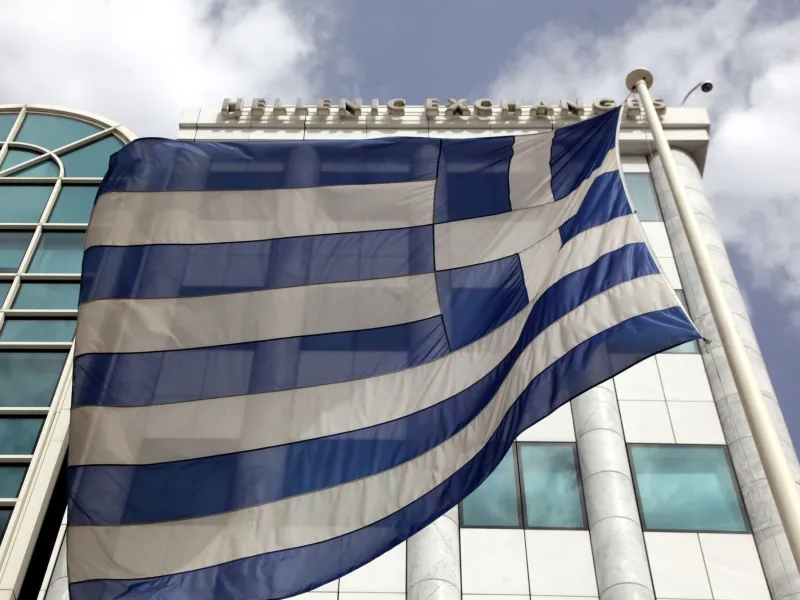
Obviously because of all this, few people know that as of November 2025, the Public Company “Hellenic Exchanges” (ATHEX) was acquired by Euronext, which is a pan-European group of stock exchanges and one of the largest European managers of stock markets.

This means that, despite Euronext’s “commitment” to maintain ATHEX’s Greek headquarters, tax residency and a significant operational presence in Athens, it is certain (and is already happening) that at least some support functions will no longer be performed exclusively by staff in Greece.

This is to be expected, since whatever operational autonomy existed until now is being replaced by integrated group structures, something that will gradually lead to the loss of specialized personnel in our country.

The greatest danger from this development, however, is that Greece now becomes “one of many markets” and moreover with the smallest stock market value, which means that the needs of the Greek market will not carry the same weight as the larger ones.

And because strategic decisions on investments, pricing policy, development, etc. will now be made at the group level, one can easily understand that the Greek market will now be the poor relative and the real needs of Greek companies, especially small and medium-sized ones, will be of little importance to foreign investors.

In the year the acquisition of the Greek Stock Exchange was completed (2025), foreign investors held 69% of its total capitalization. This means that a large part of the decisions to buy and sell shares is made outside Greece.

One can easily understand that in periods of international uncertainty or, even worse, a national crisis, large international portfolios may reduce their exposure to smaller markets, without the fundamentals of Greek enterprises necessarily having changed.

And obviously integration into a broader pan-European platform can facilitate faster reallocation of capital between markets.

Additionally, because greater international exposure means greater dependence, while at the same time foreigners tend to invest mainly in companies with large capitalization and high liquidity, there is a real risk that small and medium-sized Greek enterprises will face a serious liquidity problem at some point.

So while the Stock Exchange may be attractive to few Greeks, those who will be called upon to face any unpleasant developments from the sell-off of the Greek Stock Exchange to Euronext will be the millions of Greeks whose lives are affected directly or indirectly by the viability of small and medium-sized enterprises, whether they are listed on the Stock Exchange or not, since the second category includes very many whose turnover depends on the viability of listed companies. The risk now takes on national dimensions!

Giannis Ch. Kourianidis

Director of Endochora magazine
endohora@yahoo.gr

Share:
Newsroom
Newsroom

NewsFire.GR is a website created with the hope that the media will rediscover their true identity, which is none other than informing the public about the real stakes of our times. Journalism and political analysis must hold power accountable, not serve it.

According to available data, Greeks who carry out even a single transaction on the Greek Stock Exchange number just a few hundred thousand people, corresponding to approximately 3-5% of our country’s adult population. This is one of the lowest percentages in Europe, and the 1999 deception of citizens bears no small responsibility for this, with the then Prime Minister Konstantinos Simitis bearing exclusive responsibility.

The percentage of Greeks who know how the Stock Exchange actually works is also very low, and it is characteristic that sources from the OECD and financial institutions rank Greece below the average of many developed countries regarding its citizens’ financial literacy.

Obviously because of all this, few people know that as of November 2025, the Public Company “Hellenic Exchanges” (ATHEX) was acquired by Euronext, which is a pan-European group of stock exchanges and one of the largest European managers of stock markets.

This means that, despite Euronext’s “commitment” to maintain ATHEX’s Greek headquarters, tax residency and a significant operational presence in Athens, it is certain (and is already happening) that at least some support functions will no longer be performed exclusively by staff in Greece.

This is to be expected, since whatever operational autonomy existed until now is being replaced by integrated group structures, something that will gradually lead to the loss of specialized personnel in our country.

The greatest danger from this development, however, is that Greece now becomes “one of many markets” and moreover with the smallest stock market value, which means that the needs of the Greek market will not carry the same weight as the larger ones.

And because strategic decisions on investments, pricing policy, development, etc. will now be made at the group level, one can easily understand that the Greek market will now be the poor relative and the real needs of Greek companies, especially small and medium-sized ones, will be of little importance to foreign investors.

In the year the acquisition of the Greek Stock Exchange was completed (2025), foreign investors held 69% of its total capitalization. This means that a large part of the decisions to buy and sell shares is made outside Greece.

One can easily understand that in periods of international uncertainty or, even worse, a national crisis, large international portfolios may reduce their exposure to smaller markets, without the fundamentals of Greek enterprises necessarily having changed.

And obviously integration into a broader pan-European platform can facilitate faster reallocation of capital between markets.

Additionally, because greater international exposure means greater dependence, while at the same time foreigners tend to invest mainly in companies with large capitalization and high liquidity, there is a real risk that small and medium-sized Greek enterprises will face a serious liquidity problem at some point.

So while the Stock Exchange may be attractive to few Greeks, those who will be called upon to face any unpleasant developments from the sell-off of the Greek Stock Exchange to Euronext will be the millions of Greeks whose lives are affected directly or indirectly by the viability of small and medium-sized enterprises, whether they are listed on the Stock Exchange or not, since the second category includes very many whose turnover depends on the viability of listed companies. The risk now takes on national dimensions!

Giannis Ch. Kourianidis

Director of Endochora magazine

endohora@yahoo.gr