Necessary Cookies

Required for the site to function. Cannot be disabled.

Analytics Cookies

Help us understand how visitors interact with our site (Google Analytics via GTM).

Marketing Cookies

Used to track visitors and deliver personalised advertisements.

We use cookies to enhance your browsing experience and analyse site traffic. By clicking Accept All, you consent to our use of cookies. Privacy Policy
NewsFire Global
Home News Europe World Christianity Culture Wars Opinion Video
Information
About Us Authors Advertising Terms & Conditions Privacy Policy Contact
R2B Media
R2B NEWSFIRE.GR PAPAFOTIS.GR THRACTION HELLENIC CONSERVATIVES RIGHT2THEBONE YT
News Europe

Germany’s Perfect Storm of Social Decline

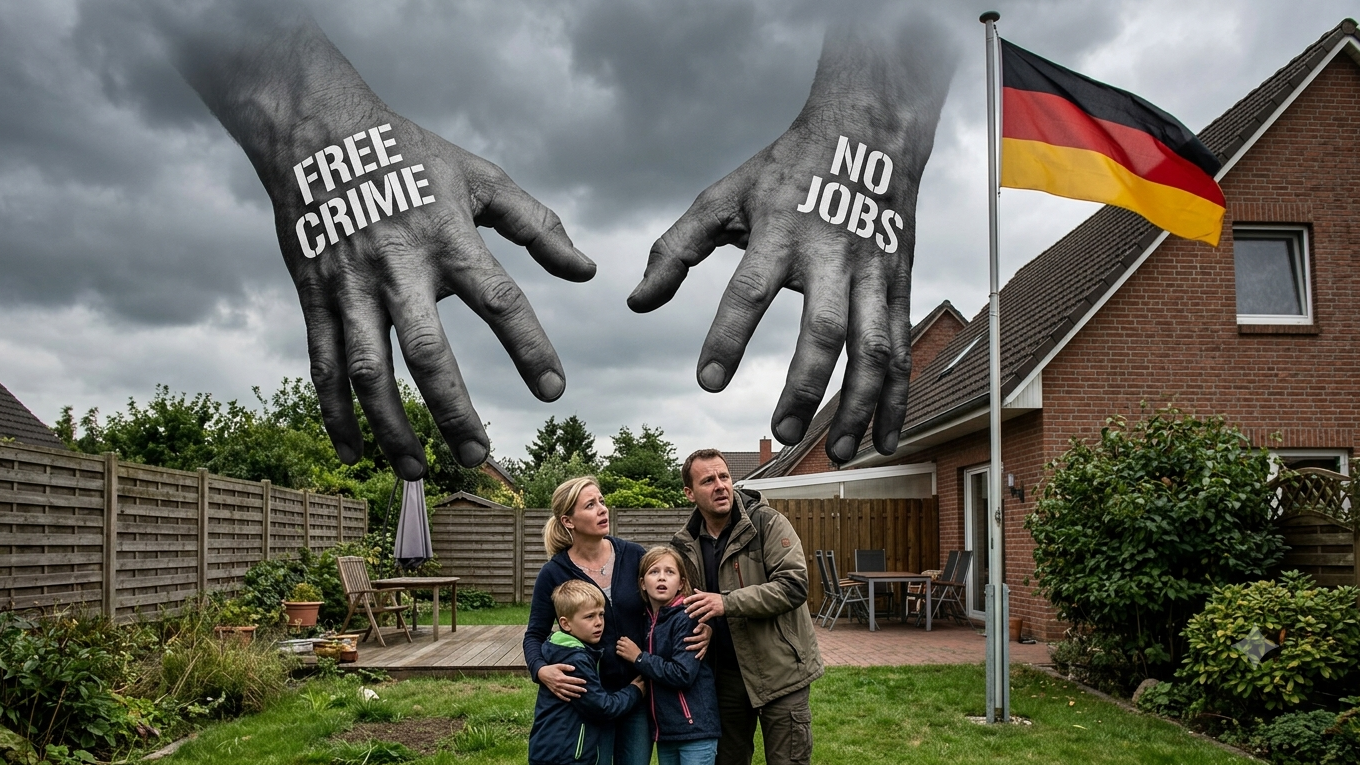
German police officers are privately expressing fears about rampant crime and failed migration policies while feeling unable to speak openly about what they describe as a breakdown of order.

Dimitris Papafotis
Dimitris Papafotis Editor in Chief
JUNE 24, 2026 AT 2:59 PM

According to The European Conservative, journalist Liv von Boetticher has uncovered a disturbing reality behind Germany’s official media facade. In a report originally published in Die Welt on June 19th, von Boetticher describes how German police officers revealed a starkly different account of conditions in their country once official interviews concluded and cameras stopped recording.

The implications are sobering. Germany has become a society where law enforcement personnel feel compelled to maintain a strict divide between their public statements and private beliefs. In a functioning democracy with genuine freedom of expression, police officers would not need to hide their professional assessments from public view.

Von Boetticher’s investigation reveals that once off camera, officers shared what she characterized as accounts of fear and anger, violence, loss of control, and failed migration policies. They expressed a profound sense of abandonment by both political leadership and society at large.

The assessment from Germany’s police force is grim. In what von Boetticher describes as a virtually unanimous opinion across all German states, law enforcement officers believe their country is disappearing. Many told her the government has created conditions that allow serious criminals to operate with impunity. Some officers went so far as to describe Germany as lost or finished.

This is not merely disgruntlement from politically conservative officers. Von Boetticher notes these views come from personnel who have survived a decade-long campaign by the German government to purge national conservatives and patriots from law enforcement ranks. There is an explicit ban preventing anyone sympathetic to the conservative-nationalist Alternative for Germany party from serving as a police officer.

The irony is striking. With AfD trending toward becoming Germany’s largest party, the officers who remain after the political purge are politically more leftist than the German electorate itself. Yet even these individuals hold opinions that could cost them their careers if stated publicly.

Two Crises Converging

The police crisis exists alongside broader deterioration in German society. Private life is suffering under economic stagnation and a withering welfare state. Citizens face unending tax increases while social benefits erode and become increasingly unreliable.

Simultaneously, German politics has become increasingly tyrannical. Any political opinion that deviates even marginally from government orthodoxy faces persecution. The suppression extends deep into state institutions, where even the most loyal servants feel unable to speak honestly about the conditions they face.

The situation reflects the application of Marxist conflict theory to policing. Because officers represent authority and power under this framework, law enforcement itself must be suppressed for the supposed liberation of the oppressed—in this case, criminals.

A Society Beyond Normal Police Work

When individuals with leftist political views begin acknowledging they were wrong, the deterioration has advanced far beyond the point where conventional police work can be effective. The politically correct restrictions imposed on German law enforcement only compound the problem.

What emerges is a government actively nullifying its own law-and-order system. Freedom of speech faces increasing curtailment. The practice of Berufsverbot—workplace bans previously used in anti-terrorist campaigns—has been resurrected for political purposes.

Von Boetticher’s report offers a rare glimpse behind the official narrative and reveals the forces driving European societal disintegration. It shows a country where those charged with maintaining order have lost faith in their mission and their government, yet dare not say so publicly.

The German government appears tone-deaf to warnings from its own law enforcement personnel. Police officers describe working in grim and even sickening conditions while feeling their professional and personal lives have been so curtailed they cannot point to the reality they face daily.

This represents more than a crisis in policing. It signals the breakdown of the social contract between a government and its citizens, including those who serve in its most critical institutions. When even politically vetted officers believe their country is lost, the situation has reached a critical threshold.

With information from The European Conservative

Share:
Dimitris Papafotis
Dimitris Papafotis

Dimitris Papafotis is the editor-in-chief of NewsFire.GR. He was born and raised in Athens. He studied at the Journalism Workshop (1991-1993). He currently lives in Pyrgos, Ilia, where he has been active in radio and various newspapers, while also maintaining his personal blog, Papafotis.gr.

According to The European Conservative, journalist Liv von Boetticher has uncovered a disturbing reality behind Germany’s official media facade. In a report originally published in Die Welt on June 19th, von Boetticher describes how German police officers revealed a starkly different account of conditions in their country once official interviews concluded and cameras stopped recording.

The implications are sobering. Germany has become a society where law enforcement personnel feel compelled to maintain a strict divide between their public statements and private beliefs. In a functioning democracy with genuine freedom of expression, police officers would not need to hide their professional assessments from public view.

Von Boetticher’s investigation reveals that once off camera, officers shared what she characterized as accounts of fear and anger, violence, loss of control, and failed migration policies. They expressed a profound sense of abandonment by both political leadership and society at large.

The assessment from Germany’s police force is grim. In what von Boetticher describes as a virtually unanimous opinion across all German states, law enforcement officers believe their country is disappearing. Many told her the government has created conditions that allow serious criminals to operate with impunity. Some officers went so far as to describe Germany as lost or finished.

This is not merely disgruntlement from politically conservative officers. Von Boetticher notes these views come from personnel who have survived a decade-long campaign by the German government to purge national conservatives and patriots from law enforcement ranks. There is an explicit ban preventing anyone sympathetic to the conservative-nationalist Alternative for Germany party from serving as a police officer.

The irony is striking. With AfD trending toward becoming Germany’s largest party, the officers who remain after the political purge are politically more leftist than the German electorate itself. Yet even these individuals hold opinions that could cost them their careers if stated publicly.

Two Crises Converging

The police crisis exists alongside broader deterioration in German society. Private life is suffering under economic stagnation and a withering welfare state. Citizens face unending tax increases while social benefits erode and become increasingly unreliable.

Simultaneously, German politics has become increasingly tyrannical. Any political opinion that deviates even marginally from government orthodoxy faces persecution. The suppression extends deep into state institutions, where even the most loyal servants feel unable to speak honestly about the conditions they face.

The situation reflects the application of Marxist conflict theory to policing. Because officers represent authority and power under this framework, law enforcement itself must be suppressed for the supposed liberation of the oppressed—in this case, criminals.

A Society Beyond Normal Police Work

When individuals with leftist political views begin acknowledging they were wrong, the deterioration has advanced far beyond the point where conventional police work can be effective. The politically correct restrictions imposed on German law enforcement only compound the problem.

What emerges is a government actively nullifying its own law-and-order system. Freedom of speech faces increasing curtailment. The practice of Berufsverbot—workplace bans previously used in anti-terrorist campaigns—has been resurrected for political purposes.

Von Boetticher’s report offers a rare glimpse behind the official narrative and reveals the forces driving European societal disintegration. It shows a country where those charged with maintaining order have lost faith in their mission and their government, yet dare not say so publicly.

The German government appears tone-deaf to warnings from its own law enforcement personnel. Police officers describe working in grim and even sickening conditions while feeling their professional and personal lives have been so curtailed they cannot point to the reality they face daily.

This represents more than a crisis in policing. It signals the breakdown of the social contract between a government and its citizens, including those who serve in its most critical institutions. When even politically vetted officers believe their country is lost, the situation has reached a critical threshold.

With information from The European Conservative

