Necessary Cookies

Required for the site to function. Cannot be disabled.

Analytics Cookies

Help us understand how visitors interact with our site (Google Analytics via GTM).

Marketing Cookies

Used to track visitors and deliver personalised advertisements.

We use cookies to enhance your browsing experience and analyse site traffic. By clicking Accept All, you consent to our use of cookies. Privacy Policy
NewsFire Global
Home News Europe World Christianity Culture Wars Opinion Video
Information
About Us Authors Advertising Terms & Conditions Privacy Policy Contact
R2B Media
R2B NEWSFIRE.GR PAPAFOTIS.GR THRACTION HELLENIC CONSERVATIVES RIGHT2THEBONE YT
News Europe

German Democracy and the Docta Ignorantia

A German government program called Demokratie leben! has been found funding 34 organizations with extremist ties, raising questions about taxpayer money supporting political activity under civic education.

Dimitris Papafotis
Dimitris Papafotis Editor in Chief
AUGUST 2, 2026 AT 4:51 PM

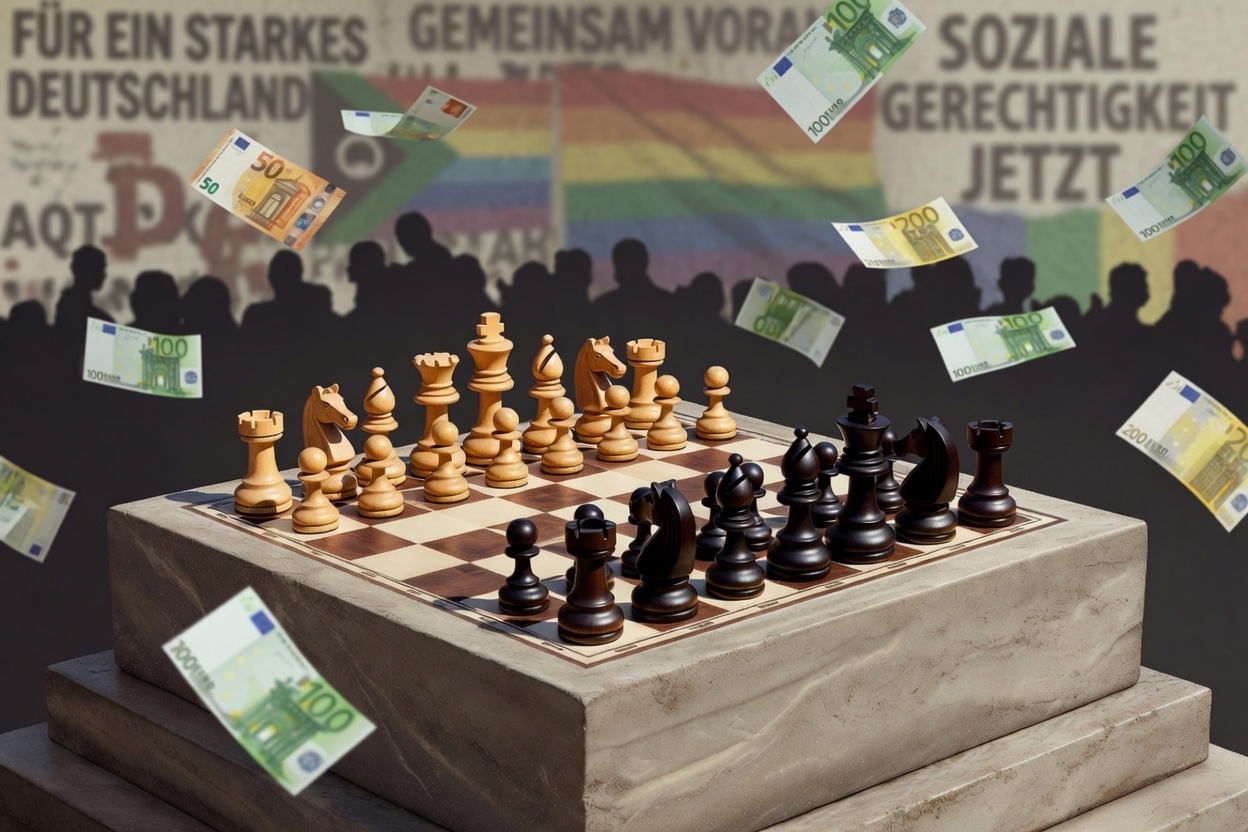
The initiative known as Demokratie leben! (Living Democracy!), operational since 2015, receives substantial funding from the Federal Ministry for Family Affairs. According to The European Conservative, the program was allocated approximately 190 million euros in 2026 alone, all drawn from German taxpayers.

Since its inception, patriotic opposition groups have consistently criticized the project for what they describe as a severe lack of transparency and the use of public funds for covert political operations. Most concerning, critics have long alleged that money from the program has flowed into networks connected to violence-prone extremist organizations.

These allegations have now been substantiated. Authorities have confirmed the existence of what they term “findings relevant to the protection of the constitution” in no fewer than 34 cases involving organizations that receive grants from the program. The exact nature of these constitutional protection findings remains unclear, but given the Federal Office for the Protection of the Constitution’s well-documented left-leaning bias, the classification of left-wing organizations under this category suggests involvement well beyond peaceful political discourse.

Left-wing extremist violence represents a massive problem in Germany, but the issues surrounding Demokratie leben! extend far beyond security concerns. The program itself embodies a fundamental misunderstanding, or perhaps deliberate distortion, of what democracy actually means.

The Ideological Overloading of Democracy

Contemporary centre-left advocates have transformed democracy from a form of government into an all-encompassing ideology. In their framework, democracy must be beautiful, kind, diverse, anxiety-reducing, social, transgender, and “woke.” Democracy, they insist, belongs exclusively to those who define it in these terms. Democracy becomes everything and can be everything—allegedly paradise on earth.

This represents a curious departure from reality. Democracy is fundamentally a form of state organization, a set of procedural rules governing how political power is exercised and transferred. No one would describe a board game like chess or Risk as diverse, kind, transgender, or woke. Such characterizations would be considered eccentric at best. Yet the analogy is entirely appropriate. Rules are rules, whether one chooses to follow them or not.

Democracy is indeed merely a structure, but it is a structure that can guarantee the greatest possible degree of freedom and justice among all forms of government. This does not transform democracy into a personification of Greek eudaimonia or Roman Iustitia. Democracy is neither divine nor a substitute for religion.

The Danger of Infantilization

Dismissing this deliberate overloading of the concept of democracy as harmless play would be a serious mistake. The infantilization of democracy and its ideological overburdening ultimately make the actual, sober concept of democracy appear cold and austere when people realize that democracy is not a god, not something divine, and not a replacement for faith.

Life itself is frequently undemocratic. Workplace decisions are typically made by individual supervisors, not committees. Democracy is not a universal tool applicable to every conceivable situation. Nevertheless, the consequences of democracy—the genuine and enforceable claim to rights—may be regarded as the most outstanding culmination of European civilization and culture.

Yet democracy requires the explicit articulation, interpretation, and application of political opinion within clear boundaries. These boundaries represent a deliberate restraint in thought itself, a conscious recognition of human limitation and imperfection.

State Financing of Political Activism

The Demokratie leben! program exemplifies how state resources can be weaponized to advance a particular ideological vision while marginalizing legitimate political opposition. By channeling nearly 200 million euros annually into organizations with documented extremist connections, the German government has effectively created a state-funded apparatus for political activism that operates outside normal democratic accountability.

The confirmation that 34 grant recipients have constitutional protection findings against them validates longstanding concerns about the program’s true purpose. Rather than promoting genuine democratic discourse and civic participation, the initiative appears designed to enforce ideological conformity and subsidize groups aligned with the government’s preferred political narrative.

This represents not the strengthening of democracy but its corruption—the transformation of democratic institutions into vehicles for partisan political objectives funded by citizens who may fundamentally disagree with the activities being supported in their name.

With information from The European Conservative

Share:
Dimitris Papafotis
Dimitris Papafotis

Dimitris Papafotis is the editor-in-chief of NewsFire.GR. He was born and raised in Athens. He studied at the Journalism Workshop (1991-1993). He currently lives in Pyrgos, Ilia, where he has been active in radio and various newspapers, while also maintaining his personal blog, Papafotis.gr.

The initiative known as Demokratie leben! (Living Democracy!), operational since 2015, receives substantial funding from the Federal Ministry for Family Affairs. According to The European Conservative, the program was allocated approximately 190 million euros in 2026 alone, all drawn from German taxpayers.

Since its inception, patriotic opposition groups have consistently criticized the project for what they describe as a severe lack of transparency and the use of public funds for covert political operations. Most concerning, critics have long alleged that money from the program has flowed into networks connected to violence-prone extremist organizations.

These allegations have now been substantiated. Authorities have confirmed the existence of what they term “findings relevant to the protection of the constitution” in no fewer than 34 cases involving organizations that receive grants from the program. The exact nature of these constitutional protection findings remains unclear, but given the Federal Office for the Protection of the Constitution’s well-documented left-leaning bias, the classification of left-wing organizations under this category suggests involvement well beyond peaceful political discourse.

Left-wing extremist violence represents a massive problem in Germany, but the issues surrounding Demokratie leben! extend far beyond security concerns. The program itself embodies a fundamental misunderstanding, or perhaps deliberate distortion, of what democracy actually means.

The Ideological Overloading of Democracy

Contemporary centre-left advocates have transformed democracy from a form of government into an all-encompassing ideology. In their framework, democracy must be beautiful, kind, diverse, anxiety-reducing, social, transgender, and “woke.” Democracy, they insist, belongs exclusively to those who define it in these terms. Democracy becomes everything and can be everything—allegedly paradise on earth.

This represents a curious departure from reality. Democracy is fundamentally a form of state organization, a set of procedural rules governing how political power is exercised and transferred. No one would describe a board game like chess or Risk as diverse, kind, transgender, or woke. Such characterizations would be considered eccentric at best. Yet the analogy is entirely appropriate. Rules are rules, whether one chooses to follow them or not.

Democracy is indeed merely a structure, but it is a structure that can guarantee the greatest possible degree of freedom and justice among all forms of government. This does not transform democracy into a personification of Greek eudaimonia or Roman Iustitia. Democracy is neither divine nor a substitute for religion.

The Danger of Infantilization

Dismissing this deliberate overloading of the concept of democracy as harmless play would be a serious mistake. The infantilization of democracy and its ideological overburdening ultimately make the actual, sober concept of democracy appear cold and austere when people realize that democracy is not a god, not something divine, and not a replacement for faith.

Life itself is frequently undemocratic. Workplace decisions are typically made by individual supervisors, not committees. Democracy is not a universal tool applicable to every conceivable situation. Nevertheless, the consequences of democracy—the genuine and enforceable claim to rights—may be regarded as the most outstanding culmination of European civilization and culture.

Yet democracy requires the explicit articulation, interpretation, and application of political opinion within clear boundaries. These boundaries represent a deliberate restraint in thought itself, a conscious recognition of human limitation and imperfection.

State Financing of Political Activism

The Demokratie leben! program exemplifies how state resources can be weaponized to advance a particular ideological vision while marginalizing legitimate political opposition. By channeling nearly 200 million euros annually into organizations with documented extremist connections, the German government has effectively created a state-funded apparatus for political activism that operates outside normal democratic accountability.

The confirmation that 34 grant recipients have constitutional protection findings against them validates longstanding concerns about the program’s true purpose. Rather than promoting genuine democratic discourse and civic participation, the initiative appears designed to enforce ideological conformity and subsidize groups aligned with the government’s preferred political narrative.

This represents not the strengthening of democracy but its corruption—the transformation of democratic institutions into vehicles for partisan political objectives funded by citizens who may fundamentally disagree with the activities being supported in their name.

With information from The European Conservative

