Necessary Cookies

Required for the site to function. Cannot be disabled.

Analytics Cookies

Help us understand how visitors interact with our site (Google Analytics via GTM).

Marketing Cookies

Used to track visitors and deliver personalised advertisements.

We use cookies to enhance your browsing experience and analyse site traffic. By clicking Accept All, you consent to our use of cookies. Privacy Policy
NewsFire Global
Home News Europe World Christianity Culture Wars Opinion Video
Information
About Us Authors Advertising Terms & Conditions Privacy Policy Contact
R2B Media
R2B NEWSFIRE.GR PAPAFOTIS.GR THRACTION HELLENIC CONSERVATIVES RIGHT2THEBONE YT
News World

French TV Executive Slams ‘Untouchables’ at State Broadcasters

A French parliamentary inquiry exposed what investigators call a protected elite within state broadcasting, revealing opaque spending of billions in public funds and cozy relationships among executives and media figures.
Stefanos Banos
Stefanos Banos Staff Writer
JUNE 19, 2026 AT 4:25 AM

A parliamentary inquiry commission spent several months examining three central questions about French public broadcasting: its financing, operations, and political neutrality. The investigation has now resulted in a explosive book exposing what its authors describe as a protected elite within France’s state-funded media apparatus.

According to Valeurs Actuelles, executives from France Télévisions, officials from Radio France, hosts, producers and journalists were all heard under oath at the National Assembly. From these hearings, Éric Morillot and Michel Goldstein produced a book titled “Les intouchables de l’audiovisuel public” (The Untouchables of Public Broadcasting), published by L’Artilleur.

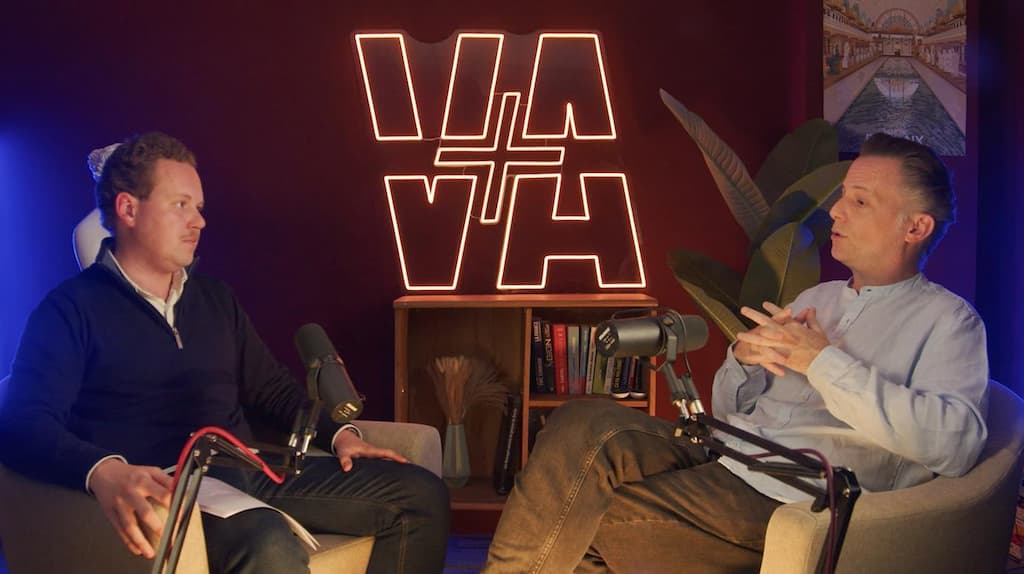
Speaking to VA+, Morillot outlined what he considers the major problem areas within French public broadcasting. For him, the issue goes far beyond simple editorial criticism. It concerns how billions of euros in public money are being spent within a system he describes as opaque and heavily protected. Morillot emphasized that French citizens have every right to ask questions, particularly since public broadcasting remains taxpayer-funded despite the abolition of the broadcasting license fee.

A System of Cozy Relationships

The journalist denounced what he characterized as collusion between certain producers, executives and media figures. He specifically called out Nagui, Patrick Cohen, Léa Salamé, France TV Slash, and certain private producers who work extensively with France Télévisions. The parliamentary commission, Morillot argued, revealed decision-making and financing circuits that remain largely incomprehensible to the general public.

The investigation also exposed questionable spending practices, including expenses related to the Cannes Film Festival and the production conditions of certain programs. Morillot even referenced his own legal conflict with the program “Quelle époque!”, which he accused of using footage from his channel Les Incorrectibles without following applicable regulations.

Progressive Ideology Embedded in Public Service

The other major focus of Morillot’s critique concerns the political neutrality of public broadcasting. He contends that the public service effectively promotes a progressive agenda, particularly through content on Radio France, France Inter, and France Télévisions.

As Valeurs Actuelles reports, Morillot cited the former director of France Inter, Laurence Bloch, who had explained that progressivism was not pulled out of a hat, but came from the broadcasting specifications themselves.

For Morillot, these specifications are precisely what need revision. He argues that public broadcasting does not simply need a debate about privatization or reducing its scope, but rather a political and institutional overhaul of its core missions. He maintains that everything in broadcasting is political, and calls for a clear redefinition of neutrality, pluralism, and the use of public funds.

Billions in Public Money, Little Accountability

The underlying theme of Morillot’s critique is financial opacity. Despite consuming billions in public funds, France’s state broadcasting system operates with minimal transparency and accountability to taxpayers. The parliamentary hearings under oath were meant to pierce this veil, revealing networks of privilege and ideological alignment that insulate certain media figures from scrutiny.

The book represents a comprehensive examination of the inner workings of French public broadcasting, combining allegations of opacity with ideological criticism and a call for fundamental reform of the public service model.

With information from Valeurs Actuelles
Share:
Stefanos Banos
Stefanos Banos

Stefanos Banos was born in Piraeus and is an editor at NewsFire.GR, specializing in political analysis and international relations. He graduated from the Department of Communication and Media at the University of Bremen in Germany, where he also completed his Master of Arts in Communication and Media Studies. Married to Zoi, he is a proud father of three boys.

A parliamentary inquiry commission spent several months examining three central questions about French public broadcasting: its financing, operations, and political neutrality. The investigation has now resulted in a explosive book exposing what its authors describe as a protected elite within France’s state-funded media apparatus.

According to Valeurs Actuelles, executives from France Télévisions, officials from Radio France, hosts, producers and journalists were all heard under oath at the National Assembly. From these hearings, Éric Morillot and Michel Goldstein produced a book titled “Les intouchables de l’audiovisuel public” (The Untouchables of Public Broadcasting), published by L’Artilleur.

Speaking to VA+, Morillot outlined what he considers the major problem areas within French public broadcasting. For him, the issue goes far beyond simple editorial criticism. It concerns how billions of euros in public money are being spent within a system he describes as opaque and heavily protected. Morillot emphasized that French citizens have every right to ask questions, particularly since public broadcasting remains taxpayer-funded despite the abolition of the broadcasting license fee.

A System of Cozy Relationships

The journalist denounced what he characterized as collusion between certain producers, executives and media figures. He specifically called out Nagui, Patrick Cohen, Léa Salamé, France TV Slash, and certain private producers who work extensively with France Télévisions. The parliamentary commission, Morillot argued, revealed decision-making and financing circuits that remain largely incomprehensible to the general public.

The investigation also exposed questionable spending practices, including expenses related to the Cannes Film Festival and the production conditions of certain programs. Morillot even referenced his own legal conflict with the program “Quelle époque!”, which he accused of using footage from his channel Les Incorrectibles without following applicable regulations.

Progressive Ideology Embedded in Public Service

The other major focus of Morillot’s critique concerns the political neutrality of public broadcasting. He contends that the public service effectively promotes a progressive agenda, particularly through content on Radio France, France Inter, and France Télévisions.

As Valeurs Actuelles reports, Morillot cited the former director of France Inter, Laurence Bloch, who had explained that progressivism was not pulled out of a hat, but came from the broadcasting specifications themselves.

For Morillot, these specifications are precisely what need revision. He argues that public broadcasting does not simply need a debate about privatization or reducing its scope, but rather a political and institutional overhaul of its core missions. He maintains that everything in broadcasting is political, and calls for a clear redefinition of neutrality, pluralism, and the use of public funds.

Billions in Public Money, Little Accountability

The underlying theme of Morillot’s critique is financial opacity. Despite consuming billions in public funds, France’s state broadcasting system operates with minimal transparency and accountability to taxpayers. The parliamentary hearings under oath were meant to pierce this veil, revealing networks of privilege and ideological alignment that insulate certain media figures from scrutiny.

The book represents a comprehensive examination of the inner workings of French public broadcasting, combining allegations of opacity with ideological criticism and a call for fundamental reform of the public service model.

With information from Valeurs Actuelles