Necessary Cookies

Required for the site to function. Cannot be disabled.

Analytics Cookies

Help us understand how visitors interact with our site (Google Analytics via GTM).

Marketing Cookies

Used to track visitors and deliver personalised advertisements.

We use cookies to enhance your browsing experience and analyse site traffic. By clicking Accept All, you consent to our use of cookies. Privacy Policy
NewsFire Global
Home News Europe World Christianity Culture Wars Opinion Video
Information
About Us Authors Advertising Terms & Conditions Privacy Policy Contact
R2B Media
R2B NEWSFIRE.GR PAPAFOTIS.GR THRACTION HELLENIC CONSERVATIVES RIGHT2THEBONE YT
News Europe

French Boost for Greece-Cyprus Power Grid Project

A major French investment group has acquired a majority stake in the Great Sea Interconnector project linking Greece and Cyprus, ending the island's energy isolation despite geopolitical tensions with Turkey.

Dimitris Papafotis
Dimitris Papafotis Editor in Chief
AUGUST 5, 2026 AT 8:14 PM

Meridiam, the French investment firm, formalized its entry into the Great Sea Interconnector on Wednesday through an agreement signed at the Greek prime minister’s office in Athens, according to Kathimerini (EN). Prime Minister Kyriakos Mitsotakis attended the signing ceremony, underscoring the strategic weight Athens places on the project.

Mitsotakis characterized the development as an important step forward for what he described as a project of strategic importance not only for Greece and Cyprus but for Europe as a whole. The Greek leader emphasized that the interconnector will effectively end the energy isolation that Cyprus has long endured.

Meridiam brings substantial capital and deep experience in large-scale international infrastructure projects to the table. The French firm’s involvement significantly amplifies French strategic interest in the eastern Mediterranean energy corridor, joining compatriot company Nexans, which is already participating in the project.

Seabed Surveys and Geopolitical Sensitivities

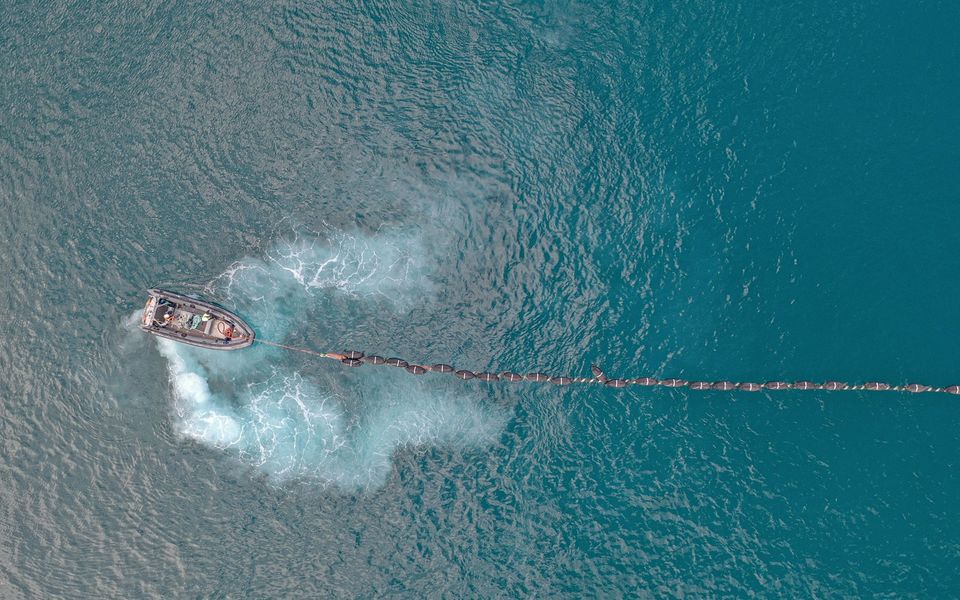
Greece’s national power grid operator ADMIE, the Great Sea Interconnector entity, and Nexans are set to sign a trilateral agreement to conduct seabed surveys, as Kathimerini (EN) reports. This phase represents one of the most technically demanding and geopolitically sensitive stages of the entire undertaking.

Previous attempts to extend surveys into international waters have drawn hostile reactions from Turkey, reflecting the longstanding dispute between Athens and Ankara over maritime zones in the eastern Mediterranean. The project’s progression into this survey phase places French financial interests directly into a region where Turkey has repeatedly challenged Greek and Cypriot sovereign rights.

Financial Structure and Cost Allocation

The Great Sea Interconnector carries an estimated price tag of 1.9 billion euros. The European Union has committed 657 million euros to the project, leaving the remainder to be financed through equity contributions, borrowing, and a regulated cost recovery mechanism.

Cyprus will shoulder 63 percent of the overall cost, with Greece covering the balance. The cost-sharing formula reflects the asymmetric benefit the link provides, given Cyprus’s current complete energy isolation from continental European grids.

With Meridiam’s majority stake now secured, the project transitions from a bilateral Greek-Cypriot energy initiative into a venture with significant French financial exposure, adding another layer of Western European strategic commitment to energy security in the eastern Mediterranean.

With information from Kathimerini (EN)

Share:
Dimitris Papafotis
Dimitris Papafotis

Dimitris Papafotis is the editor-in-chief of NewsFire.GR. He was born and raised in Athens. He studied at the Journalism Workshop (1991-1993). He currently lives in Pyrgos, Ilia, where he has been active in radio and various newspapers, while also maintaining his personal blog, Papafotis.gr.

Meridiam, the French investment firm, formalized its entry into the Great Sea Interconnector on Wednesday through an agreement signed at the Greek prime minister’s office in Athens, according to Kathimerini (EN). Prime Minister Kyriakos Mitsotakis attended the signing ceremony, underscoring the strategic weight Athens places on the project.

Mitsotakis characterized the development as an important step forward for what he described as a project of strategic importance not only for Greece and Cyprus but for Europe as a whole. The Greek leader emphasized that the interconnector will effectively end the energy isolation that Cyprus has long endured.

Meridiam brings substantial capital and deep experience in large-scale international infrastructure projects to the table. The French firm’s involvement significantly amplifies French strategic interest in the eastern Mediterranean energy corridor, joining compatriot company Nexans, which is already participating in the project.

Seabed Surveys and Geopolitical Sensitivities

Greece’s national power grid operator ADMIE, the Great Sea Interconnector entity, and Nexans are set to sign a trilateral agreement to conduct seabed surveys, as Kathimerini (EN) reports. This phase represents one of the most technically demanding and geopolitically sensitive stages of the entire undertaking.

Previous attempts to extend surveys into international waters have drawn hostile reactions from Turkey, reflecting the longstanding dispute between Athens and Ankara over maritime zones in the eastern Mediterranean. The project’s progression into this survey phase places French financial interests directly into a region where Turkey has repeatedly challenged Greek and Cypriot sovereign rights.

Financial Structure and Cost Allocation

The Great Sea Interconnector carries an estimated price tag of 1.9 billion euros. The European Union has committed 657 million euros to the project, leaving the remainder to be financed through equity contributions, borrowing, and a regulated cost recovery mechanism.

Cyprus will shoulder 63 percent of the overall cost, with Greece covering the balance. The cost-sharing formula reflects the asymmetric benefit the link provides, given Cyprus’s current complete energy isolation from continental European grids.

With Meridiam’s majority stake now secured, the project transitions from a bilateral Greek-Cypriot energy initiative into a venture with significant French financial exposure, adding another layer of Western European strategic commitment to energy security in the eastern Mediterranean.

With information from Kathimerini (EN)

