Necessary Cookies

Required for the site to function. Cannot be disabled.

Analytics Cookies

Help us understand how visitors interact with our site (Google Analytics via GTM).

Marketing Cookies

Used to track visitors and deliver personalised advertisements.

We use cookies to enhance your browsing experience and analyse site traffic. By clicking Accept All, you consent to our use of cookies. Privacy Policy
NewsFire Global
Home News Europe World Christianity Culture Wars Opinion Video
Information
About Us Authors Advertising Terms & Conditions Privacy Policy Contact
R2B Media
R2B NEWSFIRE.GR PAPAFOTIS.GR THRACTION HELLENIC CONSERVATIVES RIGHT2THEBONE YT
News World

FIFA Charges Argentina Over Falklands Banner After England Win

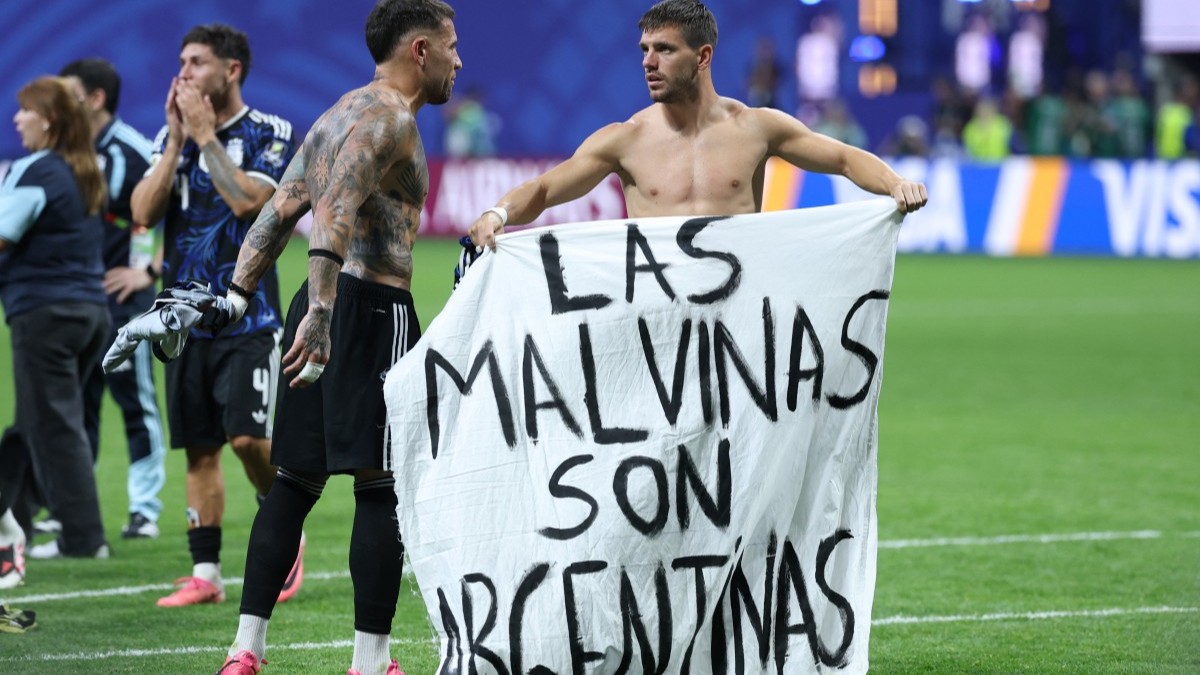
FIFA has opened disciplinary proceedings against Argentina's national team after players displayed a banner claiming sovereignty over the Falkland Islands following their World Cup semi-final win against England.
Stefanos Banos
Stefanos Banos Staff Writer
JULY 30, 2026 AT 6:39 PM

The banner, held by several Argentine players after the match in Atlanta, bore the slogan “Las Malvinas son Argentinas” (“The Falklands are Argentine”), a direct reference to the British Overseas Territory that Argentina has long claimed as its own.

World football’s governing body has charged Argentina with potentially violating regulations that prohibit political demonstrations during sporting events. The incident drew immediate condemnation from British government officials, who demanded FIFA launch an investigation into the matter.

Among the players photographed displaying the controversial banner were Cristian Romero, captain of Tottenham Hotspur, Manchester United defender Lisandro Martínez, and former Tottenham midfielder Giovani Lo Celso—all three of whom have built their careers playing in English football.

The Falkland Islands have been a British territory since 1833, though Argentina has persistently disputed British sovereignty over the South Atlantic archipelago. The two nations fought a brief but deadly war over the islands in 1982, which resulted in a decisive British victory.

The incident represents yet another example of political activism infiltrating international sport, with FIFA now facing pressure to enforce its own rules against the use of football competitions as platforms for territorial disputes.

With information from The European Conservative

Share:
Stefanos Banos
Stefanos Banos

Stefanos Banos was born in Piraeus and is an editor at NewsFire.GR, specializing in political analysis and international relations. He graduated from the Department of Communication and Media at the University of Bremen in Germany, where he also completed his Master of Arts in Communication and Media Studies. Married to Zoi, he is a proud father of three boys.

The banner, held by several Argentine players after the match in Atlanta, bore the slogan “Las Malvinas son Argentinas” (“The Falklands are Argentine”), a direct reference to the British Overseas Territory that Argentina has long claimed as its own.

World football’s governing body has charged Argentina with potentially violating regulations that prohibit political demonstrations during sporting events. The incident drew immediate condemnation from British government officials, who demanded FIFA launch an investigation into the matter.

Among the players photographed displaying the controversial banner were Cristian Romero, captain of Tottenham Hotspur, Manchester United defender Lisandro Martínez, and former Tottenham midfielder Giovani Lo Celso—all three of whom have built their careers playing in English football.

The Falkland Islands have been a British territory since 1833, though Argentina has persistently disputed British sovereignty over the South Atlantic archipelago. The two nations fought a brief but deadly war over the islands in 1982, which resulted in a decisive British victory.

The incident represents yet another example of political activism infiltrating international sport, with FIFA now facing pressure to enforce its own rules against the use of football competitions as platforms for territorial disputes.

With information from The European Conservative

