Necessary Cookies

Required for the site to function. Cannot be disabled.

Analytics Cookies

Help us understand how visitors interact with our site (Google Analytics via GTM).

Marketing Cookies

Used to track visitors and deliver personalised advertisements.

We use cookies to enhance your browsing experience and analyse site traffic. By clicking Accept All, you consent to our use of cookies. Privacy Policy
NewsFire Global
Home News Europe World Christianity Culture Wars Opinion Video
Information
About Us Authors Advertising Terms & Conditions Privacy Policy Contact
R2B Media
R2B NEWSFIRE.GR PAPAFOTIS.GR THRACTION HELLENIC CONSERVATIVES RIGHT2THEBONE YT
News Europe

Fast-Track Citizenship: Nearly All New Citizens Keep Old Passport

Germany saw record naturalizations in 2025 with over 309,000 foreigners gaining citizenship while keeping their original passports, led by Syrian and Turkish nationals amid a massive backlog.

Dimitris Papafotis
Dimitris Papafotis Editor in Chief
JUNE 2, 2026 AT 3:56 PM

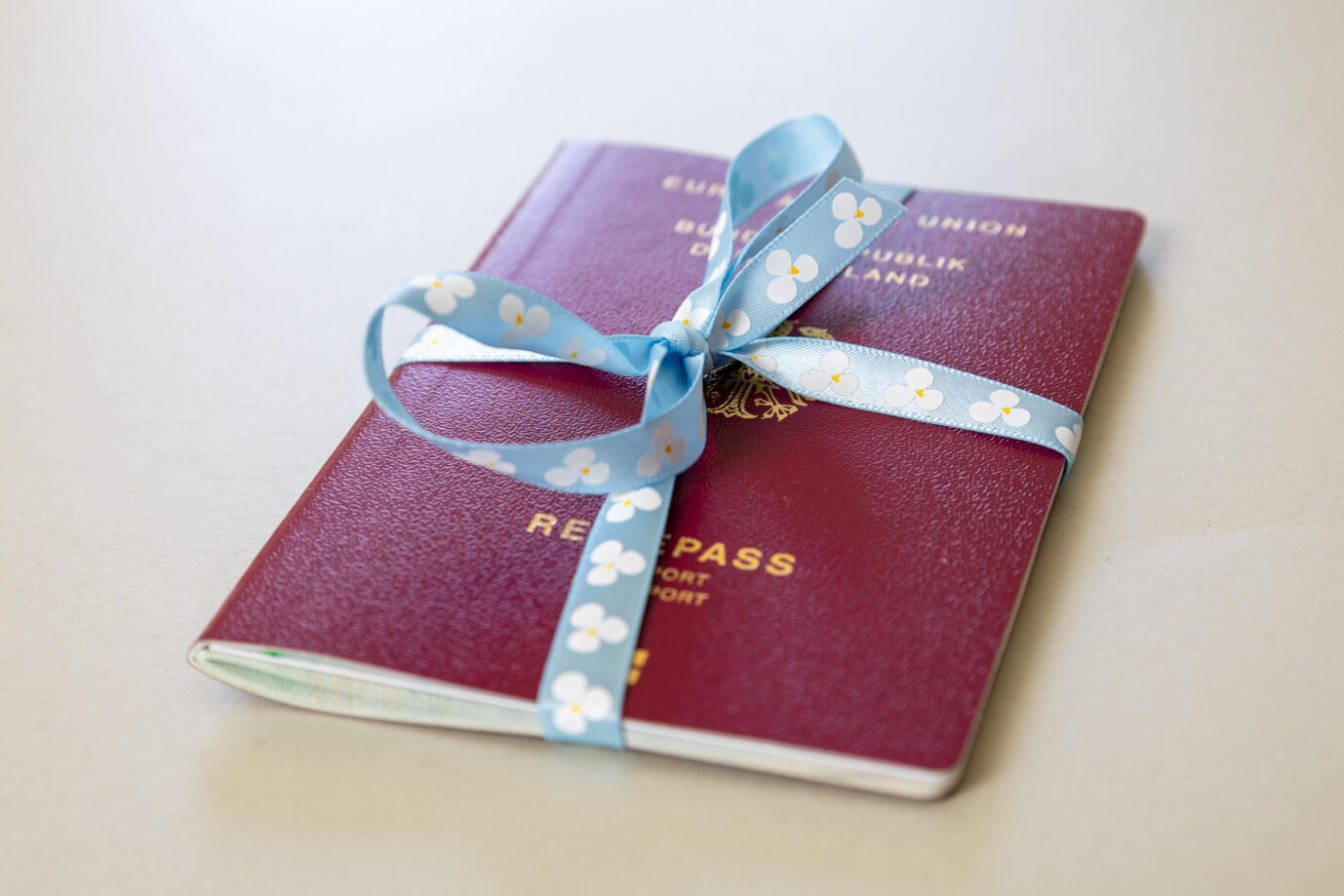
Nearly all foreigners who received German citizenship in 2025 retained their original passports, with rates of dual nationality among newly naturalized citizens ranging between 85 and 98 percent in cities that tracked the data, according to Junge Freiheit.

The Migration Media Service published the findings on Tuesday, noting that exceptions primarily involved stateless persons and individuals from countries that do not permit dual citizenship, such as India.

Germany recorded a historic surge in naturalizations during 2025, reaching unprecedented levels. At least 309,852 foreigners obtained German passports in just 14 federal states, marking the highest figure since unified statistics began in 2000. The numbers do not yet include data from Mecklenburg-Western Pomerania, Saxony-Anhalt, and several districts and cities in Lower Saxony. By comparison, 291,955 persons acquired German citizenship nationwide in the previous year.

Syrians and Turks Lead Naturalization Wave

Syrian nationals received German citizenship most frequently, followed by Turkish, Afghan, Iranian, and Russian applicants, as Junge Freiheit reports.

Despite the record approvals, hundreds of thousands of applications remain pending. In Germany’s most populous cities alone, excluding Berlin, at least 320,000 applications are still under review—a 22 percent increase compared to the prior year.

Munich has more than 40,000 applications in backlog, while Hamburg recorded approximately 32,000 pending cases and Bremen around 13,400. The regional government office in Darmstadt, which processes naturalization requests from Frankfurt and Wiesbaden among other areas, left roughly 66,000 applications unprocessed—2.4 times more than the previous year. Berlin’s State Office for Immigration has reportedly not published figures since 2024, though the authority last indicated it had around 40,000 open applications.

Coalition Government’s Reform Blamed for Surge

Authorities consulted by German media attributed the dramatic increase largely to the traffic light coalition government’s naturalization reform. Officials also noted that immigrants who arrived during the 2015 and 2016 asylum crisis years have now reached the required residency duration for citizenship eligibility.

Several districts anticipate even higher numbers ahead, as Ukrainian refugees will lose their collective protection status in March 2027. A spokesperson for the Aurich district told the press that many refugees will likely use the shortened naturalization period to obtain legal certainty.

In 2024, the Social Democrats, Greens, and Free Democrats reduced the minimum residency requirement for naturalization from eight years to five. The coalition also fundamentally enabled acquisition of dual citizenship and opened pathways for older migrants to obtain passports without the previously required language proficiency or naturalization tests. Children of foreigners who have lived in Germany for more than five years automatically receive German passports under the new rules.

With information from Junge Freiheit

Share:
Dimitris Papafotis
Dimitris Papafotis

Dimitris Papafotis is the editor-in-chief of NewsFire.GR. He was born and raised in Athens. He studied at the Journalism Workshop (1991-1993). He currently lives in Pyrgos, Ilia, where he has been active in radio and various newspapers, while also maintaining his personal blog, Papafotis.gr.

Nearly all foreigners who received German citizenship in 2025 retained their original passports, with rates of dual nationality among newly naturalized citizens ranging between 85 and 98 percent in cities that tracked the data, according to Junge Freiheit.

The Migration Media Service published the findings on Tuesday, noting that exceptions primarily involved stateless persons and individuals from countries that do not permit dual citizenship, such as India.

Germany recorded a historic surge in naturalizations during 2025, reaching unprecedented levels. At least 309,852 foreigners obtained German passports in just 14 federal states, marking the highest figure since unified statistics began in 2000. The numbers do not yet include data from Mecklenburg-Western Pomerania, Saxony-Anhalt, and several districts and cities in Lower Saxony. By comparison, 291,955 persons acquired German citizenship nationwide in the previous year.

Syrians and Turks Lead Naturalization Wave

Syrian nationals received German citizenship most frequently, followed by Turkish, Afghan, Iranian, and Russian applicants, as Junge Freiheit reports.

Despite the record approvals, hundreds of thousands of applications remain pending. In Germany’s most populous cities alone, excluding Berlin, at least 320,000 applications are still under review—a 22 percent increase compared to the prior year.

Munich has more than 40,000 applications in backlog, while Hamburg recorded approximately 32,000 pending cases and Bremen around 13,400. The regional government office in Darmstadt, which processes naturalization requests from Frankfurt and Wiesbaden among other areas, left roughly 66,000 applications unprocessed—2.4 times more than the previous year. Berlin’s State Office for Immigration has reportedly not published figures since 2024, though the authority last indicated it had around 40,000 open applications.

Coalition Government’s Reform Blamed for Surge

Authorities consulted by German media attributed the dramatic increase largely to the traffic light coalition government’s naturalization reform. Officials also noted that immigrants who arrived during the 2015 and 2016 asylum crisis years have now reached the required residency duration for citizenship eligibility.

Several districts anticipate even higher numbers ahead, as Ukrainian refugees will lose their collective protection status in March 2027. A spokesperson for the Aurich district told the press that many refugees will likely use the shortened naturalization period to obtain legal certainty.

In 2024, the Social Democrats, Greens, and Free Democrats reduced the minimum residency requirement for naturalization from eight years to five. The coalition also fundamentally enabled acquisition of dual citizenship and opened pathways for older migrants to obtain passports without the previously required language proficiency or naturalization tests. Children of foreigners who have lived in Germany for more than five years automatically receive German passports under the new rules.

With information from Junge Freiheit

