Necessary Cookies

Required for the site to function. Cannot be disabled.

Analytics Cookies

Help us understand how visitors interact with our site (Google Analytics via GTM).

Marketing Cookies

Used to track visitors and deliver personalised advertisements.

We use cookies to enhance your browsing experience and analyse site traffic. By clicking Accept All, you consent to our use of cookies. Privacy Policy
NewsFire Global
Home News Europe World Christianity Culture Wars Opinion Video
Information
About Us Authors Advertising Terms & Conditions Privacy Policy Contact
R2B Media
R2B NEWSFIRE.GR PAPAFOTIS.GR THRACTION HELLENIC CONSERVATIVES RIGHT2THEBONE YT
News Europe

Ex-Nuclear Chiefs Push Merz to Restart German Reactors

Former managers of Germany's closed nuclear plants have urged Chancellor Friedrich Merz to reverse the phase-out and restart three reactors shut down in April 2023.

Dimitris Papafotis
Dimitris Papafotis Editor in Chief
JUNE 25, 2026 AT 7:42 PM
brusselssignal.eu
Photo: brusselssignal.eu

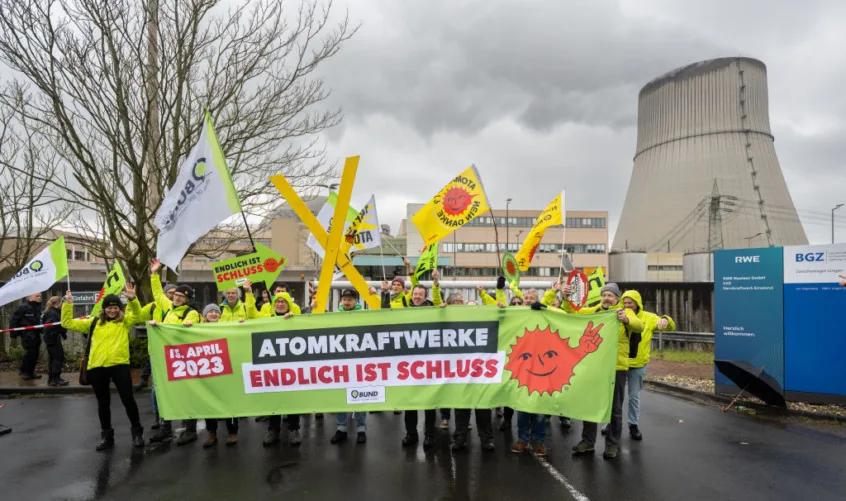
The open letter, addressed to Merz, Economy Minister Katherina Reiche, and Union parliamentary group leader Jens Spahn, makes the case that restarting the three plants decommissioned in April 2023 is not only technically viable but strategically essential, according to Brussels Signal.

The three facilities in question—Isar 2, Emsland, and Neckarwestheim 2—collectively generated around 32 terawatt hours of electricity annually, sufficient to power approximately nine million German households.

Among the signatories are Horst Kemmeter, former head of the Emsland and Biblis plants, Dr Jürgen Haag, former Emsland director, Hans-Joachim Müller of Brokdorf, and Professor Horst-Michael Prasser of ETH Zurich. The letter was obtained exclusively by Bild.

The former operators argue that Germany still possesses the necessary competence, infrastructure, fuel management expertise, and personnel to safely reactivate the plants. They note that the facilities’ sites, buildings, and grid connections remain intact, and that German-designed reactors of similar vintage continue to operate safely in Spain, Switzerland, the Netherlands, Brazil, and Argentina.

A Political Mistake Now Impossible to Ignore

The signatories describe the 2023 shutdown as a political mistake that has grown increasingly evident amid shifting global energy realities. They urge the government to establish the regulatory framework needed to make reactivation possible.

The appeal arrives as senior figures in the new CDU-led coalition, including Merz himself, have openly described the nuclear exit as a grave strategic error.

The former plant leaders also emphasize that maintaining operational nuclear expertise in Germany is critical for any serious engagement with emerging technologies such as Small Modular Reactors and nuclear fusion.

The Staggering Cost of Ideology

Germany’s abandonment of nuclear power has exacted a steep toll. Studies estimate the annual economic and health costs of the phase-out at approximately €11 billion, driven largely by increased air pollution from expanded coal and gas use.

Cumulative additional CO₂ emissions since the accelerated shutdowns run into hundreds of millions of tonnes, with associated European Emissions Trading System costs reaching tens of billions of euros.

Germany has become a net electricity importer during many periods, frequently paying premium prices for power generated by French nuclear plants and other foreign sources.

Meanwhile, persistently high and volatile energy costs have pushed German industry toward the exit. Surveys indicate that 37 to 45 per cent of industrial and energy-intensive firms are contemplating production cuts or relocating operations overseas.

A Long Road of Failed Policy

The original decision to phase out nuclear power was made by the red-green Schröder government in 2000. Following the 2011 Fukushima disaster, Chancellor Angela Merkel’s CDU-FDP coalition reaffirmed and accelerated the timeline.

In 2022, amid the energy crisis triggered by the war in Ukraine, Chancellor Olaf Scholz’s government granted a brief extension. Nevertheless, the final three German nuclear plants were shut down in April 2023.

[EMBED_N]

Germany’s so-called energy transition remains central to the EU Green Deal, but the industrial fallout is now impossible to ignore. The question facing Europe is whether this model represents a sustainable future—or a cautionary tale.

With information from Brussels Signal

Share:
Dimitris Papafotis
Dimitris Papafotis

Dimitris Papafotis is the editor-in-chief of NewsFire.GR. He was born and raised in Athens. He studied at the Journalism Workshop (1991-1993). He currently lives in Pyrgos, Ilia, where he has been active in radio and various newspapers, while also maintaining his personal blog, Papafotis.gr.

brusselssignal.eu
Photo: brusselssignal.eu

The open letter, addressed to Merz, Economy Minister Katherina Reiche, and Union parliamentary group leader Jens Spahn, makes the case that restarting the three plants decommissioned in April 2023 is not only technically viable but strategically essential, according to Brussels Signal.

The three facilities in question—Isar 2, Emsland, and Neckarwestheim 2—collectively generated around 32 terawatt hours of electricity annually, sufficient to power approximately nine million German households.

Among the signatories are Horst Kemmeter, former head of the Emsland and Biblis plants, Dr Jürgen Haag, former Emsland director, Hans-Joachim Müller of Brokdorf, and Professor Horst-Michael Prasser of ETH Zurich. The letter was obtained exclusively by Bild.

The former operators argue that Germany still possesses the necessary competence, infrastructure, fuel management expertise, and personnel to safely reactivate the plants. They note that the facilities’ sites, buildings, and grid connections remain intact, and that German-designed reactors of similar vintage continue to operate safely in Spain, Switzerland, the Netherlands, Brazil, and Argentina.

A Political Mistake Now Impossible to Ignore

The signatories describe the 2023 shutdown as a political mistake that has grown increasingly evident amid shifting global energy realities. They urge the government to establish the regulatory framework needed to make reactivation possible.

The appeal arrives as senior figures in the new CDU-led coalition, including Merz himself, have openly described the nuclear exit as a grave strategic error.

The former plant leaders also emphasize that maintaining operational nuclear expertise in Germany is critical for any serious engagement with emerging technologies such as Small Modular Reactors and nuclear fusion.

The Staggering Cost of Ideology

Germany’s abandonment of nuclear power has exacted a steep toll. Studies estimate the annual economic and health costs of the phase-out at approximately €11 billion, driven largely by increased air pollution from expanded coal and gas use.

Cumulative additional CO₂ emissions since the accelerated shutdowns run into hundreds of millions of tonnes, with associated European Emissions Trading System costs reaching tens of billions of euros.

Germany has become a net electricity importer during many periods, frequently paying premium prices for power generated by French nuclear plants and other foreign sources.

Meanwhile, persistently high and volatile energy costs have pushed German industry toward the exit. Surveys indicate that 37 to 45 per cent of industrial and energy-intensive firms are contemplating production cuts or relocating operations overseas.

A Long Road of Failed Policy

The original decision to phase out nuclear power was made by the red-green Schröder government in 2000. Following the 2011 Fukushima disaster, Chancellor Angela Merkel’s CDU-FDP coalition reaffirmed and accelerated the timeline.

In 2022, amid the energy crisis triggered by the war in Ukraine, Chancellor Olaf Scholz’s government granted a brief extension. Nevertheless, the final three German nuclear plants were shut down in April 2023.

[EMBED_N]

Germany’s so-called energy transition remains central to the EU Green Deal, but the industrial fallout is now impossible to ignore. The question facing Europe is whether this model represents a sustainable future—or a cautionary tale.

With information from Brussels Signal