Necessary Cookies

Required for the site to function. Cannot be disabled.

Analytics Cookies

Help us understand how visitors interact with our site (Google Analytics via GTM).

Marketing Cookies

Used to track visitors and deliver personalised advertisements.

We use cookies to enhance your browsing experience and analyse site traffic. By clicking Accept All, you consent to our use of cookies. Privacy Policy
NewsFire Global
Home News Europe World Christianity Culture Wars Opinion Video
Information
About Us Authors Advertising Terms & Conditions Privacy Policy Contact
R2B Media
R2B NEWSFIRE.GR PAPAFOTIS.GR THRACTION HELLENIC CONSERVATIVES RIGHT2THEBONE YT
News Europe

Ex-Commissioner Oettinger Slams von der Leyen’s Economic Record

A former European Commissioner has delivered a scathing assessment of the European Commission’s economic performance under Ursula von der Leyen, warning that Brussels has prioritized ... <a title="Ex-Commissioner Oettinger Slams von der Leyen’s Economic Record" class="read-more" href="https://newsfire.gr/en/ex-commissioner-oettinger-slams-von-der-leyens-economic-record/" aria-label="Read more about Ex-Commissioner Oettinger Slams von der Leyen’s Economic Record">Read more</a>

Dimitris Papafotis
Dimitris Papafotis Editor in Chief
JULY 2, 2026 AT 9:52 AM

A former European Commissioner has delivered a scathing assessment of the European Commission’s economic performance under Ursula von der Leyen, warning that Brussels has prioritized green ideology over industrial competitiveness while Europe’s economy has fallen behind global rivals.

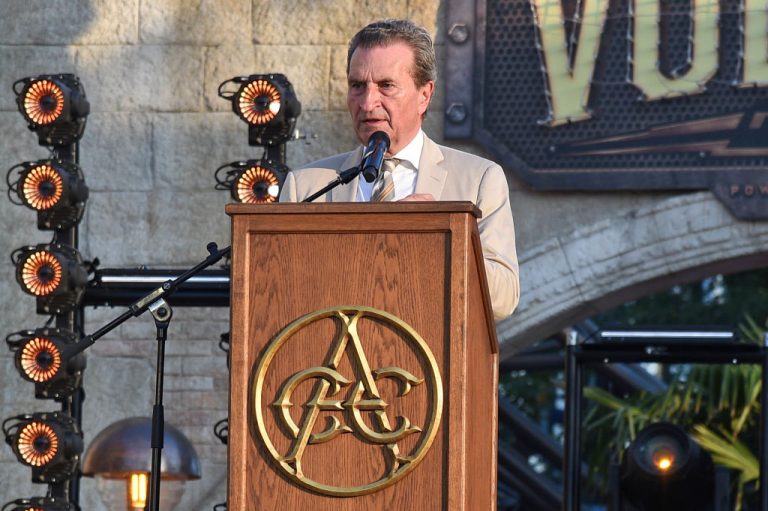
Photo: brusselssignal.eu

Günther Oettinger, who served as Commissioner for Energy, digital economy and society, budget and HR between 2010 and 2019, outlined his concerns during a talk in Brussels organized by German media outlet Table.Talk and the Representation of the Free State of Bavaria to the European Union, according to Brussels Signal.

The CDU veteran politician acknowledged that the Commission had shown merit in coordinating responses to Covid and maintaining support for Ukraine. However, he argued that European economy and industry have suffered under seven years of von der Leyen’s leadership.

Oettinger stated that the EC President doesn’t care about the economy, pointing to stark divergences in global economic performance over the past decade. While China’s GDP has grown strongly and the United States remained stable, Europe’s GDP has dropped, he noted.

The former Commissioner criticized Brussels for rushing to promote green policies while neglecting economic fundamentals. He also highlighted systemic access problems, noting that company leaders found it extremely difficult to meet with Commissioners, unlike in Europe or the US where such engagement was straightforward.

Climate Ideology Over Economic Reality

When moderator Markus Grabitz asked whether any improvement had occurred during von der Leyen’s second mandate, Oettinger responded that climate is important, but not the only thing.

He pointed to broken promises on regulatory reform. The Berlaymont had pledged a one in, one out approach in its omnibus packages to deliver better, less burdensome, standardized and more streamlined regulation. Instead, it delivered four in, one out and continued to create regulation, particularly adding massive reporting requirements.

Brussels has failed to cut excessive red tape around its economy, creating real problems especially for small and medium enterprises, Oettinger warned. Unfortunately, Germany has supported this trajectory, he added.

Concentration of Power and Weak Leadership

Oettinger drew unfavorable comparisons between current and past Commission leadership styles. Former Commission Presidents José Barroso and Jean-Claude Juncker had entire teams working together, he recalled. Under von der Leyen, Commissioners work under her authority in a concentration of power, he said.

She selected less colorful people around her, and as a result of this concentration, the Commission doesn’t accomplish much, according to the former Commissioner.

Oettinger also criticized the power struggle with Kaja Kallas, High Representative of the European Union for Foreign Affairs and Security Policy, describing too many political fights as a waste of energy.

Policy Prescriptions for European Competitiveness

Asked how to stop Europe from falling further behind, Oettinger acknowledged some progress was being made and that Europe has strong assets. However, much more needs to be done to make the EU less dependent on the rest of the world, he argued.

He called for a more common sense approach, suggesting that many countries won’t have the infrastructure for electric vehicles in the foreseeable time and Europe can continue to make combustion cars for them.

Oettinger also dismissed the effectiveness of multilateral environmental agreements, stating that Europe won’t save the tropical forests via such treaties.

On trade policy, he noted that slapping protective tariffs on Chinese cars would be difficult, as countries make different types of cars across the EU. This creates incentives for some to keep Chinese cars out, while others have incentives to export their cars to China.

Energy Costs and Digital Economy Failures

Energy costs in Europe remain far too high, including due to a lack of fracking, Oettinger warned. Europe had also been too slow on the creation of an online platform economy, wanting to save the shops in city centers but leaving the online market to be dominated by American and Chinese giants.

Budget Battles and Agricultural Policy

Regarding the budget, Oettinger said the Commission’s request for over €2 trillion was too much. A more modest €1.5 trillion would be acceptable, he suggested.

While admitting that European farmers needed subsidies to survive, he recommended keeping the subsidies in check by freezing them. There was no need for centralizing the subsidies as von der Leyen has demanded in her new budget plans, he argued.

Oettinger concluded that Germany should pressure Brussels more and that regions should maintain greater authority in agricultural policy.

With information from Brussels Signal

Share:
Dimitris Papafotis
Dimitris Papafotis

Dimitris Papafotis is the editor-in-chief of NewsFire.GR. He was born and raised in Athens. He studied at the Journalism Workshop (1991-1993). He currently lives in Pyrgos, Ilia, where he has been active in radio and various newspapers, while also maintaining his personal blog, Papafotis.gr.

A former European Commissioner has delivered a scathing assessment of the European Commission’s economic performance under Ursula von der Leyen, warning that Brussels has prioritized green ideology over industrial competitiveness while Europe’s economy has fallen behind global rivals.

Photo: brusselssignal.eu

Günther Oettinger, who served as Commissioner for Energy, digital economy and society, budget and HR between 2010 and 2019, outlined his concerns during a talk in Brussels organized by German media outlet Table.Talk and the Representation of the Free State of Bavaria to the European Union, according to Brussels Signal.

The CDU veteran politician acknowledged that the Commission had shown merit in coordinating responses to Covid and maintaining support for Ukraine. However, he argued that European economy and industry have suffered under seven years of von der Leyen’s leadership.

Oettinger stated that the EC President doesn’t care about the economy, pointing to stark divergences in global economic performance over the past decade. While China’s GDP has grown strongly and the United States remained stable, Europe’s GDP has dropped, he noted.

The former Commissioner criticized Brussels for rushing to promote green policies while neglecting economic fundamentals. He also highlighted systemic access problems, noting that company leaders found it extremely difficult to meet with Commissioners, unlike in Europe or the US where such engagement was straightforward.

Climate Ideology Over Economic Reality

When moderator Markus Grabitz asked whether any improvement had occurred during von der Leyen’s second mandate, Oettinger responded that climate is important, but not the only thing.

He pointed to broken promises on regulatory reform. The Berlaymont had pledged a one in, one out approach in its omnibus packages to deliver better, less burdensome, standardized and more streamlined regulation. Instead, it delivered four in, one out and continued to create regulation, particularly adding massive reporting requirements.

Brussels has failed to cut excessive red tape around its economy, creating real problems especially for small and medium enterprises, Oettinger warned. Unfortunately, Germany has supported this trajectory, he added.

Concentration of Power and Weak Leadership

Oettinger drew unfavorable comparisons between current and past Commission leadership styles. Former Commission Presidents José Barroso and Jean-Claude Juncker had entire teams working together, he recalled. Under von der Leyen, Commissioners work under her authority in a concentration of power, he said.

She selected less colorful people around her, and as a result of this concentration, the Commission doesn’t accomplish much, according to the former Commissioner.

Oettinger also criticized the power struggle with Kaja Kallas, High Representative of the European Union for Foreign Affairs and Security Policy, describing too many political fights as a waste of energy.

Policy Prescriptions for European Competitiveness

Asked how to stop Europe from falling further behind, Oettinger acknowledged some progress was being made and that Europe has strong assets. However, much more needs to be done to make the EU less dependent on the rest of the world, he argued.

He called for a more common sense approach, suggesting that many countries won’t have the infrastructure for electric vehicles in the foreseeable time and Europe can continue to make combustion cars for them.

Oettinger also dismissed the effectiveness of multilateral environmental agreements, stating that Europe won’t save the tropical forests via such treaties.

On trade policy, he noted that slapping protective tariffs on Chinese cars would be difficult, as countries make different types of cars across the EU. This creates incentives for some to keep Chinese cars out, while others have incentives to export their cars to China.

Energy Costs and Digital Economy Failures

Energy costs in Europe remain far too high, including due to a lack of fracking, Oettinger warned. Europe had also been too slow on the creation of an online platform economy, wanting to save the shops in city centers but leaving the online market to be dominated by American and Chinese giants.

Budget Battles and Agricultural Policy

Regarding the budget, Oettinger said the Commission’s request for over €2 trillion was too much. A more modest €1.5 trillion would be acceptable, he suggested.

While admitting that European farmers needed subsidies to survive, he recommended keeping the subsidies in check by freezing them. There was no need for centralizing the subsidies as von der Leyen has demanded in her new budget plans, he argued.

Oettinger concluded that Germany should pressure Brussels more and that regions should maintain greater authority in agricultural policy.

With information from Brussels Signal

