
EU Observers Dismiss Petro’s Colombia Fraud Claims
A European Union election monitoring mission rejected Colombian President Gustavo Petro's fraud allegations after his successor lost, finding no evidence of irregularities.
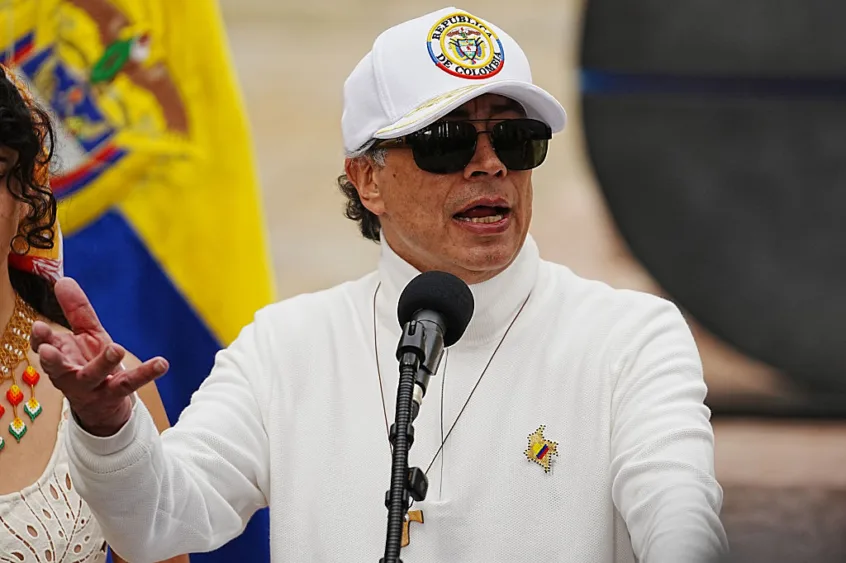


According to Brussels Signal, the EU Electoral Observation Mission found no evidence to support claims of irregularities in the election that saw right-wing outsider Abelardo de la Espriella narrowly defeat Petro-backed candidate Iván Cepeda.
In its preliminary assessment, the mission described the vote counting process as transparent, orderly, and fully compliant with Colombian electoral law. Mission chief Esteban González Pons confirmed that approximately 150 EU observers deployed across the country reached the same conclusion they had during the first round of voting in May.
Petro, whose four-year leftist administration is coming to an end, has refused to accept the outcome and launched a series of inflammatory accusations via social media. He has alleged digital interference, vote buying schemes, and even claimed that Israel orchestrated cyber attacks against Colombia’s electoral infrastructure.
Unsubstantiated Claims Against Israel
The outgoing president escalated his rhetoric dramatically by directly accusing Israeli Prime Minister Benjamin Netanyahu of ordering hackers to manipulate Colombia’s electoral software. In multiple posts on X, Petro alleged that changes in IP addresses on National Registry servers proved foreign interference, claiming the only entity in the world capable of doing that is the state of Israel.
No concrete evidence has been provided to substantiate these serious allegations, which come amid Petro’s severed diplomatic relations with Israel over the Gaza conflict. He compared his situation to Romania, where European courts annulled election results due to foreign interference concerns.
The EU mission expressed surprise that the president was raising concerns that the candidates themselves had not formally contested through proper legal channels, as Brussels Signal reports.
Domestic Authorities Reject Fraud Claims
Colombia’s Attorney General and other electoral authorities have also dismissed Petro’s fraud allegations. Officials noted that over 99 percent of votes were successfully counted with high turnout, and no credible evidence of systematic manipulation has emerged.
De la Espriella secured approximately 49.66 percent of the vote compared to Cepeda’s 48.70 percent, marking a significant rightward shift after Petro’s term in office. The narrow margin has deepened political polarization in the South American nation.
Democratic Institutions Under Pressure
Critics have warned that Petro’s refusal to accept the results and his unsubstantiated conspiracy theories risk undermining public confidence in Colombia’s democratic institutions during a sensitive transition period. The outgoing president’s rhetoric has fueled tensions between his supporters and those who backed the president-elect.
Supporters of de la Espriella view the EU mission’s endorsement as definitive proof that the election was conducted legitimately and that Petro’s claims reflect political frustration rather than electoral reality.
The election outcome represents a decisive rejection of Petro’s leftist policies and signals Colombia’s return to conservative governance after four years of leftward drift.
With information from Brussels Signal





