Necessary Cookies

Required for the site to function. Cannot be disabled.

Analytics Cookies

Help us understand how visitors interact with our site (Google Analytics via GTM).

Marketing Cookies

Used to track visitors and deliver personalised advertisements.

We use cookies to enhance your browsing experience and analyse site traffic. By clicking Accept All, you consent to our use of cookies. Privacy Policy
NewsFire Global
Home News Europe World Christianity Culture Wars Opinion Video
Information
About Us Authors Advertising Terms & Conditions Privacy Policy Contact
R2B Media
R2B NEWSFIRE.GR PAPAFOTIS.GR THRACTION HELLENIC CONSERVATIVES RIGHT2THEBONE YT
News World

EU Imposes Sanctions on Iran Over Strait Blockade

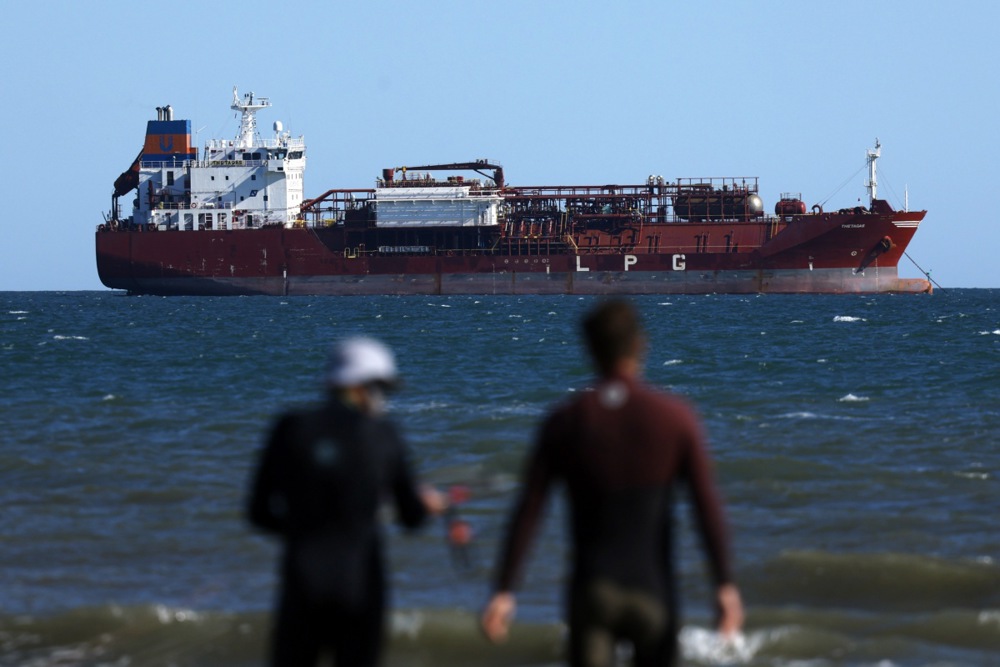
The European Union has enacted sanctions against Iranian officials and entities responsible for disrupting maritime traffic through the critical Strait of Hormuz shipping route.

Dimitris Papafotis
Dimitris Papafotis Editor in Chief
MAY 23, 2026 AT 2:19 AM

The European Union has formally enacted sanctions against Iranian officials and entities responsible for interfering with maritime traffic through the Strait of Hormuz, according to Brussels Signal. The Council of the European Union confirmed the decision on May 22, 2026, authorizing travel restrictions and asset seizures targeting those behind attacks on commercial vessels navigating the waterway.

The sanctions framework prohibits EU citizens and companies from providing financial support, assets, or economic resources to designated individuals and organizations. The action fulfills a political commitment made by EU foreign ministers during their April 21, 2026 meeting, with the Council declaring that “Iran’s actions against vessels transiting through the Strait of Hormuz are contrary to international law.”

Expanding Existing Sanctions Architecture

Rather than establishing new sanctions mechanisms, Brussels has chosen to expand its existing Iran sanctions regime—originally instituted in 2023 in response to Tehran’s military assistance to Russia’s invasion of Ukraine. The framework was subsequently broadened in 2024 to address Iranian support for militant organizations across the Middle East and Red Sea, alongside Iranian drone and missile assaults targeting Israel.

Kaja Kallas, the EU’s High Representative for Foreign Affairs, signaled support for the measure earlier in the week, stating that Tehran’s control over the world’s most critical energy corridor required decisive action. She indicated the bloc would strengthen Operation ASPIDES, its naval mission supporting freedom of navigation, potentially as part of a “Coalition of the Willing” initiative led by France and the United Kingdom.

Strategic Waterway Under Threat

The Strait of Hormuz has faced near-total closure since February 28, 2026, when Iran escalated maritime operations following American and Israeli military strikes on Iranian installations. The passage accommodates roughly one-fifth of global petroleum and liquefied natural gas shipments, making its disruption a significant threat to international energy stability.

Iran’s Islamic Revolutionary Guard Corps has issued passage prohibitions, seized merchant vessels, and deployed naval mines throughout the strait. Documentation shows at least 17 merchant ships have sustained damage, with seven abandoned and two seized by Iranian forces. The IRGC itself received formal designation as a terrorist entity by the EU on February 19, 2026.

The broader EU sanctions package targeting Iranian support for Russia and regional militant groups extends through July 27, 2026. While the Council indicated that specific individual designations under the new maritime criteria will follow at a subsequent stage, no names have yet been announced.

With information from Brussels Signal

Share:
Dimitris Papafotis
Dimitris Papafotis

Dimitris Papafotis is the editor-in-chief of NewsFire.GR. He was born and raised in Athens. He studied at the Journalism Workshop (1991-1993). He currently lives in Pyrgos, Ilia, where he has been active in radio and various newspapers, while also maintaining his personal blog, Papafotis.gr.

The European Union has formally enacted sanctions against Iranian officials and entities responsible for interfering with maritime traffic through the Strait of Hormuz, according to Brussels Signal. The Council of the European Union confirmed the decision on May 22, 2026, authorizing travel restrictions and asset seizures targeting those behind attacks on commercial vessels navigating the waterway.

The sanctions framework prohibits EU citizens and companies from providing financial support, assets, or economic resources to designated individuals and organizations. The action fulfills a political commitment made by EU foreign ministers during their April 21, 2026 meeting, with the Council declaring that “Iran’s actions against vessels transiting through the Strait of Hormuz are contrary to international law.”

Expanding Existing Sanctions Architecture

Rather than establishing new sanctions mechanisms, Brussels has chosen to expand its existing Iran sanctions regime—originally instituted in 2023 in response to Tehran’s military assistance to Russia’s invasion of Ukraine. The framework was subsequently broadened in 2024 to address Iranian support for militant organizations across the Middle East and Red Sea, alongside Iranian drone and missile assaults targeting Israel.

Kaja Kallas, the EU’s High Representative for Foreign Affairs, signaled support for the measure earlier in the week, stating that Tehran’s control over the world’s most critical energy corridor required decisive action. She indicated the bloc would strengthen Operation ASPIDES, its naval mission supporting freedom of navigation, potentially as part of a “Coalition of the Willing” initiative led by France and the United Kingdom.

Strategic Waterway Under Threat

The Strait of Hormuz has faced near-total closure since February 28, 2026, when Iran escalated maritime operations following American and Israeli military strikes on Iranian installations. The passage accommodates roughly one-fifth of global petroleum and liquefied natural gas shipments, making its disruption a significant threat to international energy stability.

Iran’s Islamic Revolutionary Guard Corps has issued passage prohibitions, seized merchant vessels, and deployed naval mines throughout the strait. Documentation shows at least 17 merchant ships have sustained damage, with seven abandoned and two seized by Iranian forces. The IRGC itself received formal designation as a terrorist entity by the EU on February 19, 2026.

The broader EU sanctions package targeting Iranian support for Russia and regional militant groups extends through July 27, 2026. While the Council indicated that specific individual designations under the new maritime criteria will follow at a subsequent stage, no names have yet been announced.

With information from Brussels Signal

