Necessary Cookies

Required for the site to function. Cannot be disabled.

Analytics Cookies

Help us understand how visitors interact with our site (Google Analytics via GTM).

Marketing Cookies

Used to track visitors and deliver personalised advertisements.

We use cookies to enhance your browsing experience and analyse site traffic. By clicking Accept All, you consent to our use of cookies. Privacy Policy
NewsFire Global
Home News Europe World Christianity Culture Wars Opinion Video
Information
About Us Authors Advertising Terms & Conditions Privacy Policy Contact
R2B Media
R2B NEWSFIRE.GR PAPAFOTIS.GR THRACTION HELLENIC CONSERVATIVES RIGHT2THEBONE YT
News Europe

EU Chief Unveils Massive New Russia Sanctions Package

The EU approved its largest sanctions wave since 2022, targeting 250 individuals and entities in its 21st package against Russia's war effort.

Dimitris Papafotis
Dimitris Papafotis Editor in Chief
JULY 13, 2026 AT 6:14 PM

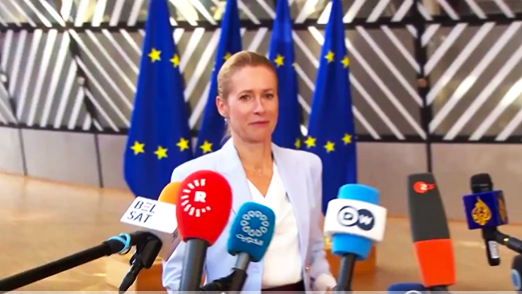
EU foreign policy chief Kaja Kallas announced the measures on social media ahead of the bloc’s Foreign Affairs Council meeting, according to The European Conservative. The sanctions will be incorporated into the EU’s 21st package of restrictions against Russia.

Kallas characterized the move as evidence that the EU is sanctioning Russia at speed and scale, marking what she called the largest single round of individual designations since Moscow launched its full-scale military operation in February 2022.

The foreign policy chief also touted the package as the largest cyber sanctions initiative to date, designed to strike at what she described as the financial backbone supporting Russia’s military operations.

Escalating Economic Warfare

The 21st sanctions package represents Brussels’ continued strategy of economic pressure against Russia, building on two decades of punitive measures that have expanded dramatically since the conflict began. The designation of 250 new targets indicates the EU’s attempt to maintain momentum in its sanctions regime despite questions about their economic effectiveness.

By emphasizing cyber sanctions, the EU appears to be broadening its focus beyond traditional financial and trade restrictions to target digital infrastructure and technology networks allegedly supporting Russian military capabilities.

The announcement comes as Western nations seek to demonstrate continued resolve in supporting Ukraine while facing growing economic pressures at home and debates over the tangible impact of sanctions on changing Russian policy.

With information from The European Conservative

Share:
Dimitris Papafotis
Dimitris Papafotis

Dimitris Papafotis is the editor-in-chief of NewsFire.GR. He was born and raised in Athens. He studied at the Journalism Workshop (1991-1993). He currently lives in Pyrgos, Ilia, where he has been active in radio and various newspapers, while also maintaining his personal blog, Papafotis.gr.

EU foreign policy chief Kaja Kallas announced the measures on social media ahead of the bloc’s Foreign Affairs Council meeting, according to The European Conservative. The sanctions will be incorporated into the EU’s 21st package of restrictions against Russia.

Kallas characterized the move as evidence that the EU is sanctioning Russia at speed and scale, marking what she called the largest single round of individual designations since Moscow launched its full-scale military operation in February 2022.

The foreign policy chief also touted the package as the largest cyber sanctions initiative to date, designed to strike at what she described as the financial backbone supporting Russia’s military operations.

Escalating Economic Warfare

The 21st sanctions package represents Brussels’ continued strategy of economic pressure against Russia, building on two decades of punitive measures that have expanded dramatically since the conflict began. The designation of 250 new targets indicates the EU’s attempt to maintain momentum in its sanctions regime despite questions about their economic effectiveness.

By emphasizing cyber sanctions, the EU appears to be broadening its focus beyond traditional financial and trade restrictions to target digital infrastructure and technology networks allegedly supporting Russian military capabilities.

The announcement comes as Western nations seek to demonstrate continued resolve in supporting Ukraine while facing growing economic pressures at home and debates over the tangible impact of sanctions on changing Russian policy.

With information from The European Conservative

