
EU Blocks Citizens’ Border Control Initiative Over Values
The European Commission blocked a citizen-led initiative demanding an end to mass migration from non-Western nations, ruling it violates EU values and constitutes racial discrimination.
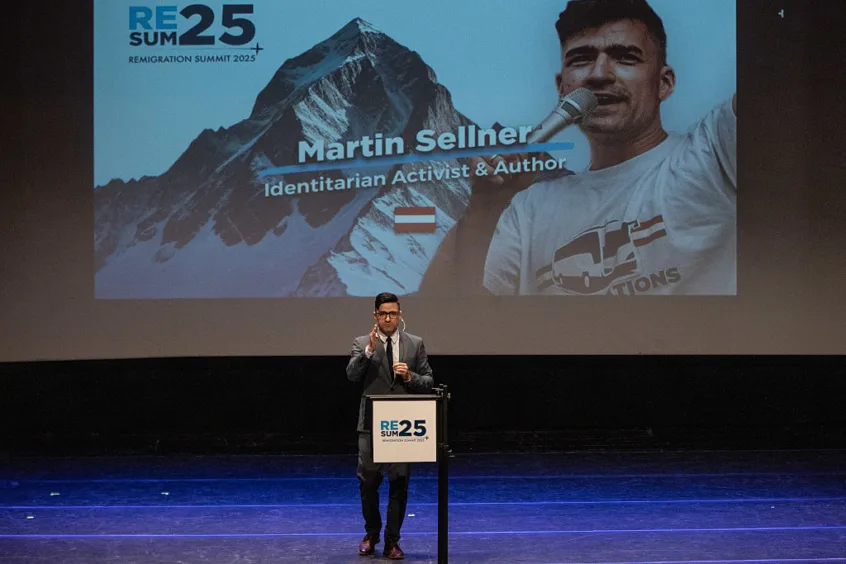

According to Brussels Signal, the Commission refused to register the “Save Europe Act,” a European Citizens’ Initiative spearheaded by Austrian activist Martin Sellner and Dutch commentator Eva Vlaardingerbroek. The campaign had already collected more than 580,000 signatures calling for a moratorium on new immigration from non-Western countries and fundamental reform of the EU’s migration and asylum system.
Brussels ruled that the initiative failed to meet legal requirements for registration as a European Citizens’ Initiative, claiming its proposals would constitute discrimination based on race or ethnic origin.
The Commission specifically objected to the initiative’s call for a moratorium on immigration from “non-Western countries,” including for study and family reunification purposes, as well as its references to the “ethnic and cultural continuity” of Europe’s “native peoples.” Officials also rejected the campaign’s assertion that Europe faces a “demographic exchange” driven by non-Western and non-European migrants.
Under EU regulations, a European Citizens’ Initiative must comply with EU Treaties and the Charter of Fundamental Rights. The Commission determined the Save Europe Act was “manifestly contrary” to Union values, disqualifying it from registration.
The decision effectively bars the campaign from using the formal European Citizens’ Initiative mechanism, which allows citizens to request Commission legislation after collecting at least one million signatures from at least seven EU member states.
Sellner and Vlaardingerbroek condemned the ruling. We will not back down, Vlaardingerbroek stated in a post announcing the Commission’s decision. The organizers accused Brussels of dismissing the views of “nearly 600,000 European patriots” and characterized the move as an assault on democratic rights.
The official X account of the Save Europe Act responded: “According to them, wanting to halt open-ended non-Western mass immigration and protect the demographic continuity of Europe’s peoples is ‘racial discrimination’ of third nationals and goes ‘contrary to EU values.'”
The statement continued: “Their motivation is vague, weak and telling of their true anti-democratic nature. We will not stop here. We are going to take action against this decision. The fight continues. Europe’s peoples are not required to accept their own demographic disappearance as a ‘value.'”
The Commission’s decision followed a June warning to organizers that their proposals appeared incompatible with EU fundamental rights and values. The campaigners responded by continuing to collect signatures and refusing to modify their demands.
The initiative sought to end what it described as open-ended “non-Western mass immigration” and demanded reform of the EU’s migration and asylum system. Organizers also advocated for policies preserving the “ethnic and cultural continuity” of Europe’s indigenous populations.
The ruling arrives as EU migration policy undergoes significant transformation. The EU’s Pact on Migration and Asylum took effect in June, establishing common rules on screening, asylum procedures, border management and deportations.
Brussels has also unveiled a five-year strategy combining efforts to reduce irregular migration and improve deportations with legal migration channels and protection for people fleeing persecution.
How the European Citizens’ Initiative Works
The European Citizens’ Initiative serves as the EU’s formal mechanism for enabling citizens to propose policy changes. Once registered, organizers have 12 months to collect at least one million verified signatures from citizens in at least seven member states. Meeting that threshold requires the European Commission to examine the proposal and issue a formal response, though the Commission faces no legal obligation to adopt the requested legislation.
Brussels has previously registered initiatives calling for EU-backed access to abortion, an EU-wide ban on so-called “conversion practices,” the abolition of cages in animal farming, restrictions on fossil-fuel advertising, and the removal of water services from market liberalization. Several of these campaigns collected more than one million signatures and received formal Commission responses.
With information from Brussels Signal





