Necessary Cookies

Required for the site to function. Cannot be disabled.

Analytics Cookies

Help us understand how visitors interact with our site (Google Analytics via GTM).

Marketing Cookies

Used to track visitors and deliver personalised advertisements.

We use cookies to enhance your browsing experience and analyse site traffic. By clicking Accept All, you consent to our use of cookies. Privacy Policy
NewsFire Global
Home News Europe World Christianity Culture Wars Opinion Video
Information
About Us Authors Advertising Terms & Conditions Privacy Policy Contact
R2B Media
R2B NEWSFIRE.GR PAPAFOTIS.GR THRACTION HELLENIC CONSERVATIVES RIGHT2THEBONE YT
News World

Election system needs long-term tightening, not before midterms

The US Supreme Court lifted an injunction blocking President Trump's mail-in voting restrictions, a move conservative commentators say will help restore electoral integrity.
Stefanos Banos
Stefanos Banos Staff Writer
SEPTEMBER 1, 2026 AT 12:00 AM

The high court’s ruling on August 24 clears the way for tighter controls on mail-in balloting, ending a legal challenge that had prevented implementation of the restrictions. Hugo Gurdon, editorial director at Washington Examiner, voiced strong support for the move during an appearance on C-Span’s Washington Journal on Sunday.

Gurdon pointed to the proliferation of mail-in and early voting systems as a source of concern, noting that America now stands apart from other democracies in its inability to deliver swift election results. According to Gurdon writing in Washington Examiner, elections need to be tightened up to restore public confidence in the integrity of outcomes, with voter identification requirements forming a critical component of reform.
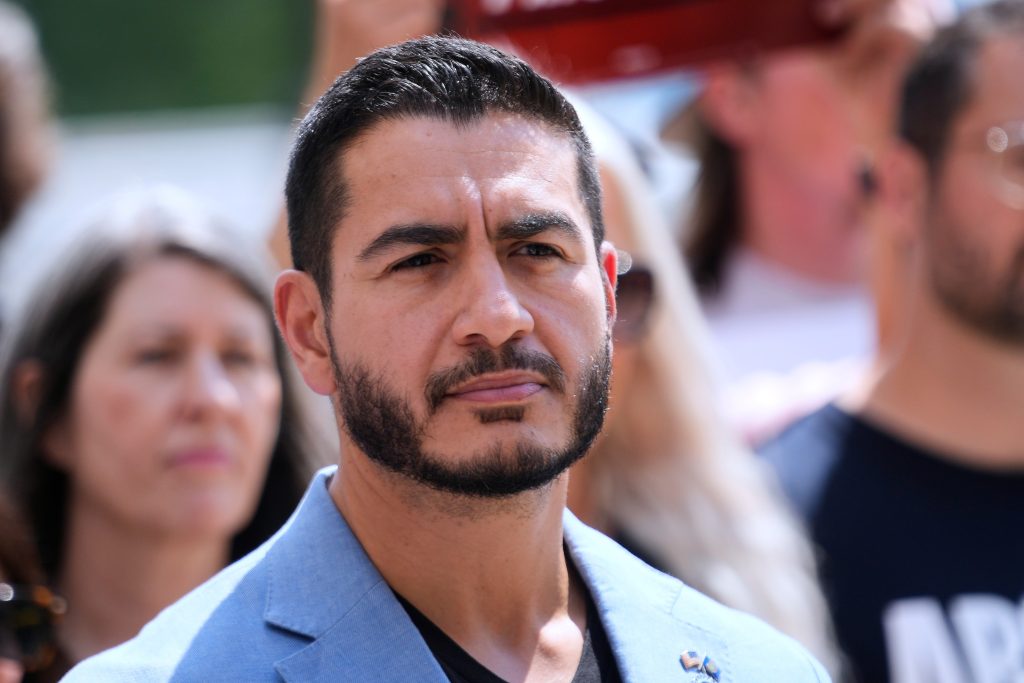
The editorial director emphasized the importance of striking a balance between ensuring universal access to voting and eliminating opportunities for electoral misconduct. The fundamental question about confidence in elections is a very important one, Gurdon stated, advocating for measures that would substantially reduce room for irregularities.

SAVE America Act Stalled in Senate

President Trump has made election integrity a cornerstone of his agenda, pushing Congress to pass the SAVE America Act. The legislation would impose stricter voter identification laws nationwide, mandate proof of citizenship for voting, and require states to purge noncitizens from voter rolls. While the House approved the measure, it remains stalled in the Senate.

With midterm elections approaching rapidly, Gurdon cautioned that attempting to implement the SAVE America Act for the current cycle could backfire. The rush to enact changes might actually increase the risk of administrative errors as states scramble to comply with new requirements, he warned.

The current electoral framework should remain in place for the upcoming midterms, Gurdon advised, but long-term reform of voting rules remains essential for future elections.

Overwhelming Public Support for Voter ID

Public sentiment strongly favors stricter voting requirements. A Pew Research Center poll conducted in August 2025 found that 83% of Americans support voter identification laws, including approximately 95% of Republicans and 71% of Democrats. The survey polled 3,554 respondents between August 4 and 10, with a margin of error of plus or minus 1.8 percentage points.

Gurdon acknowledged that election fraud does occur in America, though the scope of the problem remains contested along partisan lines. President Trump has consistently maintained that widespread voter fraud affected the 2020 election, while Democrats typically characterize fraud as minimal and inconsequential to electoral outcomes.

The truth likely falls somewhere between the extremes claimed by both parties, Gurdon suggested. Republicans may overstate the prevalence of fraud, while Democrats may downplay legitimate concerns. This uncertainty underscores the urgent need for a standardized system that eliminates grounds for dispute.

The current patchwork of state-level regulations, particularly the absence of uniform voter identification requirements, creates unnecessary vulnerabilities and fuels doubt about election security, according to the Washington Examiner editorial director.

With information from Washington Examiner

Share:
Stefanos Banos
Stefanos Banos

Stefanos Banos was born in Piraeus and is an editor at NewsFire.GR, specializing in political analysis and international relations. He graduated from the Department of Communication and Media at the University of Bremen in Germany, where he also completed his Master of Arts in Communication and Media Studies. Married to Zoi, he is a proud father of three boys.

The high court’s ruling on August 24 clears the way for tighter controls on mail-in balloting, ending a legal challenge that had prevented implementation of the restrictions. Hugo Gurdon, editorial director at Washington Examiner, voiced strong support for the move during an appearance on C-Span’s Washington Journal on Sunday.

Gurdon pointed to the proliferation of mail-in and early voting systems as a source of concern, noting that America now stands apart from other democracies in its inability to deliver swift election results. According to Gurdon writing in Washington Examiner, elections need to be tightened up to restore public confidence in the integrity of outcomes, with voter identification requirements forming a critical component of reform.
The editorial director emphasized the importance of striking a balance between ensuring universal access to voting and eliminating opportunities for electoral misconduct. The fundamental question about confidence in elections is a very important one, Gurdon stated, advocating for measures that would substantially reduce room for irregularities.

SAVE America Act Stalled in Senate

President Trump has made election integrity a cornerstone of his agenda, pushing Congress to pass the SAVE America Act. The legislation would impose stricter voter identification laws nationwide, mandate proof of citizenship for voting, and require states to purge noncitizens from voter rolls. While the House approved the measure, it remains stalled in the Senate.

With midterm elections approaching rapidly, Gurdon cautioned that attempting to implement the SAVE America Act for the current cycle could backfire. The rush to enact changes might actually increase the risk of administrative errors as states scramble to comply with new requirements, he warned.

The current electoral framework should remain in place for the upcoming midterms, Gurdon advised, but long-term reform of voting rules remains essential for future elections.

Overwhelming Public Support for Voter ID

Public sentiment strongly favors stricter voting requirements. A Pew Research Center poll conducted in August 2025 found that 83% of Americans support voter identification laws, including approximately 95% of Republicans and 71% of Democrats. The survey polled 3,554 respondents between August 4 and 10, with a margin of error of plus or minus 1.8 percentage points.

Gurdon acknowledged that election fraud does occur in America, though the scope of the problem remains contested along partisan lines. President Trump has consistently maintained that widespread voter fraud affected the 2020 election, while Democrats typically characterize fraud as minimal and inconsequential to electoral outcomes.

The truth likely falls somewhere between the extremes claimed by both parties, Gurdon suggested. Republicans may overstate the prevalence of fraud, while Democrats may downplay legitimate concerns. This uncertainty underscores the urgent need for a standardized system that eliminates grounds for dispute.

The current patchwork of state-level regulations, particularly the absence of uniform voter identification requirements, creates unnecessary vulnerabilities and fuels doubt about election security, according to the Washington Examiner editorial director.

With information from Washington Examiner