Necessary Cookies

Required for the site to function. Cannot be disabled.

Analytics Cookies

Help us understand how visitors interact with our site (Google Analytics via GTM).

Marketing Cookies

Used to track visitors and deliver personalised advertisements.

We use cookies to enhance your browsing experience and analyse site traffic. By clicking Accept All, you consent to our use of cookies. Privacy Policy
NewsFire Global
Home News Europe World Christianity Culture Wars Opinion Video
Information
About Us Authors Advertising Terms & Conditions Privacy Policy Contact
R2B Media
R2B NEWSFIRE.GR PAPAFOTIS.GR THRACTION HELLENIC CONSERVATIVES RIGHT2THEBONE YT
News Culture Wars

Editors Shocked by Justice Ministry’s Media Blacklist

German editors have sharply criticized Lower Saxony's Justice Ministry for maintaining a taxpayer-funded list that labels conservative and libertarian media outlets as indicators of right-wing extremism.
Stefanos Banos
Stefanos Banos Staff Writer
JUNE 20, 2026 AT 3:28 PM Updated: Jun 20, 2026 2:55 PM

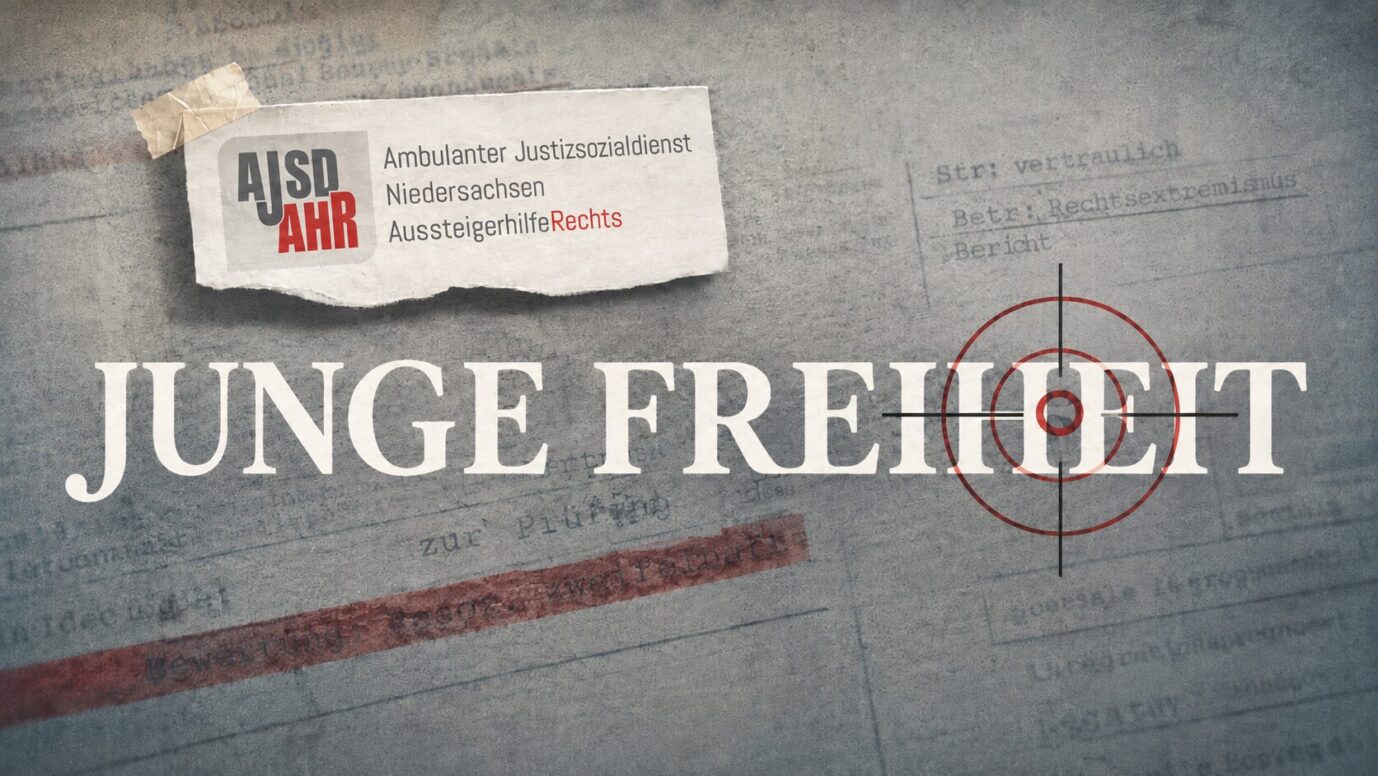
According to Junge Freiheit, which broke the story this week, the state-run program known as “Aussteigerhilfe Rechts” has placed numerous independent publications on what critics are calling a media blacklist. The targeted outlets include Tichys Einblick, Epoch Times, the libertarian publications Krautzone and Eigentümlich frei, and the conservative magazines Cato and Freilich, in addition to Junge Freiheit itself.

Roland Tichy, editor-in-chief of Tichys Einblick, issued a particularly forceful response. He called for an exit program for state employees in Lower Saxony who engage in what he described as unconstitutional behavior that violates public service standards. Tichy argued that Antifa-aligned staff members have no place in courts and state agencies and must be removed in the interest of the rule of law and democracy.

Conservative Editors Denounce Taxpayer-Funded Labeling

Ingo Langner, editor-in-chief of Cato magazine, focused his criticism on the financial aspect of the government program. He called the funding arrangement a scandal and suggested that many of the positions involved are occupied by comrades and sympathizers of Antifa. Langner emphasized that Cato is an independent, critical, and fearless publication committed to truth, goodness, and beauty, and expressed confidence that these values would ultimately prevail over lies, evil, and ugliness.

Florian Müller, editor of Krautzone, responded to his publication’s inclusion on the list with irony. He expressed gratitude for being classified as equally right-wing extremist alongside established outlets, suggesting the designation reflected his magazine’s growing significance.

Warnings About Practical Consequences

Heinrich Sickl, publisher and editor-in-chief of Freilich magazine, identified a familiar pattern in such classifications. He wrote that the enemy-marking of conservative and right-wing media has become standard practice for a left-liberal hegemonic apparatus that labels political opponents rather than engaging them argumentatively.

Sickl also warned of concrete repercussions from these listings. He noted that an Alternative for Germany member of the federal parliament was recently prohibited from citing Freilich as a source in a parliamentary motion. Additionally, he cautioned that such lists increasingly serve as sources for artificial intelligence models, search engines, and Wikipedia, thereby giving political judgments an appearance of objectivity.

Editors Challenge Specific Claims

André Lichtschlag, editor and publisher of Eigentümlich frei, responded mockingly to allegations that his publication regularly contains racist statements. He challenged the Lower Saxony agency to provide a single piece of evidence for this claim. As publisher, Lichtschlag said he reads his magazine quite carefully and must have regularly overlooked something if such content exists.

Thomas Paulwitz, editor-in-chief of Deutsche Sprachwelt, pointed to potential savings opportunities for the state government. He wrote that it is gratifying to see what savings possibilities still exist for the state in order to finally lower taxes. On the substantive criticism of his publication, Paulwitz noted that anyone can form their own judgment by reading media outlets like his.

The controversy highlights growing tensions between German state institutions and independent media, particularly as government agencies deploy taxpayer resources to categorize and label publications based on political orientation. Critics argue that such programs represent an overreach of state authority and threaten press freedom and pluralism in the media landscape.

With information from Junge Freiheit

Share:
Stefanos Banos
Stefanos Banos

Stefanos Banos was born in Piraeus and is an editor at NewsFire.GR, specializing in political analysis and international relations. He graduated from the Department of Communication and Media at the University of Bremen in Germany, where he also completed his Master of Arts in Communication and Media Studies. Married to Zoi, he is a proud father of three boys.

According to Junge Freiheit, which broke the story this week, the state-run program known as “Aussteigerhilfe Rechts” has placed numerous independent publications on what critics are calling a media blacklist. The targeted outlets include Tichys Einblick, Epoch Times, the libertarian publications Krautzone and Eigentümlich frei, and the conservative magazines Cato and Freilich, in addition to Junge Freiheit itself.

Roland Tichy, editor-in-chief of Tichys Einblick, issued a particularly forceful response. He called for an exit program for state employees in Lower Saxony who engage in what he described as unconstitutional behavior that violates public service standards. Tichy argued that Antifa-aligned staff members have no place in courts and state agencies and must be removed in the interest of the rule of law and democracy.

Conservative Editors Denounce Taxpayer-Funded Labeling

Ingo Langner, editor-in-chief of Cato magazine, focused his criticism on the financial aspect of the government program. He called the funding arrangement a scandal and suggested that many of the positions involved are occupied by comrades and sympathizers of Antifa. Langner emphasized that Cato is an independent, critical, and fearless publication committed to truth, goodness, and beauty, and expressed confidence that these values would ultimately prevail over lies, evil, and ugliness.

Florian Müller, editor of Krautzone, responded to his publication’s inclusion on the list with irony. He expressed gratitude for being classified as equally right-wing extremist alongside established outlets, suggesting the designation reflected his magazine’s growing significance.

Warnings About Practical Consequences

Heinrich Sickl, publisher and editor-in-chief of Freilich magazine, identified a familiar pattern in such classifications. He wrote that the enemy-marking of conservative and right-wing media has become standard practice for a left-liberal hegemonic apparatus that labels political opponents rather than engaging them argumentatively.

Sickl also warned of concrete repercussions from these listings. He noted that an Alternative for Germany member of the federal parliament was recently prohibited from citing Freilich as a source in a parliamentary motion. Additionally, he cautioned that such lists increasingly serve as sources for artificial intelligence models, search engines, and Wikipedia, thereby giving political judgments an appearance of objectivity.

Editors Challenge Specific Claims

André Lichtschlag, editor and publisher of Eigentümlich frei, responded mockingly to allegations that his publication regularly contains racist statements. He challenged the Lower Saxony agency to provide a single piece of evidence for this claim. As publisher, Lichtschlag said he reads his magazine quite carefully and must have regularly overlooked something if such content exists.

Thomas Paulwitz, editor-in-chief of Deutsche Sprachwelt, pointed to potential savings opportunities for the state government. He wrote that it is gratifying to see what savings possibilities still exist for the state in order to finally lower taxes. On the substantive criticism of his publication, Paulwitz noted that anyone can form their own judgment by reading media outlets like his.

The controversy highlights growing tensions between German state institutions and independent media, particularly as government agencies deploy taxpayer resources to categorize and label publications based on political orientation. Critics argue that such programs represent an overreach of state authority and threaten press freedom and pluralism in the media landscape.

With information from Junge Freiheit

