Necessary Cookies

Required for the site to function. Cannot be disabled.

Analytics Cookies

Help us understand how visitors interact with our site (Google Analytics via GTM).

Marketing Cookies

Used to track visitors and deliver personalised advertisements.

We use cookies to enhance your browsing experience and analyse site traffic. By clicking Accept All, you consent to our use of cookies. Privacy Policy
NewsFire Global
Home News Europe World Christianity Culture Wars Opinion Video
Information
About Us Authors Advertising Terms & Conditions Privacy Policy Contact
R2B Media
R2B NEWSFIRE.GR PAPAFOTIS.GR THRACTION HELLENIC CONSERVATIVES RIGHT2THEBONE YT
News Europe

Drought Pushing England to Breaking Point

England faces one of its worst agricultural crises in decades as severe drought devastates crops, reduces milk production by 18.5 million liters, and forces farmers to move cattle indoors.

Dimitris Papafotis
Dimitris Papafotis Editor in Chief
AUGUST 10, 2026 AT 8:31 AM

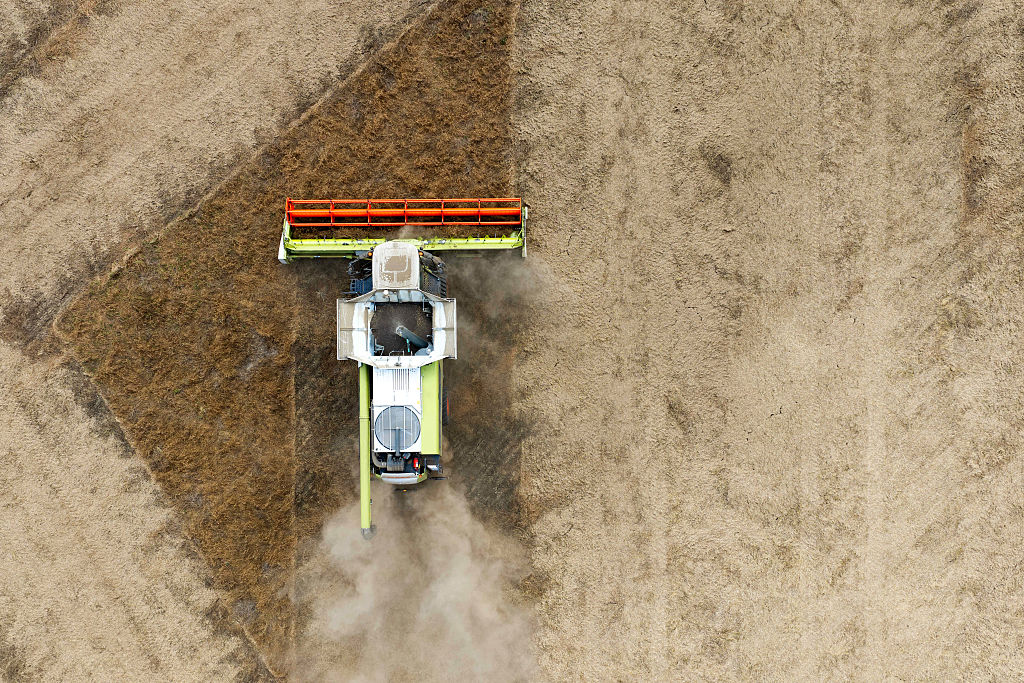
The scorching conditions have transformed the traditionally green English countryside into parched, khaki-colored landscapes more reminiscent of Mediterranean regions. Streams have dried to trickles or disappeared entirely, while dust clouds now rise from farm tracks across the nation.

The Environment Agency reports that England received just 3% of average rainfall for July, triggering what could become the worst cereal harvest since record-keeping began in 1984. Farmers are already reporting yields dramatically below average, with projected losses totaling £390 million in crop value alone.

Jake Fiennes, who manages the Holkham Estate in Kent, is grappling with unprecedented challenges as drought depletes the chalk aquifer that traditionally supplies fresh water to the coastal marshes where cattle graze. Sea water is now seeping into the farm’s drainage dykes, forcing farmers to move cattle indoors to barns where they can access piped water and shade.

The livestock sector is suffering equally severe consequences. UK milk production plummeted by 18.5 million liters in July as farms struggled to feed and cool their herds. The dried grass means livestock farmers must purchase additional feed, compounding already mounting costs.

In south Lincolnshire, Hannah Campbell and her mother Joy Dawson have spent weeks hauling water to their sheep after local ponds and rivers ran dry. They note the bitter irony that after enduring three months of summer drought, their region will likely face six months of winter flooding.

Hattie McPhee, who raises dairy sheep for cheese production in Cumbria, reports that her flock cannot produce adequate milk because their summer grazing is so poor. Her concerns extend beyond immediate losses to winter survival, as the hay she has managed to harvest is too dry and unpalatable for her animals.

Financial Devastation Mounting

Tom and Tess Darlington, tenant farmers on the Little Dalby estate in Leicestershire, face a shortfall of 300 tonnes of wheat worth approximately £60,000 due to collapsed summer yields. They will need to extend their overdraft simply to purchase seeds for next year’s planting.

Tom Darlington highlighted the crushing equipment costs facing modern farmers, noting that a single combine harvester now costs £600,000 or more. The capital investment required to maintain food production at current price levels has become unsustainable for many operations.

Soil Degradation Amplifying Crisis

While drought represents an act of nature, its severity is amplified by decades of intensive farming practices, as UnHerd reports. Large swaths of British farmland now consist of monocultures sustained by synthetic nutrients, resulting in significantly reduced soil organic matter.

These degraded soils may function adequately during years with normal moisture levels, but they dry out far more rapidly during drought conditions. The efficiency-focused agricultural model that has dominated British farming for decades is proving catastrophically vulnerable to climate extremes.

Consumer Impact Looming

British consumers will soon feel the consequences of this agricultural crisis through higher food prices and reduced product availability in coming months. The farming sector, which functions as a service industry providing food security, is warning that its current distress will translate directly to supermarket shelves.

The drought’s effects will persist long after rain eventually returns, as farmers must recover from both immediate crop losses and the cascading financial consequences of depleted feed stocks, emergency water provisions, and extended credit lines required to continue operations.

With information from UnHerd

Share:
Dimitris Papafotis
Dimitris Papafotis

Dimitris Papafotis is the editor-in-chief of NewsFire.GR. He was born and raised in Athens. He studied at the Journalism Workshop (1991-1993). He currently lives in Pyrgos, Ilia, where he has been active in radio and various newspapers, while also maintaining his personal blog, Papafotis.gr.

The scorching conditions have transformed the traditionally green English countryside into parched, khaki-colored landscapes more reminiscent of Mediterranean regions. Streams have dried to trickles or disappeared entirely, while dust clouds now rise from farm tracks across the nation.

The Environment Agency reports that England received just 3% of average rainfall for July, triggering what could become the worst cereal harvest since record-keeping began in 1984. Farmers are already reporting yields dramatically below average, with projected losses totaling £390 million in crop value alone.

Jake Fiennes, who manages the Holkham Estate in Kent, is grappling with unprecedented challenges as drought depletes the chalk aquifer that traditionally supplies fresh water to the coastal marshes where cattle graze. Sea water is now seeping into the farm’s drainage dykes, forcing farmers to move cattle indoors to barns where they can access piped water and shade.

The livestock sector is suffering equally severe consequences. UK milk production plummeted by 18.5 million liters in July as farms struggled to feed and cool their herds. The dried grass means livestock farmers must purchase additional feed, compounding already mounting costs.

In south Lincolnshire, Hannah Campbell and her mother Joy Dawson have spent weeks hauling water to their sheep after local ponds and rivers ran dry. They note the bitter irony that after enduring three months of summer drought, their region will likely face six months of winter flooding.

Hattie McPhee, who raises dairy sheep for cheese production in Cumbria, reports that her flock cannot produce adequate milk because their summer grazing is so poor. Her concerns extend beyond immediate losses to winter survival, as the hay she has managed to harvest is too dry and unpalatable for her animals.

Financial Devastation Mounting

Tom and Tess Darlington, tenant farmers on the Little Dalby estate in Leicestershire, face a shortfall of 300 tonnes of wheat worth approximately £60,000 due to collapsed summer yields. They will need to extend their overdraft simply to purchase seeds for next year’s planting.

Tom Darlington highlighted the crushing equipment costs facing modern farmers, noting that a single combine harvester now costs £600,000 or more. The capital investment required to maintain food production at current price levels has become unsustainable for many operations.

Soil Degradation Amplifying Crisis

While drought represents an act of nature, its severity is amplified by decades of intensive farming practices, as UnHerd reports. Large swaths of British farmland now consist of monocultures sustained by synthetic nutrients, resulting in significantly reduced soil organic matter.

These degraded soils may function adequately during years with normal moisture levels, but they dry out far more rapidly during drought conditions. The efficiency-focused agricultural model that has dominated British farming for decades is proving catastrophically vulnerable to climate extremes.

Consumer Impact Looming

British consumers will soon feel the consequences of this agricultural crisis through higher food prices and reduced product availability in coming months. The farming sector, which functions as a service industry providing food security, is warning that its current distress will translate directly to supermarket shelves.

The drought’s effects will persist long after rain eventually returns, as farmers must recover from both immediate crop losses and the cascading financial consequences of depleted feed stocks, emergency water provisions, and extended credit lines required to continue operations.

With information from UnHerd

