Daily Sabah: Greece as Israel’s Proxy Reveals Turkey’s Foreign Agenda
The Turkish Daily Sabah views Greece-Israel ties as a strategic move against Turkey, but this overlooks genuine geopolitical shifts driven by Ankara's assertive policies and Greece's pursuit of security and balance.
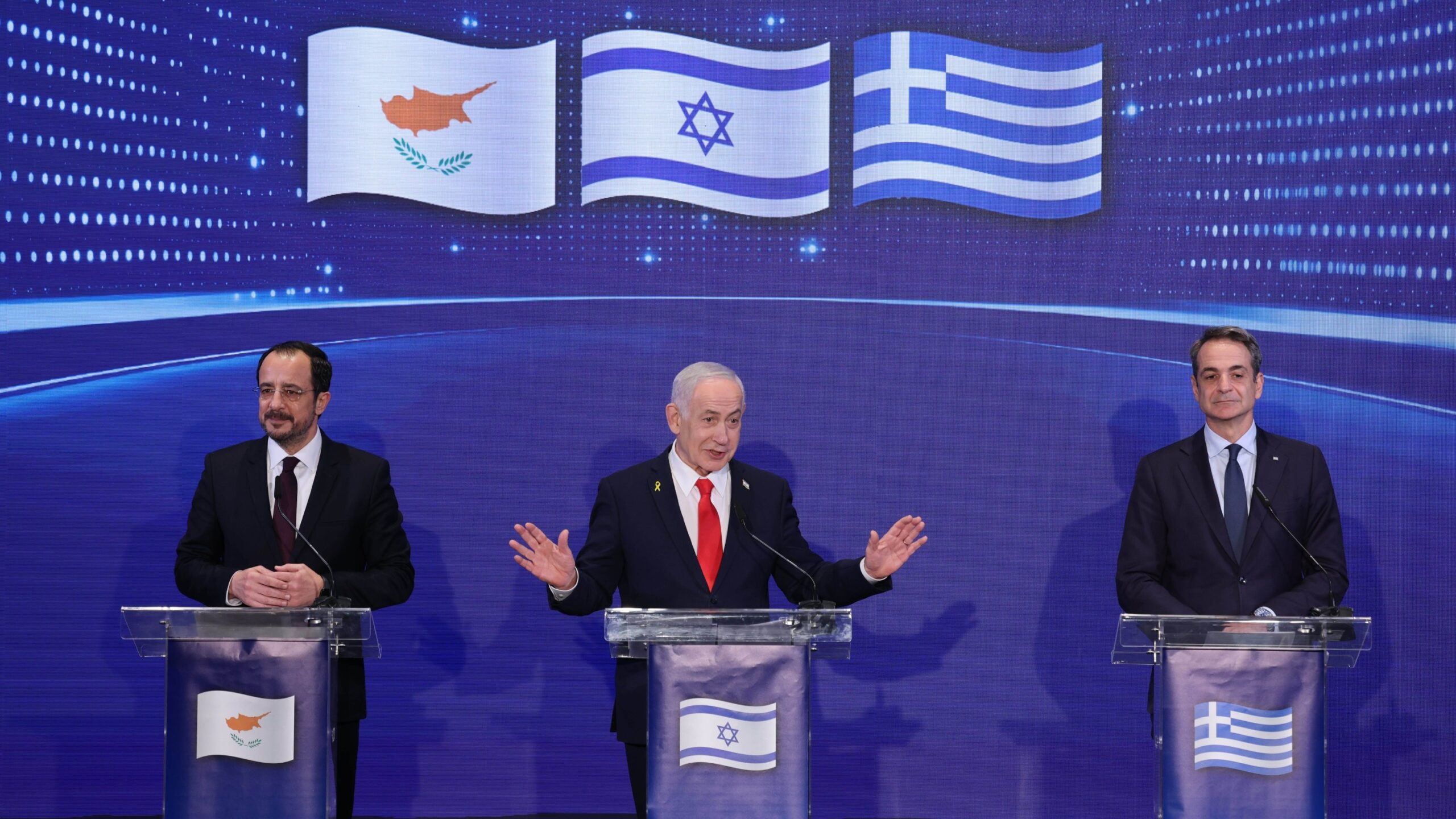

Today, the Turkish newspaper Daily Sabah attempts in an opinion article by İsmail Şahin to interpret the strengthening of Greece-Israel relations as part of a broader geopolitical plan aimed against Turkey. Its main argument is that Israel seeks to turn Greece and Cyprus into “proxy actors,” that is, proxies serving its own strategic goals in the Eastern Mediterranean, especially after the rupture of its relations with Ankara.
Within this framework, the newspaper presents military cooperation, joint exercises, and energy projects as elements of a wider effort to “encircle” Turkey, while implying that this alliance also has ideological characteristics, as a collaboration of “Western” states against an independent regional power.
The same narrative includes the emphasis placed on Greek participation in defense technology programs with Israeli assistance, as well as the use of Greek airspace and infrastructure for military training. The article argues that this relationship provides Israel with strategic depth that it lacks geographically, while at the same time enabling Greece to enhance its deterrent power. However, the overall assessment is decidedly negative, presenting it as a development that undermines NATO cohesion and intensifies regional tensions.
This approach is not merely exaggerated but fits within a consistent Turkish rhetoric that seeks to delegitimize any Greek cooperation with third countries. The concept of “proxy” functions more as a political label than a serious analytical category. Greece is not a state with limited sovereignty executing orders from others, but a member of the European Union and NATO with clearly defined national interests. The convergence with Israel arose from objective geopolitical conditions and not from external manipulation.
A decisive role in this convergence has been played by Turkey’s own policies in recent years. The aggressive rhetoric, the disputing of sovereign rights in the Aegean, the doctrine of the “Blue Homeland,” and ongoing pressure on the Republic of Cyprus have created an environment of insecurity that pushed Greece to seek reliable strategic partnerships. In this sense, the Greco-Israeli rapprochement is not a product of conspiracy but a natural reaction to a revisionist policy aiming to alter regional balances.
Moreover, presenting the cooperation as an ideological alliance of “non-Muslim” states is rather indicative of the article’s political objective. In reality, the Greece-Israel relations are based on specific and tangible interests, such as energy security, technological cooperation, and deterrence enhancement. Geopolitics operates in terms of power and interests, not cultural divides. The attempt to ideologize the partnership aims primarily at domestic consumption and rallying the Turkish audience.
Nevertheless, a serious Greek approach cannot be limited to rejecting Turkish arguments. There are indeed real issues that deserve attention. Close cooperation with Israel offers significant benefits, especially in defense and technology, but it also entails risks. Excessive dependence on a powerful partner may limit the autonomy of Greek foreign policy, while involvement in wider regional confrontations could create new challenges that do not directly concern Greek interests.
From this perspective, such cooperation is not to be rejected outright but sets as a key criterion the service of national interest with balance and realism. Greece must leverage its international relations to strengthen its deterrent power and geopolitical standing without sliding into the role of a given ally or into choices beyond its capacities.
Finally, it is worth noting that the Turkish invocation of “NATO cohesion” appears contradictory, given Ankara’s own choices in recent years, which have caused tensions within the Alliance. This does not negate the need for careful management of balances, but it weakens the argument that Greco-Israeli cooperation is the main factor of destabilization.
Overall, the Daily Sabah article reflects more the concerns and aims of Turkish foreign policy than an objective assessment of developments. The Greek response to this rhetoric cannot be either defensive or naive. It must be based on cool analysis, strengthening of national power, and steady adherence to the principle that alliances are means and not ends.