Necessary Cookies

Required for the site to function. Cannot be disabled.

Analytics Cookies

Help us understand how visitors interact with our site (Google Analytics via GTM).

Marketing Cookies

Used to track visitors and deliver personalised advertisements.

We use cookies to enhance your browsing experience and analyse site traffic. By clicking Accept All, you consent to our use of cookies. Privacy Policy
NewsFire Global
Home News Europe World Christianity Culture Wars Opinion Video
Information
About Us Authors Advertising Terms & Conditions Privacy Policy Contact
R2B Media
R2B NEWSFIRE.GR PAPAFOTIS.GR THRACTION HELLENIC CONSERVATIVES RIGHT2THEBONE YT
News Europe

Cyprus Issue Used To Block Progress In EU-Turkey Relations

Cyprus President Christodoulides' strategy of linking EU-Turkey relations to Cyprus dispute progress failed after Erdogan demanded concrete EU commitments before making concessions on the island.

Dimitris Papafotis
Dimitris Papafotis Editor in Chief
JULY 13, 2026 AT 8:49 PM

The Cypriot leader had previously convinced the EU to make the linkage a cornerstone of its approach to Turkey, a move initially hailed as a masterstroke that would compel Ankara to abandon its push for a two-state solution on the divided island. Yet as Cyprus Mail’s editorial column CM: Our View argues, the tactic has proven ineffective in practice, delivering impressive rhetoric but little tangible progress toward resolving the decades-old territorial standoff.

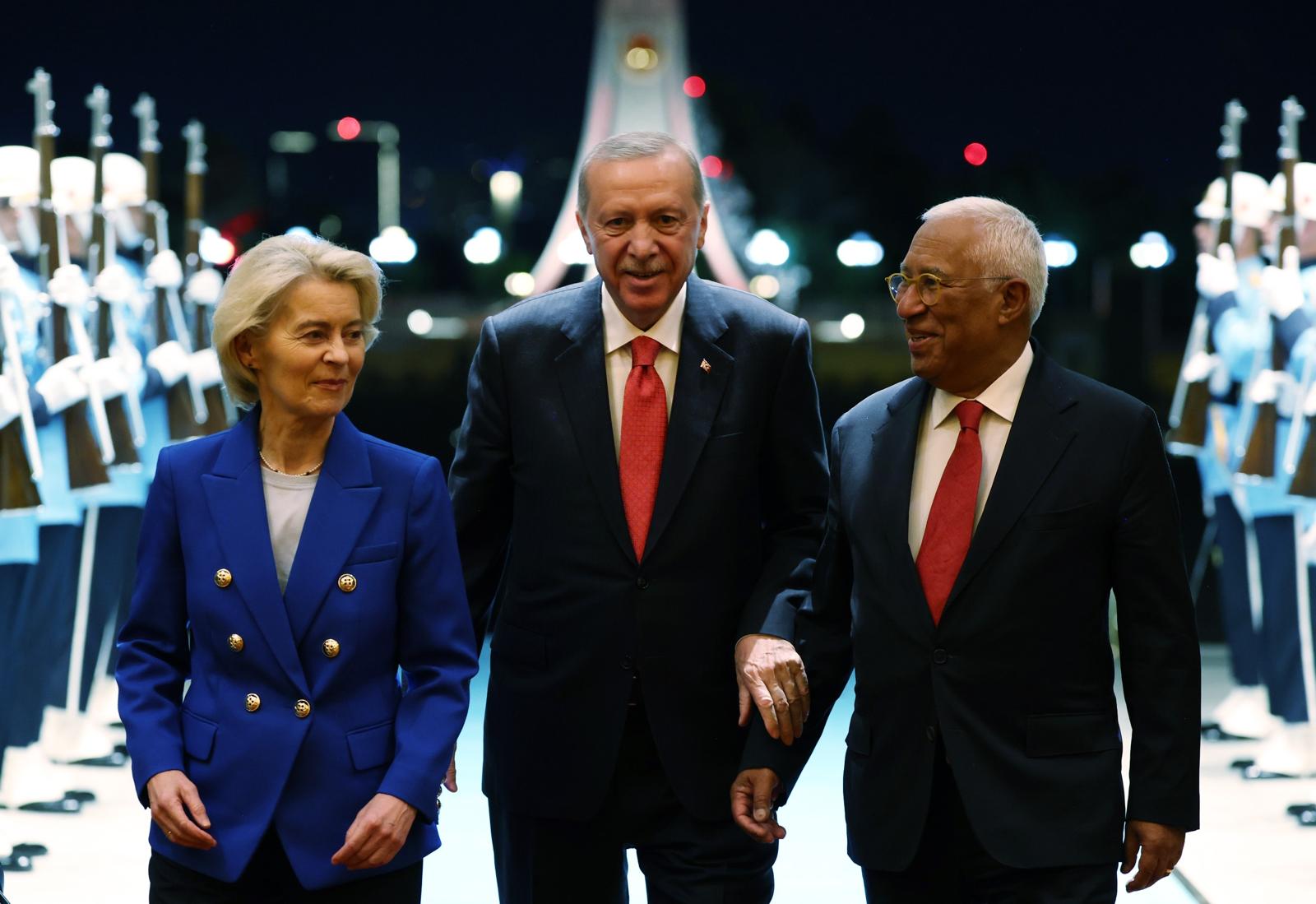
The shortcomings of this approach became glaringly apparent Wednesday evening when Turkish President Recep Tayyip Erdogan hosted European Commission President Ursula von der Leyen and European Council President Antonio Costa for talks in Ankara. Despite earlier signals from Cyprus that Erdogan would offer positive gestures on the Cyprus file in exchange for movement on EU-Turkey ties, the Turkish strongman instead demanded concrete commitments from Brussels before making any concessions regarding the island.

Hours before the gathering, Christodoulides had publicly predicted a sequenced breakthrough: Turkey would move first on Cyprus, followed by EU action on bilateral relations. That scenario never materialized. Press accounts from the dinner indicate Erdogan held firm, insisting on tangible EU pledges before addressing Cyprus—a stance that leaves both sides in deadlock given Nicosia’s refusal to greenlight EU-Turkey progress absent movement on the island.

The impasse casts doubt on the broader UN Secretary-General’s latest initiative to restart negotiations through a proposed 5+1 conference format. Rather than clearing obstacles to peace talks, the EU linkage strategy may have erected an additional barrier, according to the analysis in Cyprus Mail.

Christodoulides has made EU involvement his administration’s centerpiece, lobbying Brussels to appoint a special Cyprus envoy and declaring the dispute a “European problem.” While such positioning resonates with Greek Cypriot public opinion—which relishes symbolic victories over Turkey regardless of practical outcomes—it misjudged Erdogan’s willingness to yield to pressure channeled through European institutions.

The more probable outcome, CM: Our View contends, is that Brussels will engineer a face-saving compromise satisfying both Erdogan and the broader EU imperative of maintaining workable Turkey relations. For the EU’s major powers, progress with Ankara on migration, security, and trade matters carries strategic weight that may ultimately override Cypriot objections.

Government spokesman Konstantinos Letymbiotis struck a defiant tone following the Ankara dinner, insisting that all 27 member states and EU institutions remain united in requiring Ankara to demonstrate constructive intent on Cyprus before any movement on Turkey’s EU-related priorities. He declared this position enjoys unanimous backing across the bloc.

That assurance warrants skepticism. Several EU capitals maintain close economic and diplomatic ties with Turkey and will likely seek workarounds or softening of the hard linkage as time passes. Should Nicosia succeed in blocking all EU-Turkey advancement by refusing compromise, it risks simultaneously freezing any momentum on resolving the Cyprus question itself—effectively sabotaging the very UN peace process it claims to support.

The territory known internationally as the Turkish Pseudostate in Northern Cyprus remains under Ankara’s control following Turkey’s 1974 military intervention. Successive rounds of UN-mediated negotiations have failed to reunify the island, with Turkish officials increasingly vocal about formalizing permanent partition rather than pursuing federation formulas.

With information from Cyprus Mail

Share:
Dimitris Papafotis
Dimitris Papafotis

Dimitris Papafotis is the editor-in-chief of NewsFire.GR. He was born and raised in Athens. He studied at the Journalism Workshop (1991-1993). He currently lives in Pyrgos, Ilia, where he has been active in radio and various newspapers, while also maintaining his personal blog, Papafotis.gr.

The Cypriot leader had previously convinced the EU to make the linkage a cornerstone of its approach to Turkey, a move initially hailed as a masterstroke that would compel Ankara to abandon its push for a two-state solution on the divided island. Yet as Cyprus Mail’s editorial column CM: Our View argues, the tactic has proven ineffective in practice, delivering impressive rhetoric but little tangible progress toward resolving the decades-old territorial standoff.

The shortcomings of this approach became glaringly apparent Wednesday evening when Turkish President Recep Tayyip Erdogan hosted European Commission President Ursula von der Leyen and European Council President Antonio Costa for talks in Ankara. Despite earlier signals from Cyprus that Erdogan would offer positive gestures on the Cyprus file in exchange for movement on EU-Turkey ties, the Turkish strongman instead demanded concrete commitments from Brussels before making any concessions regarding the island.

Hours before the gathering, Christodoulides had publicly predicted a sequenced breakthrough: Turkey would move first on Cyprus, followed by EU action on bilateral relations. That scenario never materialized. Press accounts from the dinner indicate Erdogan held firm, insisting on tangible EU pledges before addressing Cyprus—a stance that leaves both sides in deadlock given Nicosia’s refusal to greenlight EU-Turkey progress absent movement on the island.

The impasse casts doubt on the broader UN Secretary-General’s latest initiative to restart negotiations through a proposed 5+1 conference format. Rather than clearing obstacles to peace talks, the EU linkage strategy may have erected an additional barrier, according to the analysis in Cyprus Mail.

Christodoulides has made EU involvement his administration’s centerpiece, lobbying Brussels to appoint a special Cyprus envoy and declaring the dispute a “European problem.” While such positioning resonates with Greek Cypriot public opinion—which relishes symbolic victories over Turkey regardless of practical outcomes—it misjudged Erdogan’s willingness to yield to pressure channeled through European institutions.

The more probable outcome, CM: Our View contends, is that Brussels will engineer a face-saving compromise satisfying both Erdogan and the broader EU imperative of maintaining workable Turkey relations. For the EU’s major powers, progress with Ankara on migration, security, and trade matters carries strategic weight that may ultimately override Cypriot objections.

Government spokesman Konstantinos Letymbiotis struck a defiant tone following the Ankara dinner, insisting that all 27 member states and EU institutions remain united in requiring Ankara to demonstrate constructive intent on Cyprus before any movement on Turkey’s EU-related priorities. He declared this position enjoys unanimous backing across the bloc.

That assurance warrants skepticism. Several EU capitals maintain close economic and diplomatic ties with Turkey and will likely seek workarounds or softening of the hard linkage as time passes. Should Nicosia succeed in blocking all EU-Turkey advancement by refusing compromise, it risks simultaneously freezing any momentum on resolving the Cyprus question itself—effectively sabotaging the very UN peace process it claims to support.

The territory known internationally as the Turkish Pseudostate in Northern Cyprus remains under Ankara’s control following Turkey’s 1974 military intervention. Successive rounds of UN-mediated negotiations have failed to reunify the island, with Turkish officials increasingly vocal about formalizing permanent partition rather than pursuing federation formulas.

With information from Cyprus Mail