
Conservative Christians Fight Back Against Green Party Inquiry on “Totalitarian Tendencies”
Germany's Green Party has submitted a parliamentary inquiry demanding information about alleged links between conservative Christians and right-wing extremism, specifically naming influencers and pastors.
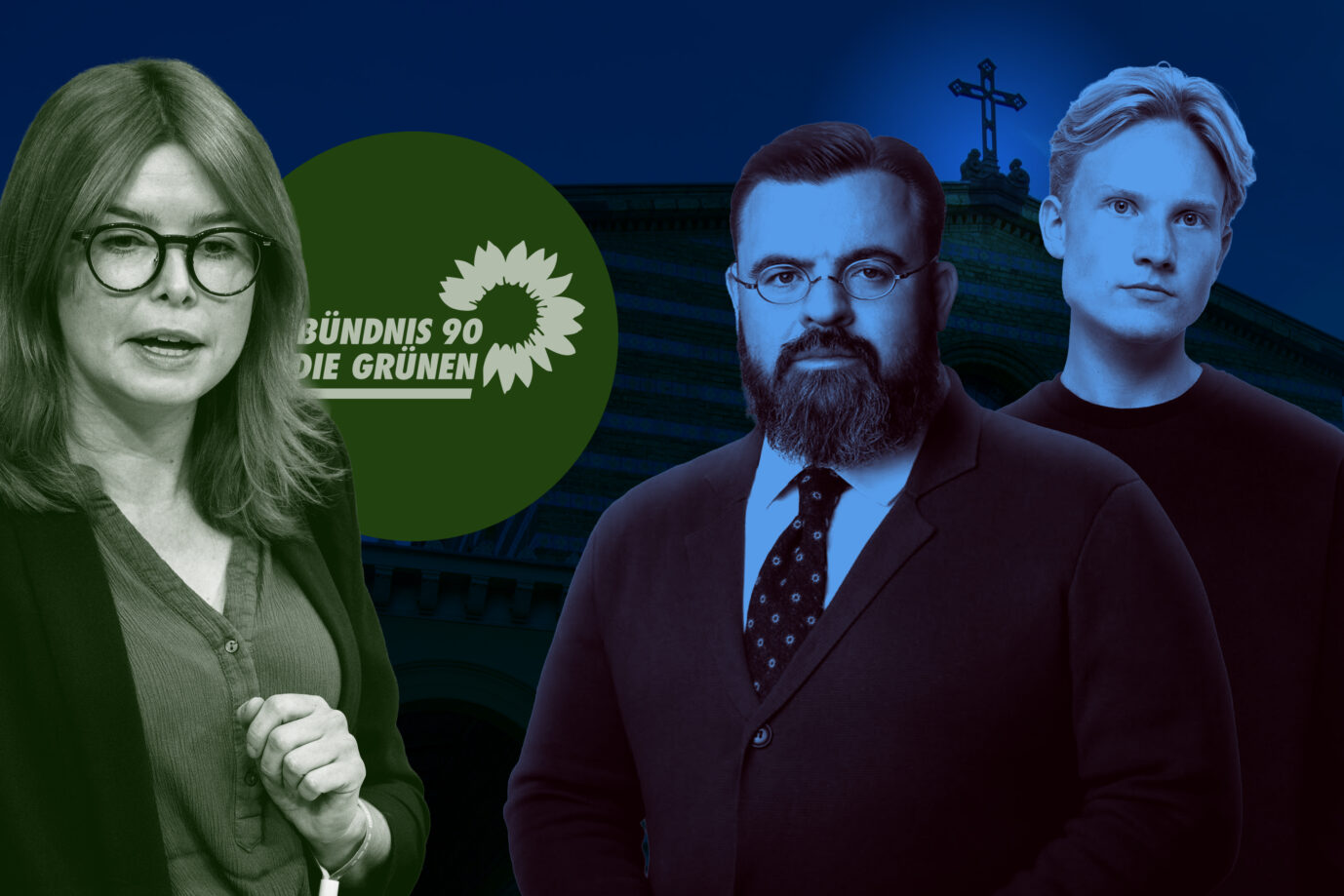

According to Junge Freiheit, the inquiry consists of 27 questions submitted in late May by Green Party interior policy spokeswoman Marlene Schönberger and her colleagues. The document is titled “Possible Connections between Christian Fundamentalism and Right-Wing Extremism in Germany.”
The Green Party explicitly references various media reports which allegedly show that certain groups and individuals described as Christian fundamentalists are spreading what the Greens characterize as right-conservative to right-extremist, anti-queer, anti-feminist, racist, anti-Semitic, and anti-democratic positions while invoking Christianity.
Conservative Christians Named Directly
The inquiry names several prominent figures in Germany’s conservative Christian community. Among them is Leonard Jäger, better known by his online persona “Ketzer der Neuzeit” (Heretic of Modern Times). Jäger started his YouTube channel with political content but was baptized in 2024 and now focuses heavily on faith topics. In 2025, he approached AfD party leader Alice Weidel about Jesus during a party congress.
Also mentioned is Tobias Riemenschneider, a conservative Reformed pastor from Frankfurt who has built a following through YouTube videos. Riemenschneider has repeatedly expressed support for the AfD. In February, speaking at a “Christians in the AfD” event, he suggested there might be early signs of Christianity’s return to Germany, which he said he only sees within the AfD. Riemenschneider contributed a Christmas guest article to Junge Freiheit.
The Greens also target Jana Hochhalter, known as Jana Highholder, a Christian influencer who advocates for conservative gender roles. Hochhalter has not been associated with AfD connections. Notably, she served as a YouTube ambassador for the Evangelical Church in Germany (EKD) between 2018 and 2020.
Pro-Life March and Legal Organizations Targeted
Beyond individuals, the Green Party inquiry lists several Christian organizations. These include Alliance Defending Freedom International (ADF), which advocates for the free speech rights of conservative Christians. The inquiry also mentions the Federal Association for the Right to Life and its “March for Life” event, attempting to link them to right-wing extremism.
The Greens want the federal government to disclose what information it has regarding the scope, structure, and threat potential of Christian fundamentalist milieus with connections to extremism in Germany. They also ask about connections between Christian influencers and right-extremist individuals, networks, or parties, specifically including the Alternative for Germany party.
Calls for Content Removal and Criminal Investigation
The inquiry explores what criminal investigation procedures the federal government knows about in connection with Christian fundamentalists. The Greens also want to know whether and to what extent children and young people are being radicalized by right-extremist influencers through anti-Semitic, anti-feminist, or anti-queer narratives in a Christian fundamentalist context.
Perhaps most alarmingly, the Green Party suggests political measures. They ask the federal government what specifically it is doing to ensure the consistent application of existing legal instruments for removing content in the digital space that is connected to Christian-motivated political extremism.
Christians Respond: Attempt to Criminalize Biblical Faith
Leonard Jäger responded confidently to the inquiry. He told Junge Freiheit that a few years ago, being a believing Christian simply meant being a boring Christian, but today it is enough to hold to biblical values to be placed near extremism by the Greens. He argued that Christianity has not changed, but rather the corridor of acceptable opinion in Germany has shifted.
Jäger said the inquiry clearly demonstrates the censorship reflex of a party that does not want to argue against Christian-conservative positions but rather wants to morally delegitimize them. He said this does not intimidate him, and that perhaps such headwinds are necessary because many Christians in the West have become comfortable, quiet, and conformist.
Tobias Riemenschneider told Junge Freiheit that the Greens apparently see the necessity of using the power of the state against Bible-believing Christians and their convictions, since certain statements of Holy Scripture, particularly regarding protection of life and sexuality, conflict with the left-woke ideology of the Greens. Riemenschneider characterized the inquiry as an attempt to stigmatize and criminalize historically Christian beliefs, describing it as an expression of totalitarian tendencies.
Pattern of Media Targeting
The parliamentary inquiry follows a pattern of increased media interest in alleged Christian fundamentalists and their supposed connections to right-wing extremism, as Junge Freiheit reports. Public broadcasters ARD and ZDF have recently aired documentaries with notable frequency in which conservative Christians were portrayed negatively.
The Green Party inquiry represents the issue’s arrival in the Bundestag, transforming what had been a media narrative into formal government scrutiny of conservative Christians and their organizations. The targeting of mainstream pro-life advocates, family-focused influencers, and legal defense organizations suggests an expansive definition of what the Greens consider extremist Christianity.
With information from Junge Freiheit





