Necessary Cookies

Required for the site to function. Cannot be disabled.

Analytics Cookies

Help us understand how visitors interact with our site (Google Analytics via GTM).

Marketing Cookies

Used to track visitors and deliver personalised advertisements.

We use cookies to enhance your browsing experience and analyse site traffic. By clicking Accept All, you consent to our use of cookies. Privacy Policy
NewsFire Global
Home News Europe World Christianity Culture Wars Opinion Video
Information
About Us Authors Advertising Terms & Conditions Privacy Policy Contact
R2B Media
R2B NEWSFIRE.GR PAPAFOTIS.GR THRACTION HELLENIC CONSERVATIVES RIGHT2THEBONE YT
News Culture Wars

Colin Kaepernick’s Woke Era Fades But He Refuses to Exit Stage

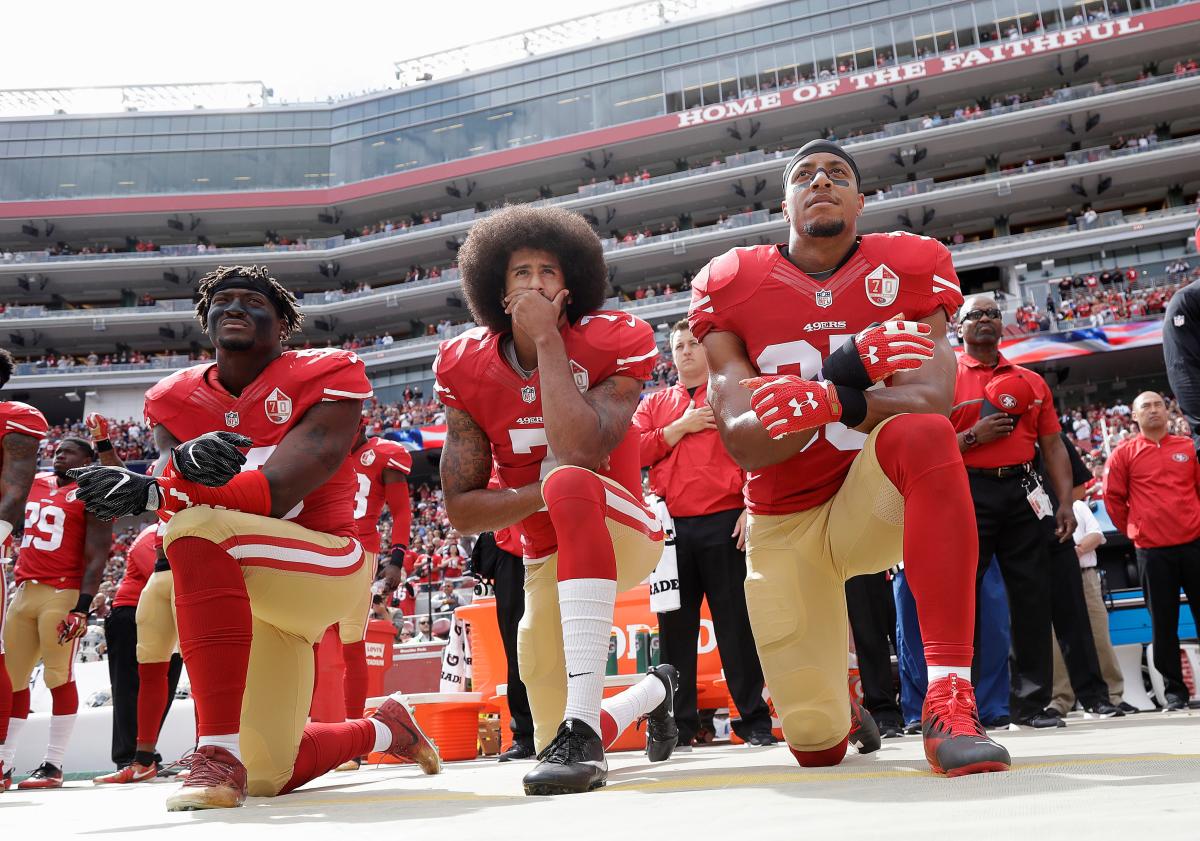
Colin Kaepernick marks the tenth anniversary of his national anthem protests with a new memoir, though his NFL career decline preceded the controversy that overshadowed his playing ability.
Stefanos Banos
Stefanos Banos Staff Writer
SEPTEMBER 6, 2026 AT 10:28 PM

In a recent interview with NBC News promoting his book “The Perilful Fight,” Kaepernick defended his decision to kneel during the national anthem while playing for the San Francisco 49ers, according to Rich Lowry writing in New York Post. The former quarterback claimed his protests targeted police violence against black Americans and systemic oppression, while comparing himself to civil rights icons Rosa Parks and Martin Luther King.

Career Decline Preceded Protest Controversy

While Kaepernick frames himself as a martyr who sacrificed his career for principle, the reality is more complex. At his peak in 2012 and 2013, he was indeed an exceptional athlete. His 2012 playoff performance saw him pass for 263 yards while rushing for 181 yards, setting a single-game NFL record for quarterback rushing yards.

However, his performance deteriorated sharply by 2015, when he lost his starting position to journeyman quarterback Blaine Gabbert. Though he regained the starting role briefly in 2016, his play was abysmal. In one game that season, he threw for just four yards before being benched. The 49ers posted a 1-10 record in his starts, and by advanced metrics he ranked 23rd among 30 qualifying quarterbacks that year.

Unmarketable Package for NFL Teams

By 2017, when Kaepernick became a free agent, teams faced a calculation: sign a declining, mediocre quarterback whose playing style fit few offensive systems, who would also bring enormous controversy and media distraction through his anthem protests. The choice was straightforward for most franchises, which had numerous backup quarterback options without the baggage.

Had Kaepernick maintained his 2012 elite performance level, teams would have signed him regardless of his protests. Athletic excellence covers many sins in professional sports. But as a 38-year-old who has not played in a decade, he now bizarrely positions himself as excluded from a league he once compared to slavery in a Netflix documentary.

Disastrous Policy Legacy

The substantive impact of Kaepernick’s anti-police activism reached its zenith following George Floyd’s death in 2020. The NFL effectively apologized for not embracing his worldview, while police departments across America were hamstrung by political hostility.

The consequences were predictable and tragic. Violent crime surged nationwide, with black communities suffering disproportionate harm from the resulting lawlessness. The country has only recently recovered from what was exposed as a false narrative that police indiscriminately kill black Americans.

Kaepernick’s preferred policies of abolishing police and prisons would trigger the worst crime wave in American history, devastating the very communities he claims to champion.

No Muhammad Ali

Some have attempted to compare Kaepernick to boxing legend Muhammad Ali, who sacrificed years of his prime career by refusing military service during the Vietnam War. But Ali possessed genuine transcendent greatness as an athlete, magnetic charisma, and cultural significance that allowed him to eventually become a beloved American icon despite early controversy.

Kaepernick’s sole claim to cultural relevance is kneeling on NFL sidelines. His legacy will not follow Ali’s redemptive arc.

The former quarterback dismisses as performative the league’s current gestures toward his cause, including “End Racism” painted in end zones. He is correct that such messaging is empty theatre. But so was his contemptuous rejection of his own nation’s anthem a decade ago.

With information from New York Post

Share:
Stefanos Banos
Stefanos Banos

Stefanos Banos was born in Piraeus and is an editor at NewsFire.GR, specializing in political analysis and international relations. He graduated from the Department of Communication and Media at the University of Bremen in Germany, where he also completed his Master of Arts in Communication and Media Studies. Married to Zoi, he is a proud father of three boys.

Recent News

In a recent interview with NBC News promoting his book “The Perilful Fight,” Kaepernick defended his decision to kneel during the national anthem while playing for the San Francisco 49ers, according to Rich Lowry writing in New York Post. The former quarterback claimed his protests targeted police violence against black Americans and systemic oppression, while comparing himself to civil rights icons Rosa Parks and Martin Luther King.

Career Decline Preceded Protest Controversy

While Kaepernick frames himself as a martyr who sacrificed his career for principle, the reality is more complex. At his peak in 2012 and 2013, he was indeed an exceptional athlete. His 2012 playoff performance saw him pass for 263 yards while rushing for 181 yards, setting a single-game NFL record for quarterback rushing yards.

However, his performance deteriorated sharply by 2015, when he lost his starting position to journeyman quarterback Blaine Gabbert. Though he regained the starting role briefly in 2016, his play was abysmal. In one game that season, he threw for just four yards before being benched. The 49ers posted a 1-10 record in his starts, and by advanced metrics he ranked 23rd among 30 qualifying quarterbacks that year.

Unmarketable Package for NFL Teams

By 2017, when Kaepernick became a free agent, teams faced a calculation: sign a declining, mediocre quarterback whose playing style fit few offensive systems, who would also bring enormous controversy and media distraction through his anthem protests. The choice was straightforward for most franchises, which had numerous backup quarterback options without the baggage.

Had Kaepernick maintained his 2012 elite performance level, teams would have signed him regardless of his protests. Athletic excellence covers many sins in professional sports. But as a 38-year-old who has not played in a decade, he now bizarrely positions himself as excluded from a league he once compared to slavery in a Netflix documentary.

Disastrous Policy Legacy

The substantive impact of Kaepernick’s anti-police activism reached its zenith following George Floyd’s death in 2020. The NFL effectively apologized for not embracing his worldview, while police departments across America were hamstrung by political hostility.

The consequences were predictable and tragic. Violent crime surged nationwide, with black communities suffering disproportionate harm from the resulting lawlessness. The country has only recently recovered from what was exposed as a false narrative that police indiscriminately kill black Americans.

Kaepernick’s preferred policies of abolishing police and prisons would trigger the worst crime wave in American history, devastating the very communities he claims to champion.

No Muhammad Ali

Some have attempted to compare Kaepernick to boxing legend Muhammad Ali, who sacrificed years of his prime career by refusing military service during the Vietnam War. But Ali possessed genuine transcendent greatness as an athlete, magnetic charisma, and cultural significance that allowed him to eventually become a beloved American icon despite early controversy.

Kaepernick’s sole claim to cultural relevance is kneeling on NFL sidelines. His legacy will not follow Ali’s redemptive arc.

The former quarterback dismisses as performative the league’s current gestures toward his cause, including “End Racism” painted in end zones. He is correct that such messaging is empty theatre. But so was his contemptuous rejection of his own nation’s anthem a decade ago.

With information from New York Post