
Brussels’ Silence on Turkish Cyprus Occupation Called “Cowardice”
A Greek MEP's chief of staff condemned the EU's failure to confront Turkey over Cyprus's occupation as cowardice driven by migration control and NATO strategy concerns.

Emmanouil Koulas, who serves as chief of staff to the Greek parliamentarian, laid bare what he sees as the cynical calculus behind European institutions’ unwillingness to challenge Ankara over the Turkish pseudostate in northern Cyprus, according to The European Conservative.
Brussels maintains its silence, Koulas explained, because Turkey wields two critical forms of leverage over the continent: control over illegal migration flows that can be opened or closed at will, and its strategic position on NATO’s southern flank that Western powers are unwilling to jeopardize.
The remarks come as the European Union continues accession negotiations with Turkey despite the ongoing occupation, which began with the 1974 invasion and has left the island divided for more than five decades. The Turkish pseudostate in northern Cyprus remains unrecognized by all nations except Turkey itself, yet Brussels has consistently avoided taking meaningful action to pressure Ankara on the issue.
Cyprus, an EU member state since 2004, has seen approximately 37% of its territory remain under foreign military occupation—a situation unique among member nations and one that theoretically should bar Turkey from any path toward EU membership. Yet European officials have repeatedly sidestepped the Cyprus question in favor of maintaining working relationships with the Turkish government.
The strategic calculation outlined by Koulas reflects a broader pattern in EU-Turkey relations, where Brussels has repeatedly prioritized short-term stability and migration management over principles of territorial integrity and international law. The 2016 EU-Turkey migration deal, which saw billions of euros flow to Ankara in exchange for preventing migrants from crossing into Greece, exemplified this transactional approach.
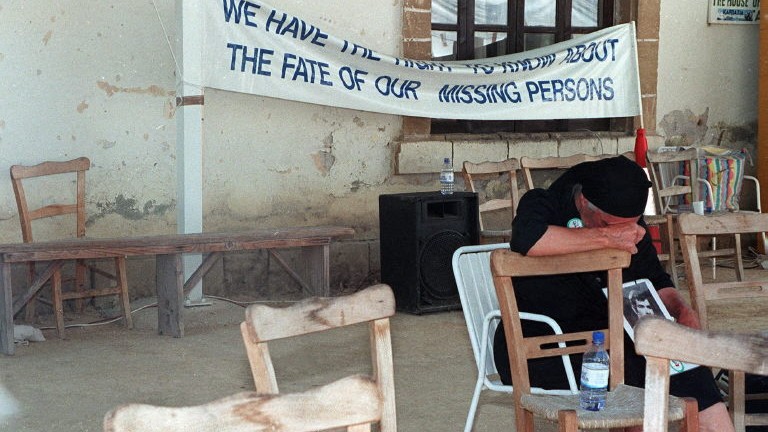
For Cyprus and its supporters in the European Parliament, the EU’s stance represents a fundamental betrayal of one of its own member states. The occupation has resulted in the displacement of hundreds of thousands of Greek Cypriots from their homes, the ongoing presence of tens of thousands of Turkish troops on EU soil, and the effective partition of an EU member state along ethnic and religious lines.
NATO membership considerations add another layer of complexity, as Turkey controls access to the Black Sea through the Bosporus and Dardanelles straits and maintains the alliance’s second-largest military. Western capitals have consistently proven unwilling to jeopardize these strategic advantages, even when confronted with clear violations of international law.
The interview with Koulas underscores growing frustration among conservative and sovereignty-minded voices in Europe who view the EU’s accommodation of Turkey as symptomatic of a broader institutional weakness—one that prioritizes bureaucratic convenience and geopolitical expediency over the rights and territorial integrity of member states.
With information from The European Conservative





