Necessary Cookies

Required for the site to function. Cannot be disabled.

Analytics Cookies

Help us understand how visitors interact with our site (Google Analytics via GTM).

Marketing Cookies

Used to track visitors and deliver personalised advertisements.

We use cookies to enhance your browsing experience and analyse site traffic. By clicking Accept All, you consent to our use of cookies. Privacy Policy
NewsFire Global
Home News Europe World Christianity Culture Wars Opinion Video
Information
About Us Authors Advertising Terms & Conditions Privacy Policy Contact
R2B Media
R2B NEWSFIRE.GR PAPAFOTIS.GR THRACTION HELLENIC CONSERVATIVES RIGHT2THEBONE YT
News Europe

Book Fair: No Censorship Found, But Investigation Continues as Left Attacks Meloni

Italian Prime Minister Giorgia Meloni condemned a Rome book fair's requirement that participants sign an anti-fascist declaration, calling it censorship and sparking political division.
Stefanos Banos
Stefanos Banos Staff Writer
JUNE 14, 2026 AT 7:40 PM

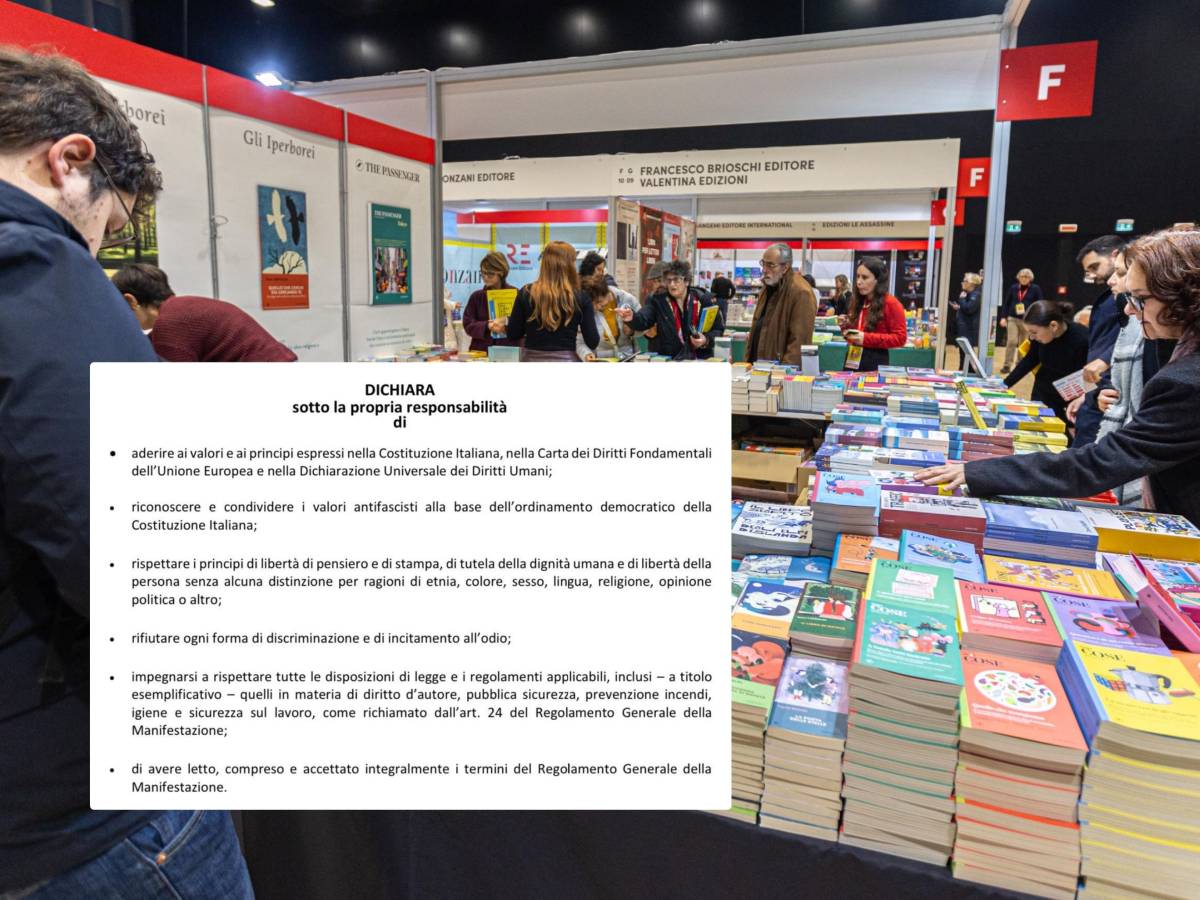
The dispute centers on the Più Libri Più Liberi book fair, where publishers were asked to endorse a statement affirming anti-fascist principles as a condition of participation. According to Il Giornale, the requirement drew sharp criticism from Meloni, who characterized the measure as an attempt to restrict free expression in the cultural sphere.
"Più libri, più liberi": nessuna censura. ma approfondiremo. E la sinistra attacca Meloni: “Gravissimo”
Photo: ilgiornale.it

The controversy has divided Italian politics along familiar lines. Angelo Bonelli of the Green-Left Alliance attacked the Prime Minister’s position, claiming that anti-fascism represents a foundational value of Italy’s Constitution and democracy. He accused Meloni of rejecting the constitutional basis of the democratic order, calling her stance extremely serious.

However, as Il Giornale reports, Bonelli’s assertion contains a significant factual error. The word “anti-fascism” does not appear even once in the Italian Constitution, despite being drafted by distinguished minds from various political backgrounds in the immediate aftermath of the fascist dictatorship. The Constitution’s framers, though painfully aware of the dictatorship they had just escaped, did not feel compelled to explicitly anchor the document to anti-fascism.

The requirement becomes all the more peculiar given that the fascist party in question ceased to exist in the middle of the last century, yet certain political actors continue to demand signed declarations against it eight decades later.

Giuseppe Conte, leader of the Five Star Movement and former Prime Minister, dismissed the controversy as a weekend distraction. He suggested Meloni was deflecting attention from pressing issues including declining real wages, falling industrial production, and Italy’s international credibility. Conte accused the Prime Minister of creating a story that would dominate news coverage while Italians await answers on poverty after four years.

Yet Conte conveniently omitted that the current government inherited severe fiscal challenges following the economic damage that occurred under his own leadership, forcing difficult budget reconciliation efforts.

Iacoviello, dal Chianti al Giappone
Photo: ilgiornale.it

Organizers of Più Libri Più Liberi defended their position, insisting that requiring participants to endorse constitutional, democratic, and fundamental principles does not constitute censorship. They framed it as a necessity for clarity and unity among the diverse participants at the fair.

This argument returns to the central problem: anti-fascism is not present in the Constitution itself. The organizers expressed regret over the escalating situation, noting that the Prime Minister’s intervention and resulting public debate compel further careful examination out of institutional respect.

The episode raises fundamental questions about freedom of expression in a mature democracy. In a truly democratic country confident in its own foundations, no book should be feared regardless of its content. When text selection becomes based on ideological content, the practice begins to resemble the very censorship it claims to oppose.

The controversy also echoes a recent incident involving a left-wing municipal administration that initially required residents to sign an anti-fascist declaration even to request a driveway permit for their own homes, before eventually backing down from the requirement.

The dispute highlights the ongoing tension in Italian politics between those who invoke anti-fascism as a contemporary litmus test and those who view such requirements as anachronistic restrictions on democratic participation and free expression in modern Italy.

With information from Il Giornale

Share:
Stefanos Banos
Stefanos Banos

Stefanos Banos was born in Piraeus and is an editor at NewsFire.GR, specializing in political analysis and international relations. He graduated from the Department of Communication and Media at the University of Bremen in Germany, where he also completed his Master of Arts in Communication and Media Studies. Married to Zoi, he is a proud father of three boys.

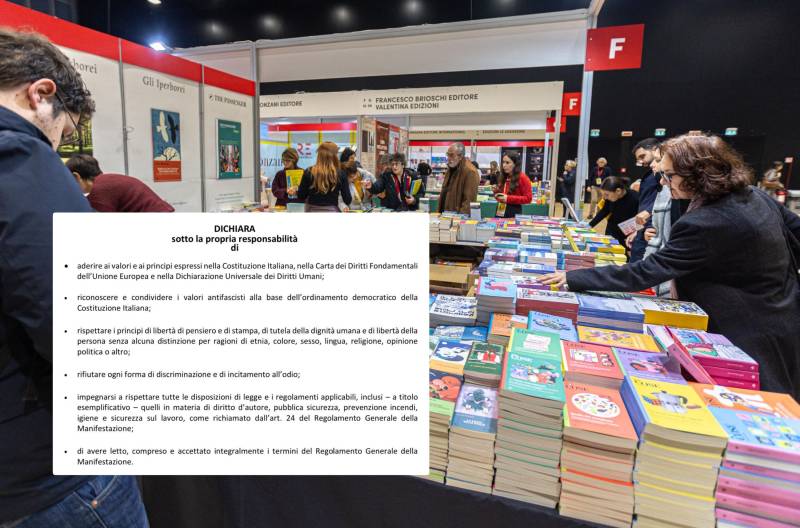
The dispute centers on the Più Libri Più Liberi book fair, where publishers were asked to endorse a statement affirming anti-fascist principles as a condition of participation. According to Il Giornale, the requirement drew sharp criticism from Meloni, who characterized the measure as an attempt to restrict free expression in the cultural sphere.

"Più libri, più liberi": nessuna censura. ma approfondiremo. E la sinistra attacca Meloni: “Gravissimo”
Photo: ilgiornale.it

The controversy has divided Italian politics along familiar lines. Angelo Bonelli of the Green-Left Alliance attacked the Prime Minister’s position, claiming that anti-fascism represents a foundational value of Italy’s Constitution and democracy. He accused Meloni of rejecting the constitutional basis of the democratic order, calling her stance extremely serious.

However, as Il Giornale reports, Bonelli’s assertion contains a significant factual error. The word “anti-fascism” does not appear even once in the Italian Constitution, despite being drafted by distinguished minds from various political backgrounds in the immediate aftermath of the fascist dictatorship. The Constitution’s framers, though painfully aware of the dictatorship they had just escaped, did not feel compelled to explicitly anchor the document to anti-fascism.

The requirement becomes all the more peculiar given that the fascist party in question ceased to exist in the middle of the last century, yet certain political actors continue to demand signed declarations against it eight decades later.

Giuseppe Conte, leader of the Five Star Movement and former Prime Minister, dismissed the controversy as a weekend distraction. He suggested Meloni was deflecting attention from pressing issues including declining real wages, falling industrial production, and Italy’s international credibility. Conte accused the Prime Minister of creating a story that would dominate news coverage while Italians await answers on poverty after four years.

Yet Conte conveniently omitted that the current government inherited severe fiscal challenges following the economic damage that occurred under his own leadership, forcing difficult budget reconciliation efforts.

Iacoviello, dal Chianti al Giappone
Photo: ilgiornale.it

Organizers of Più Libri Più Liberi defended their position, insisting that requiring participants to endorse constitutional, democratic, and fundamental principles does not constitute censorship. They framed it as a necessity for clarity and unity among the diverse participants at the fair.

This argument returns to the central problem: anti-fascism is not present in the Constitution itself. The organizers expressed regret over the escalating situation, noting that the Prime Minister’s intervention and resulting public debate compel further careful examination out of institutional respect.

The episode raises fundamental questions about freedom of expression in a mature democracy. In a truly democratic country confident in its own foundations, no book should be feared regardless of its content. When text selection becomes based on ideological content, the practice begins to resemble the very censorship it claims to oppose.

The controversy also echoes a recent incident involving a left-wing municipal administration that initially required residents to sign an anti-fascist declaration even to request a driveway permit for their own homes, before eventually backing down from the requirement.

The dispute highlights the ongoing tension in Italian politics between those who invoke anti-fascism as a contemporary litmus test and those who view such requirements as anachronistic restrictions on democratic participation and free expression in modern Italy.

With information from Il Giornale

