Necessary Cookies

Required for the site to function. Cannot be disabled.

Analytics Cookies

Help us understand how visitors interact with our site (Google Analytics via GTM).

Marketing Cookies

Used to track visitors and deliver personalised advertisements.

We use cookies to enhance your browsing experience and analyse site traffic. By clicking Accept All, you consent to our use of cookies. Privacy Policy
NewsFire Global
Home News Europe World Christianity Culture Wars Opinion Video
Information
About Us Authors Advertising Terms & Conditions Privacy Policy Contact
R2B Media
R2B NEWSFIRE.GR PAPAFOTIS.GR THRACTION HELLENIC CONSERVATIVES RIGHT2THEBONE YT
News Europe

Blue Earthquake! Current Tally: Not Enough for Absolute Majority

The Alternative for Germany party won a decisive victory in Saxony-Anhalt with 44 percent of the vote, while the ruling Christian Democrats collapsed to 17.8 percent.


Dimitris Papafotis
Dimitris Papafotis Editor in Chief
SEPTEMBER 6, 2026 AT 10:57 PM

According to Nius, the AfD’s lead candidate Ulrich Siegmund achieved a massive surge of 23.2 percentage points compared to the last election, while the CDU under Minister President Sven Schulze lost nearly half its previous support, dropping 19.3 points to land in second place with just 17.8 percent.

The results as of 21:08 local time show the Left party at 8.8 percent, down 2.2 points, while the Social Democrats managed 9.1 percent, a modest gain of 0.7 points. The Greens reached 8.7 percent, up 2.8 points, while the Free Democrats fell out of the state parliament entirely with just 2.3 percent, down 4 points from their previous result. The Sahra Wagenknecht Alliance, competing for the first time, secured 5.1 percent of the vote.

AfD-Spitzenkandidat Ulrich Siegmund kam gemeinsam mit seiner Ehefrau Julia Siegmund auf einer Simson Schwalbe zur Stimmabgabe ins Wahllokal.
Photo: nius.de

The projected seat distribution in the 83-member state parliament gives the AfD 39 mandates, the CDU 16, and eight seats each to the Left, the SPD, and the Greens. The BSW is projected to receive four seats according to public broadcaster ARD.

Absolute Majority Remains Uncertain

Whether the AfD will achieve an absolute majority depends on the final counting and whether the BSW clears the five percent threshold. If the Wagenknecht party falls short, the AfD would secure enough seats to govern alone. If the BSW enters the parliament, the AfD would fall just short of an outright majority.

Voter turnout reached historic levels, with participation between 76.9 and 78.1 percent, compared to just 60.3 percent in the 2021 election. Nearly 1.7 million citizens were eligible to vote in the eastern German state.
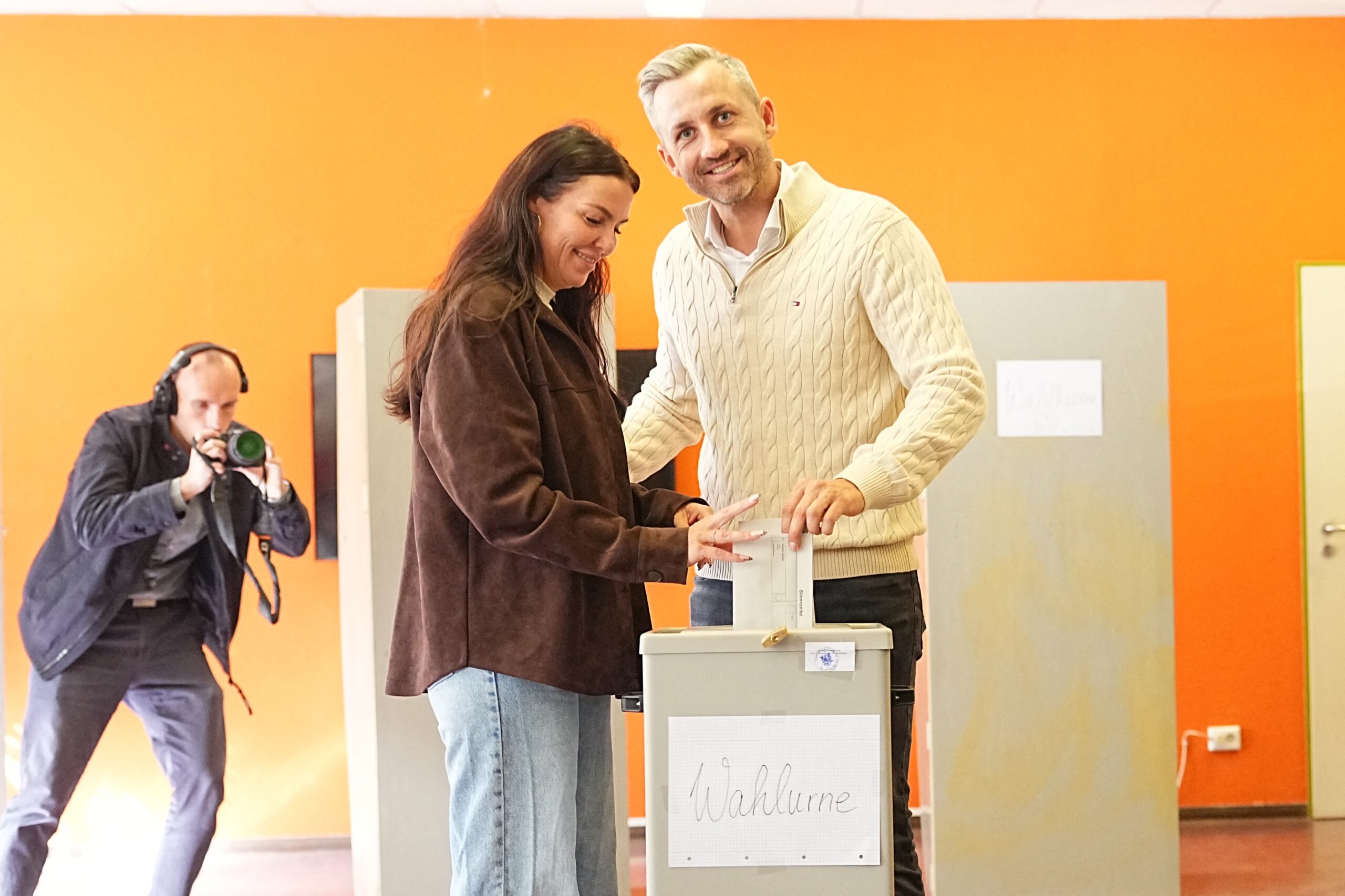
AfD-Spitzenkandidat Ulrich Siegmund und seine Ehefrau Julia bei der Stimmabgabe.
Photo: nius.de

Pre-Election Polling Proved Accurate

The results largely confirmed pre-election surveys that had consistently shown the AfD with a commanding lead. The final poll released Thursday by the Forschungsgruppe Wahlen research institute for ZDF public television had projected the AfD at 41 percent and the CDU at 23 percent, with the Left at 11.5 percent, the SPD at 8.5 percent, and the Greens at 6 percent. Both the BSW and FDP were shown below the five percent threshold in that survey.

Siegmund arrived at his polling station together with his wife Julia Siegmund, making a symbolic entrance on a Simson Schwalbe motorcycle, a product of the former East German industrial economy.
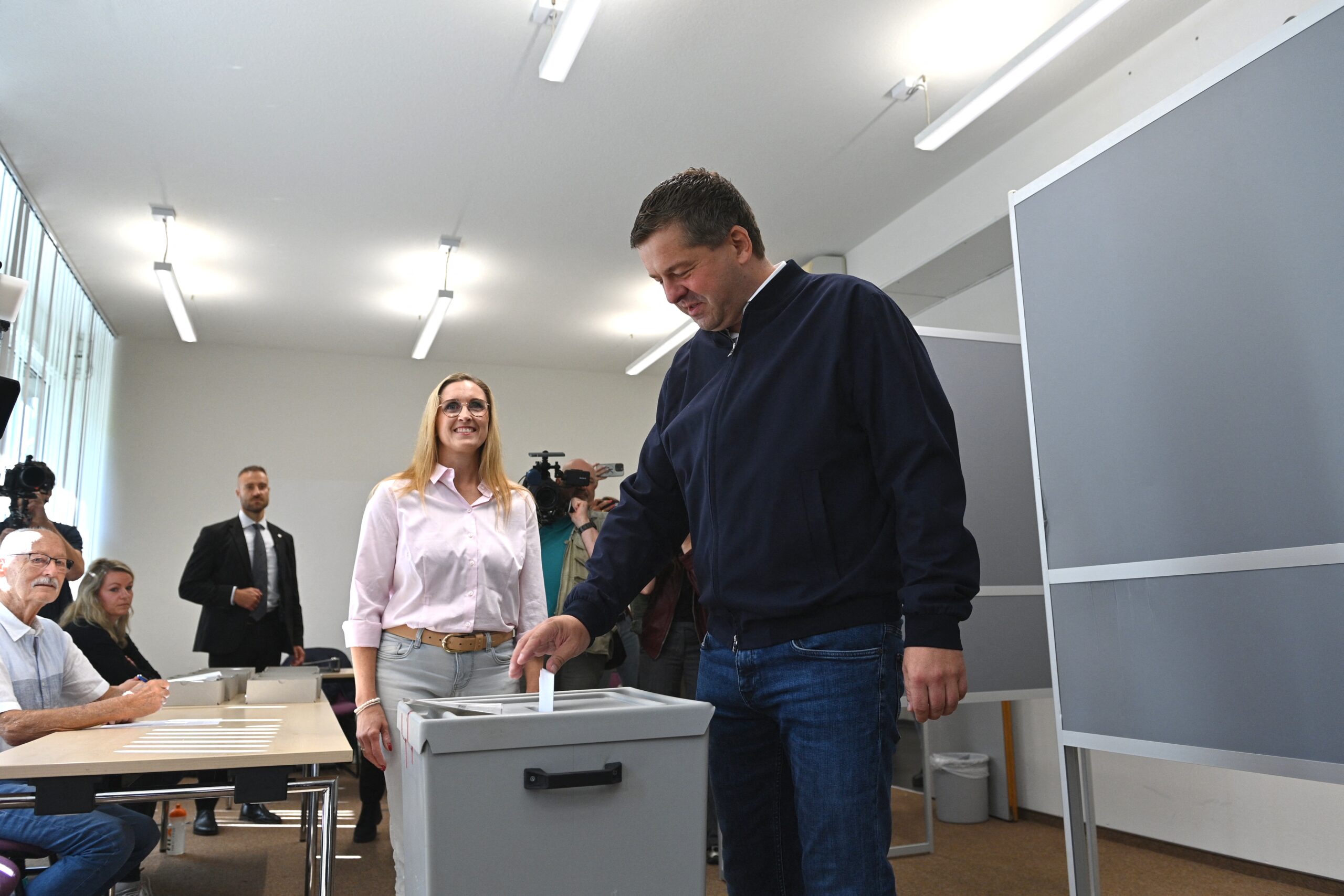
CDU-Ministerpräsident Sven Schulze wirft seinen gefalteten Stimmzettel in die Wahlurne. Hinter ihm steht seine Ehefrau Kati Schulze.
Photo: nius.de

Government Formation Scenarios

Two scenarios now appear most likely in the aftermath of the election. If the AfD secures an absolute majority, it would form Germany’s first AfD-led state government. If the party falls short of that threshold, the most probable outcome would be a CDU-led minority government dependent on support from the Left party on key votes, similar to arrangements currently in place in Saxony and Thuringia.

Both Minister President Schulze and federal CDU leader Friedrich Merz, along with Bavarian premier Markus Söder, had indicated openness to such an arrangement in recent statements.

Under the state constitution, the new parliament must convene no later than 30 days after the election, meaning by October 6 at the latest. On that date, the terms of the current ministers and government head formally expire, though they are constitutionally required to continue managing affairs until successors are sworn in. There is no deadline for when a new minister president must be elected, though procedural timelines govern subsequent voting rounds if initial attempts fail.

More Elections on the Horizon

The Saxony-Anhalt result sets the stage for two more crucial state elections in just two weeks, when voters in Mecklenburg-Western Pomerania and Berlin head to the polls.

With information from Nius

Share:
Dimitris Papafotis
Dimitris Papafotis

Dimitris Papafotis is the editor-in-chief of NewsFire.GR. He was born and raised in Athens. He studied at the Journalism Workshop (1991-1993). He currently lives in Pyrgos, Ilia, where he has been active in radio and various newspapers, while also maintaining his personal blog, Papafotis.gr.

Recent News

According to Nius, the AfD’s lead candidate Ulrich Siegmund achieved a massive surge of 23.2 percentage points compared to the last election, while the CDU under Minister President Sven Schulze lost nearly half its previous support, dropping 19.3 points to land in second place with just 17.8 percent.

The results as of 21:08 local time show the Left party at 8.8 percent, down 2.2 points, while the Social Democrats managed 9.1 percent, a modest gain of 0.7 points. The Greens reached 8.7 percent, up 2.8 points, while the Free Democrats fell out of the state parliament entirely with just 2.3 percent, down 4 points from their previous result. The Sahra Wagenknecht Alliance, competing for the first time, secured 5.1 percent of the vote.

AfD-Spitzenkandidat Ulrich Siegmund kam gemeinsam mit seiner Ehefrau Julia Siegmund auf einer Simson Schwalbe zur Stimmabgabe ins Wahllokal.
Photo: nius.de

The projected seat distribution in the 83-member state parliament gives the AfD 39 mandates, the CDU 16, and eight seats each to the Left, the SPD, and the Greens. The BSW is projected to receive four seats according to public broadcaster ARD.

Absolute Majority Remains Uncertain

Whether the AfD will achieve an absolute majority depends on the final counting and whether the BSW clears the five percent threshold. If the Wagenknecht party falls short, the AfD would secure enough seats to govern alone. If the BSW enters the parliament, the AfD would fall just short of an outright majority.

Voter turnout reached historic levels, with participation between 76.9 and 78.1 percent, compared to just 60.3 percent in the 2021 election. Nearly 1.7 million citizens were eligible to vote in the eastern German state.

AfD-Spitzenkandidat Ulrich Siegmund und seine Ehefrau Julia bei der Stimmabgabe.
Photo: nius.de

Pre-Election Polling Proved Accurate

The results largely confirmed pre-election surveys that had consistently shown the AfD with a commanding lead. The final poll released Thursday by the Forschungsgruppe Wahlen research institute for ZDF public television had projected the AfD at 41 percent and the CDU at 23 percent, with the Left at 11.5 percent, the SPD at 8.5 percent, and the Greens at 6 percent. Both the BSW and FDP were shown below the five percent threshold in that survey.

Siegmund arrived at his polling station together with his wife Julia Siegmund, making a symbolic entrance on a Simson Schwalbe motorcycle, a product of the former East German industrial economy.

CDU-Ministerpräsident Sven Schulze wirft seinen gefalteten Stimmzettel in die Wahlurne. Hinter ihm steht seine Ehefrau Kati Schulze.
Photo: nius.de

Government Formation Scenarios

Two scenarios now appear most likely in the aftermath of the election. If the AfD secures an absolute majority, it would form Germany’s first AfD-led state government. If the party falls short of that threshold, the most probable outcome would be a CDU-led minority government dependent on support from the Left party on key votes, similar to arrangements currently in place in Saxony and Thuringia.

Both Minister President Schulze and federal CDU leader Friedrich Merz, along with Bavarian premier Markus Söder, had indicated openness to such an arrangement in recent statements.

Under the state constitution, the new parliament must convene no later than 30 days after the election, meaning by October 6 at the latest. On that date, the terms of the current ministers and government head formally expire, though they are constitutionally required to continue managing affairs until successors are sworn in. There is no deadline for when a new minister president must be elected, though procedural timelines govern subsequent voting rounds if initial attempts fail.

More Elections on the Horizon

The Saxony-Anhalt result sets the stage for two more crucial state elections in just two weeks, when voters in Mecklenburg-Western Pomerania and Berlin head to the polls.

With information from Nius