Necessary Cookies

Required for the site to function. Cannot be disabled.

Analytics Cookies

Help us understand how visitors interact with our site (Google Analytics via GTM).

Marketing Cookies

Used to track visitors and deliver personalised advertisements.

We use cookies to enhance your browsing experience and analyse site traffic. By clicking Accept All, you consent to our use of cookies. Privacy Policy
NewsFire Global
Home News Europe World Christianity Culture Wars Opinion Video
Information
About Us Authors Advertising Terms & Conditions Privacy Policy Contact
R2B Media
R2B NEWSFIRE.GR PAPAFOTIS.GR THRACTION HELLENIC CONSERVATIVES RIGHT2THEBONE YT
News Europe

Biden Admin Enables Border Crisis Through Policy Surrender

Thousands of illegal border crossings into Spanish enclaves Ceuta and Melilla are described as coordinated assaults on sovereignty that Spain's Sánchez government has failed to stop.

Dimitris Papafotis
Dimitris Papafotis Editor in Chief
JULY 31, 2026 AT 8:44 PM

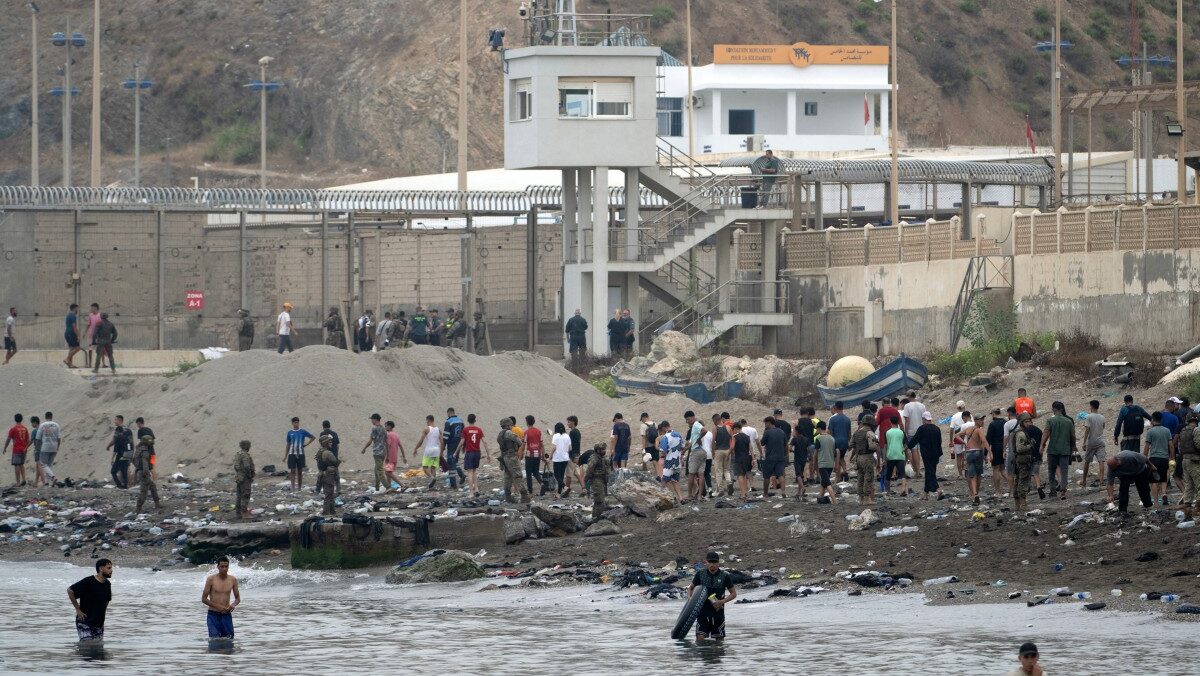
According to The European Conservative, the scale and speed of these violations point not to so-called irregular migration or humanitarian crisis, but to an organized attempt to undermine Spain’s control over its own territories. Despite urgent appeals from local authorities, the Spanish government has stood by while tens of thousands of Moroccan residents openly flout national sovereignty laws in what many observers believe is a deliberate effort to make these Spanish enclaves unviable as Spanish soil.

Even if order is eventually restored, the labyrinthine legal framework of European institutions makes it virtually impossible that these illegal arrivals will ever be deported. This is a disaster not only for Spain but for the entire continent, yet it is a crisis actively enabled by both Spanish and European progressive elites.

Sánchez Government Undermines Spanish Sovereignty

The government of Pedro Sánchez has systematically worked to erode Spanish sovereignty at every turn. Rather than deriving legitimacy from the Spanish people, Sánchez draws authority from international institutions while deliberately weakening Spain’s status as a sovereign nation. His administration’s policies, which by some estimates will affect as many as 2 million people, have fundamentally compromised Spain’s border integrity and the cohesion of the Spanish nation.

This crisis has also exposed critical fractures within the European Union itself. Countries across the bloc are once again questioning the wisdom of unrestricted freedom of movement. While some European elites recognize that Sánchez may be using these policies to distract from spiraling corruption allegations involving himself and his political and personal circles, he is merely implementing on a grand scale the standard practices of globalist elites.

EU Legal Architecture Prevents Border Defense

European institutions have constructed a vast legal and bureaucratic apparatus that systematically undermines sovereignty and border integrity. The complex web of courts in Strasbourg, Luxembourg, and national capitals has rendered effective border control virtually impossible and made any serious deportation efforts equally unlikely.

The most significant EU action regarding borders in recent years was not to defend them, but to financially punish the Hungarian government for attempting to protect its own frontiers. Whatever characteristics this influx shares with an invasion, it is better understood as a surrender.

Betrayal of the Spanish People

This collapse of Spanish territorial integrity represents the logical outcome of a political elite that has abandoned any commitment to national sovereignty. Surrendering sovereignty is functionally equivalent to surrendering territory.

Yet this is not merely a national surrender but an outright betrayal. The Spanish people, broadly speaking, retain strong attachment to their sovereignty. It is the Spanish political elite who have metaphorically unlocked the city gates while the population sleeps. The Spanish ruling class has betrayed its own citizens and is long overdue for political accountability.

The only potential silver lining from this catastrophe may be that patriotic forces in Spain receive renewed momentum from this episode. Despite some welcome measures in the European Parliament to establish legal pathways for removing illegal or criminal migrants, the EU as a whole appears poised to invite more scenes like those witnessed in Ceuta and Melilla.

With information from The European Conservative

Share:
Dimitris Papafotis
Dimitris Papafotis

Dimitris Papafotis is the editor-in-chief of NewsFire.GR. He was born and raised in Athens. He studied at the Journalism Workshop (1991-1993). He currently lives in Pyrgos, Ilia, where he has been active in radio and various newspapers, while also maintaining his personal blog, Papafotis.gr.

According to The European Conservative, the scale and speed of these violations point not to so-called irregular migration or humanitarian crisis, but to an organized attempt to undermine Spain’s control over its own territories. Despite urgent appeals from local authorities, the Spanish government has stood by while tens of thousands of Moroccan residents openly flout national sovereignty laws in what many observers believe is a deliberate effort to make these Spanish enclaves unviable as Spanish soil.

Even if order is eventually restored, the labyrinthine legal framework of European institutions makes it virtually impossible that these illegal arrivals will ever be deported. This is a disaster not only for Spain but for the entire continent, yet it is a crisis actively enabled by both Spanish and European progressive elites.

Sánchez Government Undermines Spanish Sovereignty

The government of Pedro Sánchez has systematically worked to erode Spanish sovereignty at every turn. Rather than deriving legitimacy from the Spanish people, Sánchez draws authority from international institutions while deliberately weakening Spain’s status as a sovereign nation. His administration’s policies, which by some estimates will affect as many as 2 million people, have fundamentally compromised Spain’s border integrity and the cohesion of the Spanish nation.

This crisis has also exposed critical fractures within the European Union itself. Countries across the bloc are once again questioning the wisdom of unrestricted freedom of movement. While some European elites recognize that Sánchez may be using these policies to distract from spiraling corruption allegations involving himself and his political and personal circles, he is merely implementing on a grand scale the standard practices of globalist elites.

EU Legal Architecture Prevents Border Defense

European institutions have constructed a vast legal and bureaucratic apparatus that systematically undermines sovereignty and border integrity. The complex web of courts in Strasbourg, Luxembourg, and national capitals has rendered effective border control virtually impossible and made any serious deportation efforts equally unlikely.

The most significant EU action regarding borders in recent years was not to defend them, but to financially punish the Hungarian government for attempting to protect its own frontiers. Whatever characteristics this influx shares with an invasion, it is better understood as a surrender.

Betrayal of the Spanish People

This collapse of Spanish territorial integrity represents the logical outcome of a political elite that has abandoned any commitment to national sovereignty. Surrendering sovereignty is functionally equivalent to surrendering territory.

Yet this is not merely a national surrender but an outright betrayal. The Spanish people, broadly speaking, retain strong attachment to their sovereignty. It is the Spanish political elite who have metaphorically unlocked the city gates while the population sleeps. The Spanish ruling class has betrayed its own citizens and is long overdue for political accountability.

The only potential silver lining from this catastrophe may be that patriotic forces in Spain receive renewed momentum from this episode. Despite some welcome measures in the European Parliament to establish legal pathways for removing illegal or criminal migrants, the EU as a whole appears poised to invite more scenes like those witnessed in Ceuta and Melilla.

With information from The European Conservative

