Necessary Cookies

Required for the site to function. Cannot be disabled.

Analytics Cookies

Help us understand how visitors interact with our site (Google Analytics via GTM).

Marketing Cookies

Used to track visitors and deliver personalised advertisements.

We use cookies to enhance your browsing experience and analyse site traffic. By clicking Accept All, you consent to our use of cookies. Privacy Policy
NewsFire Global
Home News Europe World Christianity Culture Wars Opinion Video
Information
About Us Authors Advertising Terms & Conditions Privacy Policy Contact
R2B Media
R2B NEWSFIRE.GR PAPAFOTIS.GR THRACTION HELLENIC CONSERVATIVES RIGHT2THEBONE YT
News Europe

Berlin Greens Push to Allow Neck Tattoos for Police Officers

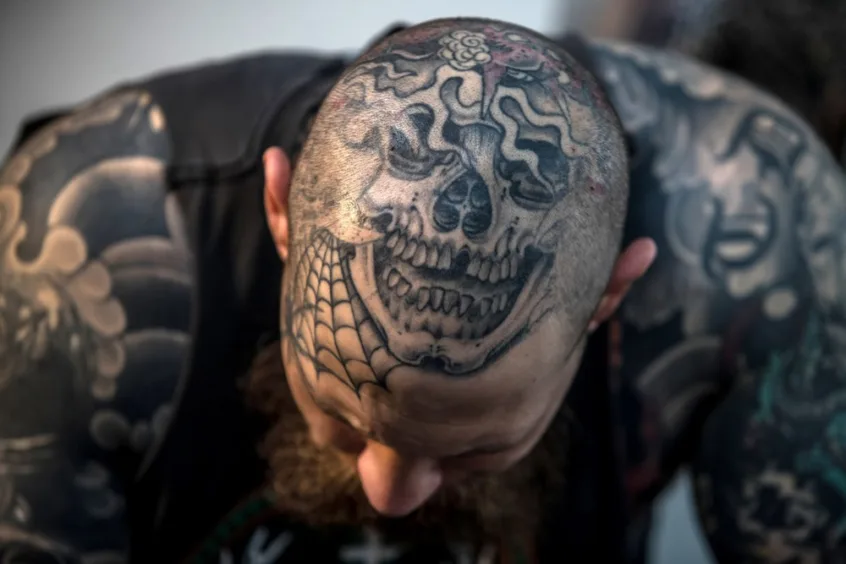
Berlin's Green Party has proposed allowing police officers to display tattoos on the head, neck, hands, and calves to modernize the force and attract younger recruits.
Stefanos Banos
Stefanos Banos Staff Writer
JUNE 29, 2026 AT 9:08 PM
Photo: brusselssignal.eu

According to Brussels Signal, the Greens have submitted a formal motion to Berlin’s state parliament calling for a sweeping reform of existing appearance standards, which they characterise as outdated and belonging to the previous century.

Under the proposed changes, police officers and public order officials would be allowed to display tattoos on body parts currently deemed off-limits, as long as the designs are not offensive or extremist in nature. The Greens have told German newspaper Tagesspiegel that the reform is necessary to modernise the force and attract younger candidates in an increasingly diverse urban environment.

Berlin’s current police guidelines maintain strict prohibitions on openly visible tattoos, especially on the head, neck, hands, and lower arms. Officers with tattoos on their forearms are not permitted to roll up their sleeves even in hot weather. Any tattoo that promotes content against the democratic constitutional order or contains obscene, discriminatory, or violence-glorifying imagery remains categorically banned.

Courts Beginning to Challenge Traditional Standards

While courts have historically upheld these regulations, recent judicial rulings suggest momentum may be building for change. In March of last year, the Berlin Administrative Court overturned a police rejection of a 33-year-old female applicant who had roses and her children’s names tattooed on the backs of both hands.

The court ruled that diverse tattoos, particularly featuring flowers, plants, and personal information, have become commonplace in contemporary society. Since 2018, the same court has maintained that even large visible tattoos should not automatically disqualify candidates from joining the capital’s police force.

Conservative Opposition Warns of Professionalism Concerns

The Green initiative has triggered sharp criticism from conservative political parties and police unions, who contend that law enforcement officers must project a neutral and professional image to maintain public respect and authority. Critics argue that visible head and neck tattoos could compromise the perception of impartiality essential to policing.

If adopted, Berlin’s approach would align the city more closely with more permissive policies in certain other German states. The debate reflects broader tensions over modernisation and diversity within German police forces nationwide.

Supporters of the reform maintain that excessively rigid appearance requirements make it harder to recruit qualified personnel in a competitive labour market. Opponents counter that the proposal prioritises contemporary aesthetic trends over traditional standards of institutional authority.

The controversy emerges as Germany’s Green Party continues advancing progressive cultural policies, including initiatives aimed at accommodating Muslim populations and challenging established norms within public institutions.

With information from Brussels Signal

Share:
Stefanos Banos
Stefanos Banos

Stefanos Banos was born in Piraeus and is an editor at NewsFire.GR, specializing in political analysis and international relations. He graduated from the Department of Communication and Media at the University of Bremen in Germany, where he also completed his Master of Arts in Communication and Media Studies. Married to Zoi, he is a proud father of three boys.

Photo: brusselssignal.eu

According to Brussels Signal, the Greens have submitted a formal motion to Berlin’s state parliament calling for a sweeping reform of existing appearance standards, which they characterise as outdated and belonging to the previous century.

Under the proposed changes, police officers and public order officials would be allowed to display tattoos on body parts currently deemed off-limits, as long as the designs are not offensive or extremist in nature. The Greens have told German newspaper Tagesspiegel that the reform is necessary to modernise the force and attract younger candidates in an increasingly diverse urban environment.

Berlin’s current police guidelines maintain strict prohibitions on openly visible tattoos, especially on the head, neck, hands, and lower arms. Officers with tattoos on their forearms are not permitted to roll up their sleeves even in hot weather. Any tattoo that promotes content against the democratic constitutional order or contains obscene, discriminatory, or violence-glorifying imagery remains categorically banned.

Courts Beginning to Challenge Traditional Standards

While courts have historically upheld these regulations, recent judicial rulings suggest momentum may be building for change. In March of last year, the Berlin Administrative Court overturned a police rejection of a 33-year-old female applicant who had roses and her children’s names tattooed on the backs of both hands.

The court ruled that diverse tattoos, particularly featuring flowers, plants, and personal information, have become commonplace in contemporary society. Since 2018, the same court has maintained that even large visible tattoos should not automatically disqualify candidates from joining the capital’s police force.

Conservative Opposition Warns of Professionalism Concerns

The Green initiative has triggered sharp criticism from conservative political parties and police unions, who contend that law enforcement officers must project a neutral and professional image to maintain public respect and authority. Critics argue that visible head and neck tattoos could compromise the perception of impartiality essential to policing.

If adopted, Berlin’s approach would align the city more closely with more permissive policies in certain other German states. The debate reflects broader tensions over modernisation and diversity within German police forces nationwide.

Supporters of the reform maintain that excessively rigid appearance requirements make it harder to recruit qualified personnel in a competitive labour market. Opponents counter that the proposal prioritises contemporary aesthetic trends over traditional standards of institutional authority.

The controversy emerges as Germany’s Green Party continues advancing progressive cultural policies, including initiatives aimed at accommodating Muslim populations and challenging established norms within public institutions.

With information from Brussels Signal