
Belgium Issues Taliban Visas for EU Migration Talks
Belgium issued five one-day visas to a Taliban delegation for talks on deporting Afghan migrants, marking the first time the EU has formally hosted the group since 2021.
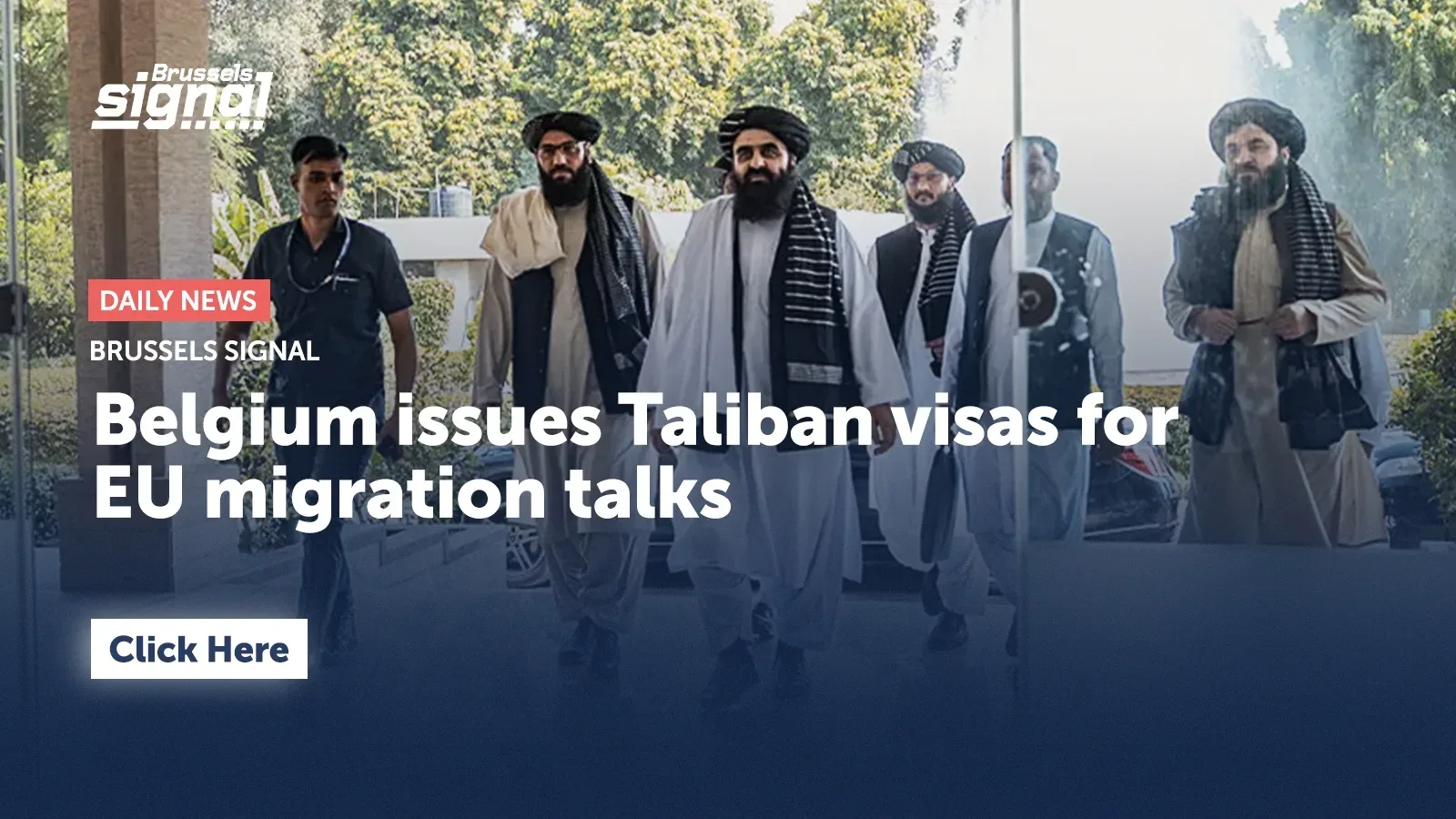

According to Brussels Signal, the visas were granted late Monday and restricted exclusively to Belgian territory, with validity limited to a single day. Two European officials confirmed the permits applied only to Tuesday, June 23.
Belgium’s State Security Service approved the applications after determining that the five Taliban envoys posed no security threat, a Foreign Ministry spokesperson confirmed. Authorities declined to disclose the exact arrival date, citing security considerations.
The Brussels meeting stems from an invitation issued last month by the European Commission. A letter addressed to Taliban spokesman Abdul Qaher Balkhi indicated the discussions would center on the return of Afghans without legal residence rights in the bloc.
Commission spokesman Markus Lammert told reporters Monday that member states are examining methods to return individuals who have committed serious crimes.
Technical Talks, Not Recognition
Brussels has maintained that the discussions are purely technical in nature and do not constitute recognition of the Taliban regime. The Commission has been courting the group for several months, dispatching a senior home affairs official to Kabul in January.
The decision has exposed internal divisions within Belgium itself. Foreign Minister Maxime Prévot of the centrist Les Engagés party stated he personally opposed the invitation but argued Belgium cannot reject invitations issued by the EU institutions it hosts without undermining Brussels’ status as a diplomatic capital. He emphasized that formal recognition of the Taliban remains out of the question, as he told members of parliament.
Human Rights Groups Sound Alarm
Human rights organizations have condemned the planned engagement. Amnesty International and Human Rights Watch warned that engaging the Taliban could put returnees at serious risk, noting that several senior Taliban figures remain under EU sanctions.
Eve Geddie, director of Amnesty International’s European Institutions Office, called the deportation plan unconscionable.
Hundreds of thousands of Afghans have sought asylum in Europe since the Taliban’s 2021 return to power, and they continue to rank among the nationalities with the highest protection grant rates. Returns have been severely limited by the absence of diplomatic relations with Kabul.
Afghanistan Under Taliban Rule
Since seizing control, the Taliban have banned girls from attending school beyond the primary level and imposed severe restrictions on women’s freedom of movement and employment. Afghanistan is simultaneously facing a severe humanitarian crisis, with the United Nations estimating that approximately one-third of the population suffers from food insecurity.
With information from Brussels Signal





