
Bavarian State Broadcaster Promotes Islamic Dress Code for Women
Germany's public broadcaster Bayerischer Rundfunk faces criticism for portraying Islamic female dress codes as trendy fashion rather than religiously mandated sharia law requirements.
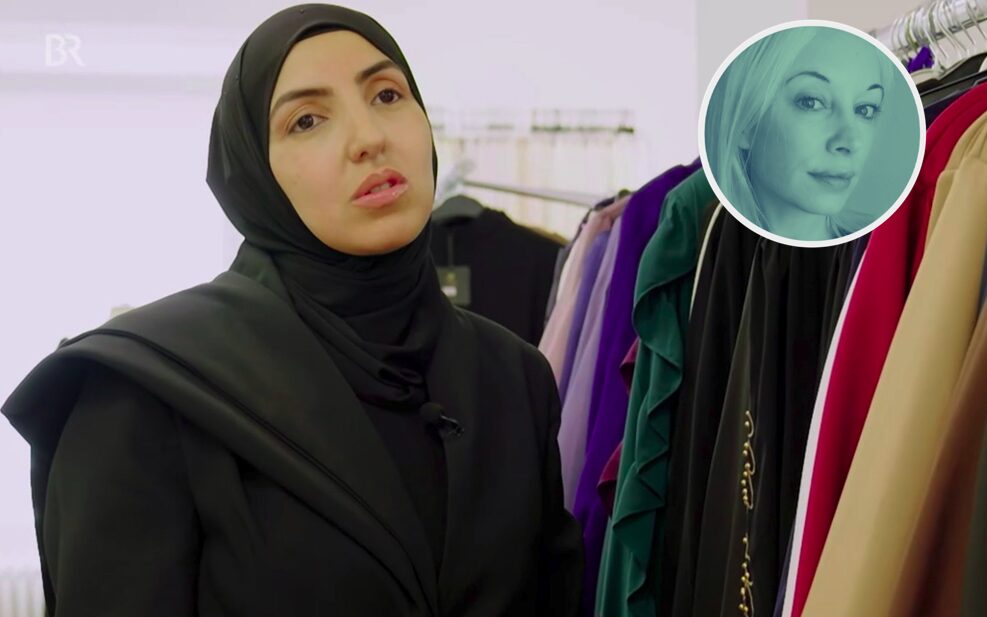

The segment, titled “Modest Fashion – when fashion consciously covers skin,” deliberately obscures the fact that the clothing in question is designed to comply with sharia law, according to Junge Freiheit. The broadcaster describes the garments as an expression of faith for some and a sign of self-confidence and personal style for others, conveniently ignoring that women and girls in Islamic societies are compelled to cover themselves under religious doctrine.
The fundamental premise of Islamic dress codes rests on the view that the female body is sinful and must be shielded from the lustful gazes of men. The broadcaster’s casual framing also ignores the reality that women in Islamic countries face punishment when they fail to veil themselves according to sharia standards. Personal style and fashion preferences have nothing to do with it.
Public Broadcaster Treats Religious Mandate as Seasonal Trend
The segment’s narrator claims that while summer brings more skin exposure, “modest fashion” represents a countertrend. This characterization is fundamentally misleading. Islamic clothing requirements are not a seasonal fashion statement like airy summer dresses or thick winter cardigans. Modest fashion garments are specifically engineered to meet strict Islamic dress codes, with multiple layers of fabric draped over one another to ensure that the contours of the female body remain nearly invisible. The most extreme form is the burka with its narrow eye slit, which renders the woman beneath it completely unidentifiable.
The owner of a Nuremberg modest fashion shop explains in the segment that she struggled to find longer skirts, tops, and dresses. This claim is disingenuous, as German fashion retailers certainly offer clothing in longer cuts. The real issue is that these items do not meet Islamic prescriptions, which forbid bright colors, tight fits, and fabrics that cannot be layered multiple times.
Women Compared to Mobile Phones Needing Protection
In a particularly revealing moment, the shop owner’s husband explains Islamic veiling requirements for women, who may only show their face, hands, and feet. He compares women to smartphones that need protective cases, stating that what is important should be protected. This deeply contemptuous worldview, which treats women as valuable objects requiring safeguarding, is commonplace in Islamic teaching. The broadcaster apparently found this comparison between women and mobile phones unproblematic enough to air without challenge.
The program makers should have pressed further on the implication that unveiled women become fair game when they forgo their protective covering. The shop owner adds that a woman should not be an object for other men, seemingly unaware of the contradiction in his analogy.
Billion-Dollar Market Built on Female Subjugation
The shop owner mentions that she sometimes receives strange looks since covering herself Islamically, with an accusatory undertone suggesting discrimination by the Western-dressed majority society. The narrator then claims modest fashion is a worldwide trend representing a billion-dollar market, insisting it is less about showing little skin and more about feeling comfortable in one’s own skin.
These explanations are fundamentally misleading. The clothing fulfills strict Islamic dress codes rooted in the belief that female bodies are sinful and must be hidden from early youth. The cuts are long and flowing to conceal the figure. Colors are kept in muted tones to avoid drawing attention. Modest fashion exists solely to ensure compliance with severe veiling mandates.
Pattern of Uncritical Coverage by German Public Media
German public broadcasting repeatedly airs uncritical segments about headscarves and Islamic clothing, recasting them as symbols of female self-determination. The Funk format “Die Datteltäter” declares that the hijab represents feminism standing for freedom and dignity, glorifying the headscarf as a fashion statement. Meanwhile, millions of women in Islamic countries face harsh repression for failing to observe sharia clothing rules meticulously. An ARD Kultur segment similarly claims the headscarf can be a feminist symbol.
ARD Kultur states that women in Islam protect themselves from the greedy gazes of men and thus make a statement against objectification. An Islamic fashion influencer featured in the programming explains that girls adopt the headscarf upon reaching sexual maturity, claiming this voluntary decision comes from the heart rather than being commanded by parents or husbands. This assertion lacks credibility given the growing number of elementary school-age girls being veiled.
These public broadcasting programs romanticize the misogynistic attitudes prevalent in Islamic circles. The strict clothing requirements are anything but a harmless seasonal fashion trend. Not a single word is devoted to the fact that these women must spend their lives under a fabric cage while men regard unveiled women with contempt as willing prey. Modest fashion serves to signal outwardly that the wearer is pious and chaste, conveying that she is not a cheap object available for male consumption.
With information from Junge Freiheit





