Necessary Cookies

Required for the site to function. Cannot be disabled.

Analytics Cookies

Help us understand how visitors interact with our site (Google Analytics via GTM).

Marketing Cookies

Used to track visitors and deliver personalised advertisements.

We use cookies to enhance your browsing experience and analyse site traffic. By clicking Accept All, you consent to our use of cookies. Privacy Policy
NewsFire Global
Home News Europe World Christianity Culture Wars Opinion Video
Information
About Us Authors Advertising Terms & Conditions Privacy Policy Contact
R2B Media
R2B NEWSFIRE.GR PAPAFOTIS.GR THRACTION HELLENIC CONSERVATIVES RIGHT2THEBONE YT
News Culture Wars

Bavarian Broadcaster Promotes Islamist Veils Using Phone Analogy

Germany's public broadcaster faced criticism for promoting Islamic modest fashion without challenging views comparing women to objects needing protection.
Stefanos Banos
Stefanos Banos Staff Writer
JUNE 15, 2026 AT 2:28 PM

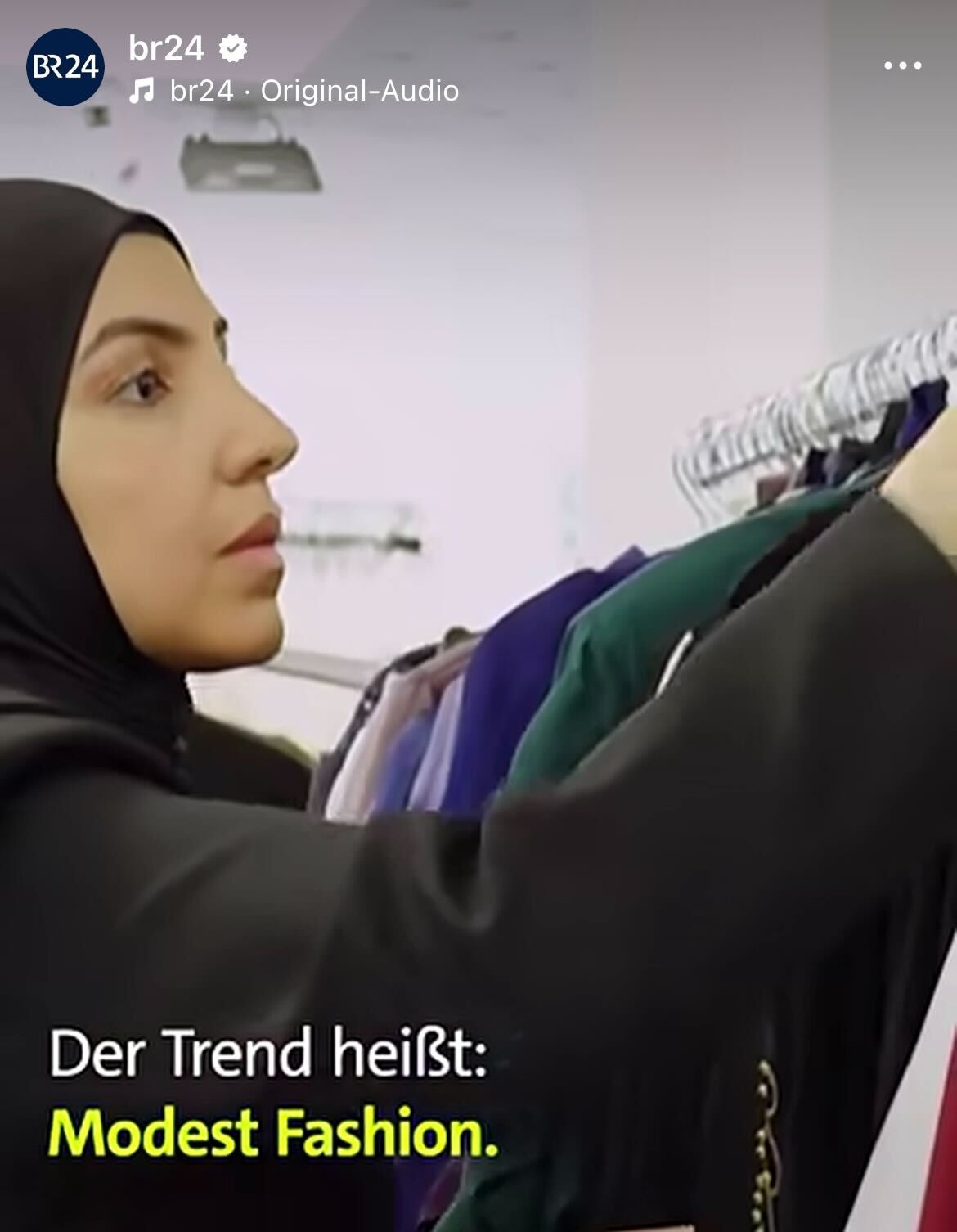
The taxpayer-funded broadcaster ran a segment glorifying so-called “modest fashion” at a store in Nuremberg owned by Selda Dastan, who wears a headscarf herself. The report presented the increased covering of women’s bodies as simply one fashion choice among many, without any critical examination of the religious ideology behind it.

The BR piece opened by noting that as temperatures rise, many people wear less clothing and show more skin. It then introduced modest fashion as a counter-trend involving clothes that cover most of the body, giving it a platform in Dastan’s Nuremberg shop.

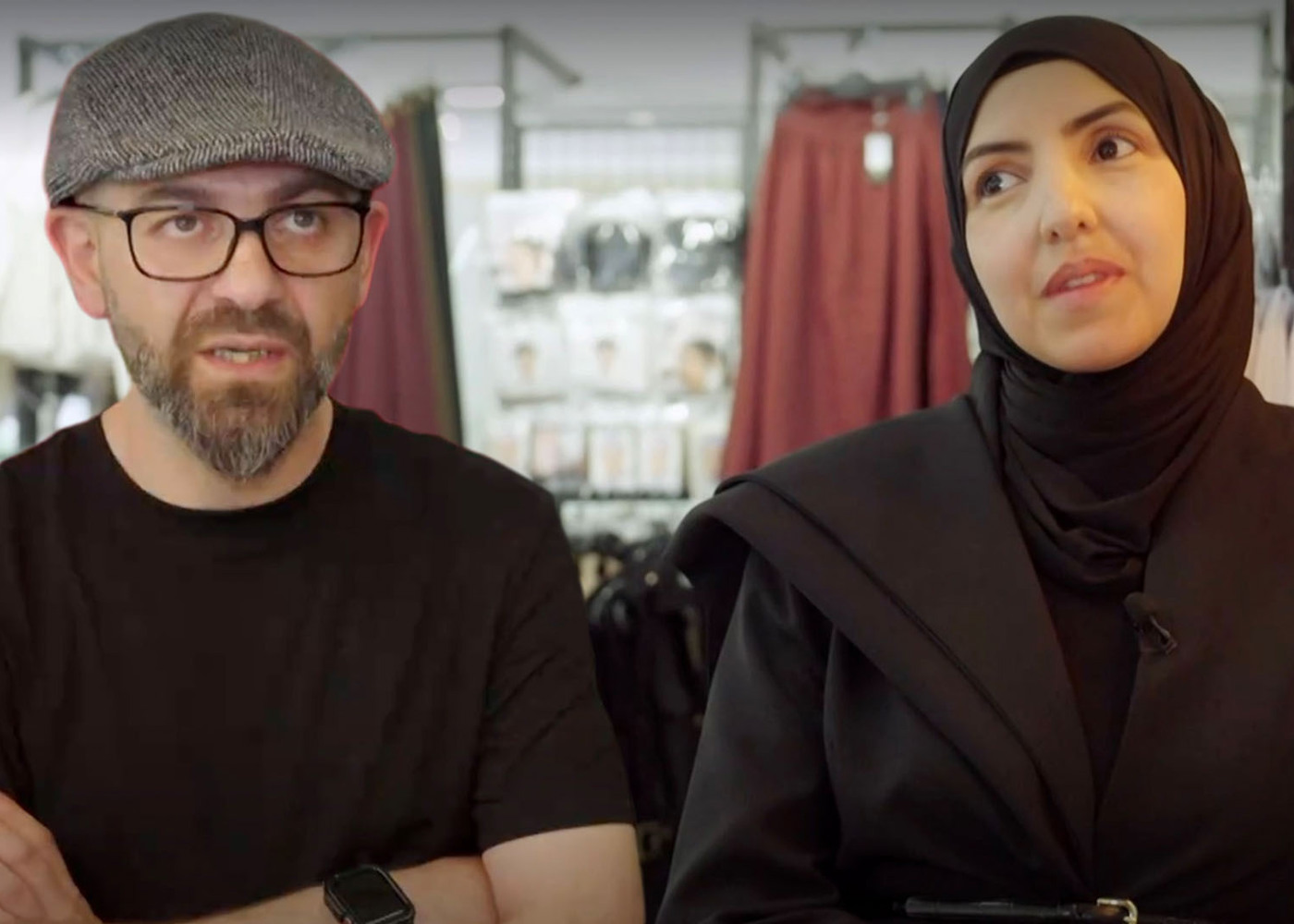
Most controversially, the segment allowed Dastan’s husband to speak at length about Islamic dress requirements without any pushback or journalistic scrutiny. He explained that in Islamic belief, women must dress covered, with only face, hands, and feet from the ankle down permitted to be visible.
Verkäuferin Selda Dastan in ihrem Laden für islamische Bekleidung.
Photo: nius.de

He then compared women to mobile phones requiring protective cases. Important things should be protected, he argued, and since a woman is important with all her body parts, she too should be protected. Women should not be objects for other men, he claimed. The BR narrator left these statements completely unchallenged, offering no context or counterpoint to this view of women as objects requiring concealment.

To suggest that modest fashion appeals beyond Muslim women, the broadcast featured a customer expressing delight at finding items suitable for her, adding that she did not want to commit cultural appropriation.

The segment went on to describe modest fashion as a worldwide trend since the 2010s, with the market growing continuously and now estimated at several billion euros. The narrator concluded that the message behind modest fashion might be not how much skin is shown, but how it is shown.

The uncritical promotion of religious veiling by a state-funded German broadcaster has sparked questions about editorial standards and the willingness of public media to challenge fundamentalist interpretations of women’s roles in society.

With information from Nius

Share:
Stefanos Banos
Stefanos Banos

Stefanos Banos was born in Piraeus and is an editor at NewsFire.GR, specializing in political analysis and international relations. He graduated from the Department of Communication and Media at the University of Bremen in Germany, where he also completed his Master of Arts in Communication and Media Studies. Married to Zoi, he is a proud father of three boys.

The taxpayer-funded broadcaster ran a segment glorifying so-called “modest fashion” at a store in Nuremberg owned by Selda Dastan, who wears a headscarf herself. The report presented the increased covering of women’s bodies as simply one fashion choice among many, without any critical examination of the religious ideology behind it.

The BR piece opened by noting that as temperatures rise, many people wear less clothing and show more skin. It then introduced modest fashion as a counter-trend involving clothes that cover most of the body, giving it a platform in Dastan’s Nuremberg shop.

Most controversially, the segment allowed Dastan’s husband to speak at length about Islamic dress requirements without any pushback or journalistic scrutiny. He explained that in Islamic belief, women must dress covered, with only face, hands, and feet from the ankle down permitted to be visible.

Verkäuferin Selda Dastan in ihrem Laden für islamische Bekleidung.
Photo: nius.de

He then compared women to mobile phones requiring protective cases. Important things should be protected, he argued, and since a woman is important with all her body parts, she too should be protected. Women should not be objects for other men, he claimed. The BR narrator left these statements completely unchallenged, offering no context or counterpoint to this view of women as objects requiring concealment.

To suggest that modest fashion appeals beyond Muslim women, the broadcast featured a customer expressing delight at finding items suitable for her, adding that she did not want to commit cultural appropriation.

The segment went on to describe modest fashion as a worldwide trend since the 2010s, with the market growing continuously and now estimated at several billion euros. The narrator concluded that the message behind modest fashion might be not how much skin is shown, but how it is shown.

The uncritical promotion of religious veiling by a state-funded German broadcaster has sparked questions about editorial standards and the willingness of public media to challenge fundamentalist interpretations of women’s roles in society.

With information from Nius

