Necessary Cookies

Required for the site to function. Cannot be disabled.

Analytics Cookies

Help us understand how visitors interact with our site (Google Analytics via GTM).

Marketing Cookies

Used to track visitors and deliver personalised advertisements.

We use cookies to enhance your browsing experience and analyse site traffic. By clicking Accept All, you consent to our use of cookies. Privacy Policy
NewsFire Global
Home News Europe World Christianity Culture Wars Opinion Video
Information
About Us Authors Advertising Terms & Conditions Privacy Policy Contact
R2B Media
R2B NEWSFIRE.GR PAPAFOTIS.GR THRACTION HELLENIC CONSERVATIVES RIGHT2THEBONE YT
News Culture Wars

Banned from Watching ‘Citizen Vigilante’!

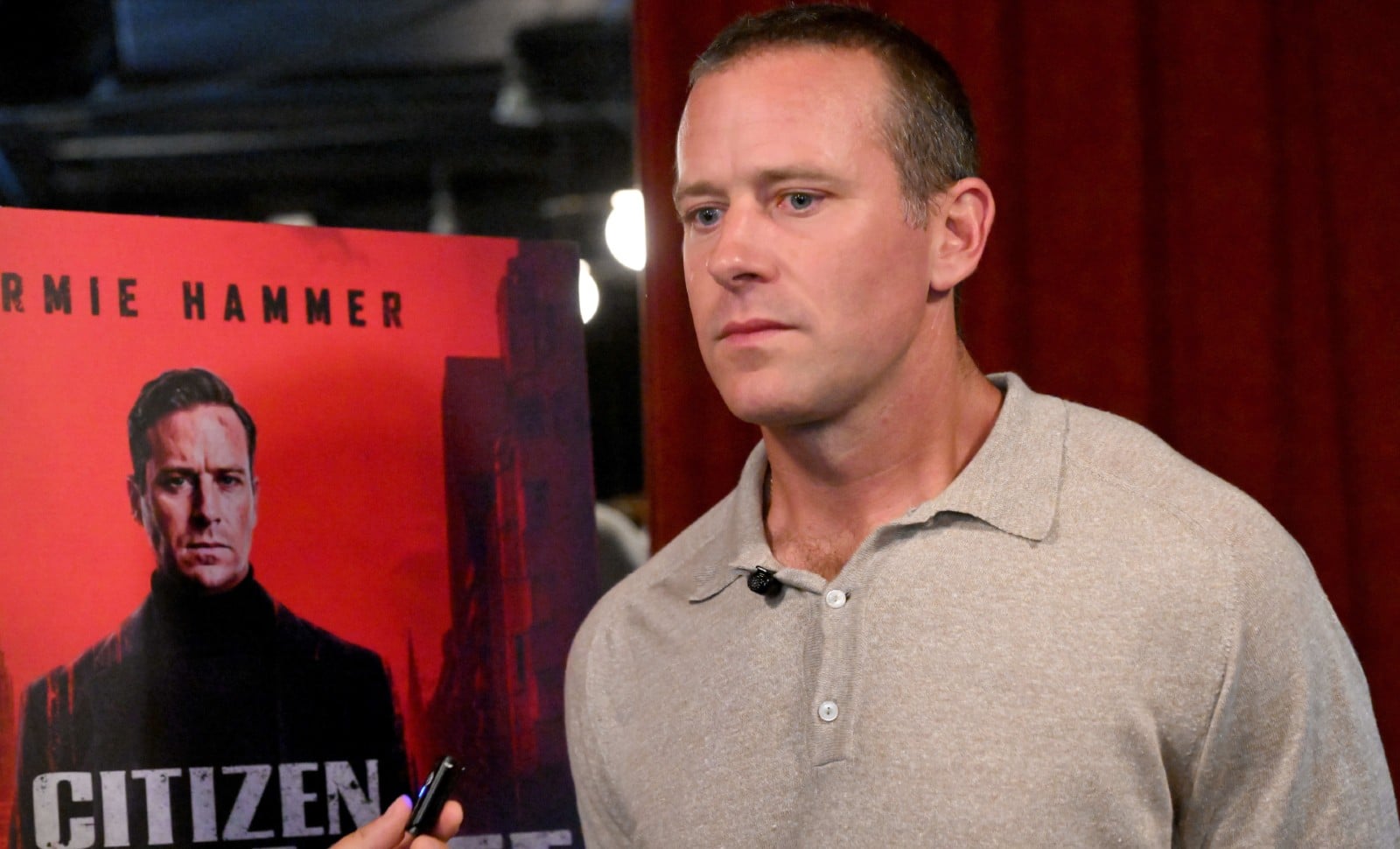
A vigilante film starring blacklisted actor Armie Hammer has been banned in Germany but gained millions of online views after Elon Musk championed its release on X.
Stefanos Banos
Stefanos Banos Staff Writer
JULY 6, 2026 AT 11:18 AM

According to Causeur, the film Citizen Vigilante has been refused classification for theatrical release in Germany and boycotted by most major streaming platforms. Despite this institutional blacklisting, the brutal 90-minute thriller has found a massive audience on the internet.

The picture was directed by German filmmaker Uwe Boll, known for low-budget video game adaptations and his dystopian Rampage trilogy. Often dismissed by critics as the worst director of his generation, Boll has delivered what may be his most ambitious and confrontational work to date.

The film opens with a dedication to thousands of rape and murder victims in Europe who have been betrayed by the judicial system, as Causeur reports. This sets the tone for what follows: an uncompromising return to the vigilante movie genre that flourished in American and European cinemas during the 1970s and 1980s.

Armie Hammer, blacklisted in Hollywood following various misconduct allegations, plays Michael Sanders, a taciturn former American military man who now runs a rent collection agency. The character operates in a grey, dehumanized metropolis that is actually Zagreb, where the German-American-Croatian co-production was filmed on a budget estimated between two and three million dollars.

Rather than identify a specific city, Boll deliberately opens the film with a simple title card reading “Europe,” thereby expanding his narrative to encompass an entire continent in decay. Sanders is not merely a businessman in a dark suit. Exasperated by what he views as the collapse of public authority, he decides to replace a brain-dead rule of law incapable of protecting victims and too quick to preserve the rights of criminals and attackers.

Echoes of Bronson and Eastwood

The vigilante film tradition emerged in American cinema around 1970, featuring ordinary citizens—often police officers, former soldiers, or veterans—who take justice into their own hands after witnessing the impotence of public institutions against rising crime. These characters become simultaneously judge, jury, and executioner, seeking to restore an order the state no longer seems capable of guaranteeing.

Classic examples include Harry Callahan from Dirty Harry, Paul Kersey from Death Wish, and Travis Bickle from Taxi Driver. This transgressive subgenre, labeled reactionary by detractors, became a staple of video rental stores for audiences of all ages.

Boll’s film follows this template with relentless intensity. The director chains together sequences depicting nightmarish criminal incidents, filmed with dry brutality and extremely nervous editing that occasionally approaches music video style. Cinematography features extensive drone camera work from Ethan Maniquis, who previously collaborated with Robert Rodriguez on Machete.

Accusations of Neofascism

The film has predictably drawn charges of neofascism and populism from portions of the media and critical establishment who position themselves as guardians of acceptable opinion. Yet Boll’s real achievement may be reviving an explosive subgenre of popular exploitation cinema that once dominated theaters.

In one scene described by Causeur, an illegal migrant who was never deported despite a removal order slits a woman’s throat. This and similar vignettes construct a vision of European societies where immigration enforcement has failed and violent crime flourishes with impunity.

The production shoots straight through the boundaries of propriety, according to Causeur, shattering the rules of decorum that have come to dominate mainstream filmmaking. For all its crude elements and shoestring production values, Citizen Vigilante represents a singular work that refuses to accommodate progressive sensibilities.

Musk’s promotion of the film on X has been instrumental in circumventing the institutional gatekeepers who sought to suppress it. The Tesla and SpaceX founder framed his support as defending artistic freedom against censorship, helping the production reach an audience that would otherwise have been denied access.

Whether Hammer represents a new Charles Bronson for the 21st century remains to be seen. What is certain is that Citizen Vigilante has touched a nerve across Europe, where debates over immigration, crime, and the effectiveness of justice systems continue to intensify. The film’s commercial ban in Germany and platform boycotts have only amplified its notoriety and guaranteed it will remain a flashpoint in ongoing culture war battles over acceptable artistic expression.

With information from Causeur

Share:
Stefanos Banos
Stefanos Banos

Stefanos Banos was born in Piraeus and is an editor at NewsFire.GR, specializing in political analysis and international relations. He graduated from the Department of Communication and Media at the University of Bremen in Germany, where he also completed his Master of Arts in Communication and Media Studies. Married to Zoi, he is a proud father of three boys.

According to Causeur, the film Citizen Vigilante has been refused classification for theatrical release in Germany and boycotted by most major streaming platforms. Despite this institutional blacklisting, the brutal 90-minute thriller has found a massive audience on the internet.

The picture was directed by German filmmaker Uwe Boll, known for low-budget video game adaptations and his dystopian Rampage trilogy. Often dismissed by critics as the worst director of his generation, Boll has delivered what may be his most ambitious and confrontational work to date.

The film opens with a dedication to thousands of rape and murder victims in Europe who have been betrayed by the judicial system, as Causeur reports. This sets the tone for what follows: an uncompromising return to the vigilante movie genre that flourished in American and European cinemas during the 1970s and 1980s.

Armie Hammer, blacklisted in Hollywood following various misconduct allegations, plays Michael Sanders, a taciturn former American military man who now runs a rent collection agency. The character operates in a grey, dehumanized metropolis that is actually Zagreb, where the German-American-Croatian co-production was filmed on a budget estimated between two and three million dollars.

Rather than identify a specific city, Boll deliberately opens the film with a simple title card reading “Europe,” thereby expanding his narrative to encompass an entire continent in decay. Sanders is not merely a businessman in a dark suit. Exasperated by what he views as the collapse of public authority, he decides to replace a brain-dead rule of law incapable of protecting victims and too quick to preserve the rights of criminals and attackers.

Echoes of Bronson and Eastwood

The vigilante film tradition emerged in American cinema around 1970, featuring ordinary citizens—often police officers, former soldiers, or veterans—who take justice into their own hands after witnessing the impotence of public institutions against rising crime. These characters become simultaneously judge, jury, and executioner, seeking to restore an order the state no longer seems capable of guaranteeing.

Classic examples include Harry Callahan from Dirty Harry, Paul Kersey from Death Wish, and Travis Bickle from Taxi Driver. This transgressive subgenre, labeled reactionary by detractors, became a staple of video rental stores for audiences of all ages.

Boll’s film follows this template with relentless intensity. The director chains together sequences depicting nightmarish criminal incidents, filmed with dry brutality and extremely nervous editing that occasionally approaches music video style. Cinematography features extensive drone camera work from Ethan Maniquis, who previously collaborated with Robert Rodriguez on Machete.

Accusations of Neofascism

The film has predictably drawn charges of neofascism and populism from portions of the media and critical establishment who position themselves as guardians of acceptable opinion. Yet Boll’s real achievement may be reviving an explosive subgenre of popular exploitation cinema that once dominated theaters.

In one scene described by Causeur, an illegal migrant who was never deported despite a removal order slits a woman’s throat. This and similar vignettes construct a vision of European societies where immigration enforcement has failed and violent crime flourishes with impunity.

The production shoots straight through the boundaries of propriety, according to Causeur, shattering the rules of decorum that have come to dominate mainstream filmmaking. For all its crude elements and shoestring production values, Citizen Vigilante represents a singular work that refuses to accommodate progressive sensibilities.

Musk’s promotion of the film on X has been instrumental in circumventing the institutional gatekeepers who sought to suppress it. The Tesla and SpaceX founder framed his support as defending artistic freedom against censorship, helping the production reach an audience that would otherwise have been denied access.

Whether Hammer represents a new Charles Bronson for the 21st century remains to be seen. What is certain is that Citizen Vigilante has touched a nerve across Europe, where debates over immigration, crime, and the effectiveness of justice systems continue to intensify. The film’s commercial ban in Germany and platform boycotts have only amplified its notoriety and guaranteed it will remain a flashpoint in ongoing culture war battles over acceptable artistic expression.

With information from Causeur

