Necessary Cookies

Required for the site to function. Cannot be disabled.

Analytics Cookies

Help us understand how visitors interact with our site (Google Analytics via GTM).

Marketing Cookies

Used to track visitors and deliver personalised advertisements.

We use cookies to enhance your browsing experience and analyse site traffic. By clicking Accept All, you consent to our use of cookies. Privacy Policy
NewsFire Global
Home News Europe World Christianity Culture Wars Opinion Video
Information
About Us Authors Advertising Terms & Conditions Privacy Policy Contact
R2B Media
R2B NEWSFIRE.GR PAPAFOTIS.GR THRACTION HELLENIC CONSERVATIVES RIGHT2THEBONE YT
News Christianity

Armenia: Unclear election results place first Christian state in difficult situation

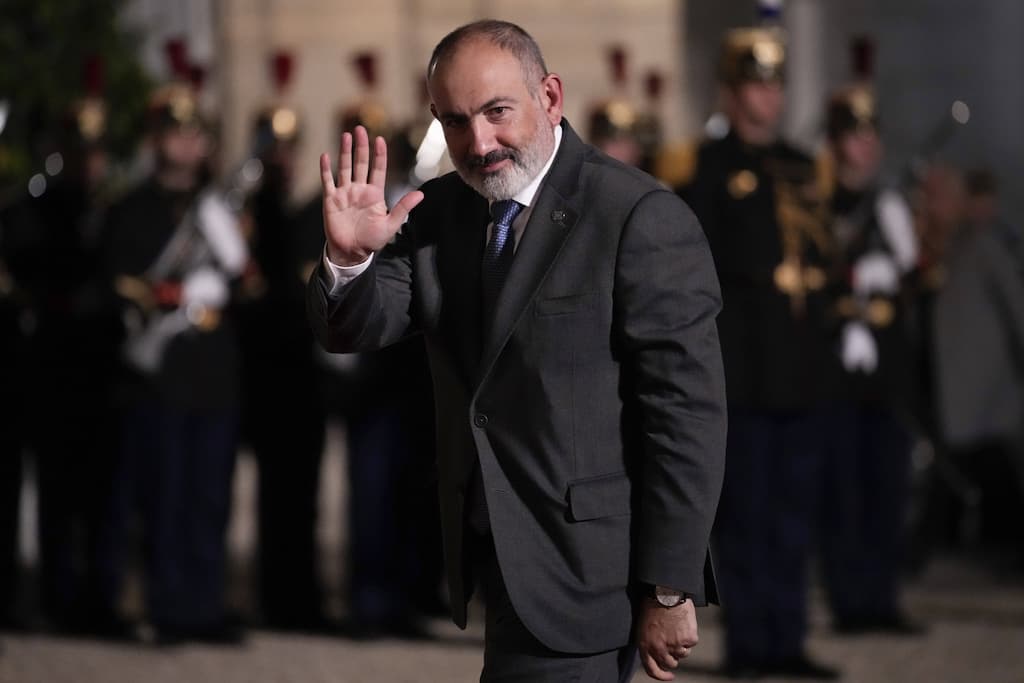
Armenian Prime Minister Nikol Pachinian won a third term with 61 of 105 parliamentary seats despite securing only 49.81 percent of votes, defying intense Russian pressure in a nation still reeling from Nagorno-Karabakh's loss.

Dimitris Papafotis
Dimitris Papafotis Editor in Chief
JUNE 11, 2026 AT 2:20 AM

According to Valeurs Actuelles, Pachinian’s Civil Contract party won 61 of 105 seats in the National Assembly, securing an absolute majority without need for coalition partners or a second round. However, the final tally from the Central Electoral Commission shows Civil Contract received just 49.81 percent of votes, with turnout below 59 percent. This means the man who will form the next government convinced only one in three Armenians to support him.

In a country still processing the loss of Nagorno-Karabakh in 2023, under a Prime Minister staking his future on European Union candidacy and an accord with Baku, this arithmetic majority without broad popular support reflects a complex and precarious situation in Yerevan.

Moscow’s Failed Pressure Campaign

The election result represents a significant setback for Russia, which sought to bring Yerevan back into its orbit. Moscow conducted a year-long influence campaign, threatening export restrictions and labor market access while leveraging its weight through the Armenian Apostolic Church. Russian President Vladimir Putin personally invoked parallels to Ukraine, while Foreign Minister Sergei Lavrov and former President Dmitry Medvedev actively involved themselves in the campaign.

Despite this unprecedented pressure, Civil Contract finished more than two-to-one ahead of billionaire Samvel Karapetyan’s Strong Armenia party, which garnered 23.29 percent. As an exercise in coercive influence, it represents a complete failure, with the threat itself becoming the strongest argument against its author.

Moscow’s strategy mirrored its failed approach in Moldova. Hoping that a fragmented opposition facing a united government would mechanically produce a second round favorable to Russian interests, the Kremlin’s gamble on divide-and-rule tactics proved losing. Pachinian emerged victorious with no second round, denying Moscow a unified anti-Pachinian vehicle.

Azerbaijan’s Paradox

The outcome may also complicate calculations in Baku. Azerbaijani President Ilham Aliev’s structural interest has never been a defeated Armenia, but rather a durably weak and revanchist one. A confident neighbor on the path to normalization and anchored to the West deprives Azerbaijani petro-authoritarianism of its founding threat.

The external peril that legitimizes the autocratic state internally and the dynastic succession being prepared appears diminished. Aliev’s ideal Armenia is not one that signs agreements, but one perpetually preparing to sign, keeping the Zangezur corridor as a living instrument rather than a closed file.

A contested victory serves as a gift to the strongman in Baku. The Armenia alliance of Robert Kocharyan refuses to recognize the result and denounces organized falsification. Opposition candidates were detained on the eve of voting. The verdict from the Organization for Security and Co-operation in Europe remains pending.

Constitutional Constraints

Western capitals see a newly reelected Prime Minister with full powers, but the mathematics tell a more nuanced story. Armenians voted less for the West than against having their vote dictated by the Kremlin. Pachinian governs with active consent from roughly one in three Armenians.

The detail that should concern Western capitals lies in the numbers. While a majority of 61 seats out of 105 appears comfortable, it falls short of the three-fifths threshold of 63 seats required for constitutional revision. Pachinian holds power to sign an accord with Azerbaijan, but lacks both the supermajority and popular authority to constitutionalize it.

Only constitutional inscription would survive him politically and permit a durable peace to be enacted. Nothing guarantees that a future majority would not reverse any agreement, leaving the region’s stability dependent on the political fortunes of one man rather than embedded in institutional frameworks.

With information from Valeurs Actuelles

Share:
Dimitris Papafotis
Dimitris Papafotis

Dimitris Papafotis is the editor-in-chief of NewsFire.GR. He was born and raised in Athens. He studied at the Journalism Workshop (1991-1993). He currently lives in Pyrgos, Ilia, where he has been active in radio and various newspapers, while also maintaining his personal blog, Papafotis.gr.

According to Valeurs Actuelles, Pachinian’s Civil Contract party won 61 of 105 seats in the National Assembly, securing an absolute majority without need for coalition partners or a second round. However, the final tally from the Central Electoral Commission shows Civil Contract received just 49.81 percent of votes, with turnout below 59 percent. This means the man who will form the next government convinced only one in three Armenians to support him.

In a country still processing the loss of Nagorno-Karabakh in 2023, under a Prime Minister staking his future on European Union candidacy and an accord with Baku, this arithmetic majority without broad popular support reflects a complex and precarious situation in Yerevan.

Moscow’s Failed Pressure Campaign

The election result represents a significant setback for Russia, which sought to bring Yerevan back into its orbit. Moscow conducted a year-long influence campaign, threatening export restrictions and labor market access while leveraging its weight through the Armenian Apostolic Church. Russian President Vladimir Putin personally invoked parallels to Ukraine, while Foreign Minister Sergei Lavrov and former President Dmitry Medvedev actively involved themselves in the campaign.

Despite this unprecedented pressure, Civil Contract finished more than two-to-one ahead of billionaire Samvel Karapetyan’s Strong Armenia party, which garnered 23.29 percent. As an exercise in coercive influence, it represents a complete failure, with the threat itself becoming the strongest argument against its author.

Moscow’s strategy mirrored its failed approach in Moldova. Hoping that a fragmented opposition facing a united government would mechanically produce a second round favorable to Russian interests, the Kremlin’s gamble on divide-and-rule tactics proved losing. Pachinian emerged victorious with no second round, denying Moscow a unified anti-Pachinian vehicle.

Azerbaijan’s Paradox

The outcome may also complicate calculations in Baku. Azerbaijani President Ilham Aliev’s structural interest has never been a defeated Armenia, but rather a durably weak and revanchist one. A confident neighbor on the path to normalization and anchored to the West deprives Azerbaijani petro-authoritarianism of its founding threat.

The external peril that legitimizes the autocratic state internally and the dynastic succession being prepared appears diminished. Aliev’s ideal Armenia is not one that signs agreements, but one perpetually preparing to sign, keeping the Zangezur corridor as a living instrument rather than a closed file.

A contested victory serves as a gift to the strongman in Baku. The Armenia alliance of Robert Kocharyan refuses to recognize the result and denounces organized falsification. Opposition candidates were detained on the eve of voting. The verdict from the Organization for Security and Co-operation in Europe remains pending.

Constitutional Constraints

Western capitals see a newly reelected Prime Minister with full powers, but the mathematics tell a more nuanced story. Armenians voted less for the West than against having their vote dictated by the Kremlin. Pachinian governs with active consent from roughly one in three Armenians.

The detail that should concern Western capitals lies in the numbers. While a majority of 61 seats out of 105 appears comfortable, it falls short of the three-fifths threshold of 63 seats required for constitutional revision. Pachinian holds power to sign an accord with Azerbaijan, but lacks both the supermajority and popular authority to constitutionalize it.

Only constitutional inscription would survive him politically and permit a durable peace to be enacted. Nothing guarantees that a future majority would not reverse any agreement, leaving the region’s stability dependent on the political fortunes of one man rather than embedded in institutional frameworks.

With information from Valeurs Actuelles

