Necessary Cookies

Required for the site to function. Cannot be disabled.

Analytics Cookies

Help us understand how visitors interact with our site (Google Analytics via GTM).

Marketing Cookies

Used to track visitors and deliver personalised advertisements.

We use cookies to enhance your browsing experience and analyse site traffic. By clicking Accept All, you consent to our use of cookies. Privacy Policy
NewsFire Global
Home News Europe World Christianity Culture Wars Opinion Video
Information
About Us Authors Advertising Terms & Conditions Privacy Policy Contact
R2B Media
R2B NEWSFIRE.GR PAPAFOTIS.GR THRACTION HELLENIC CONSERVATIVES RIGHT2THEBONE YT
News Culture Wars

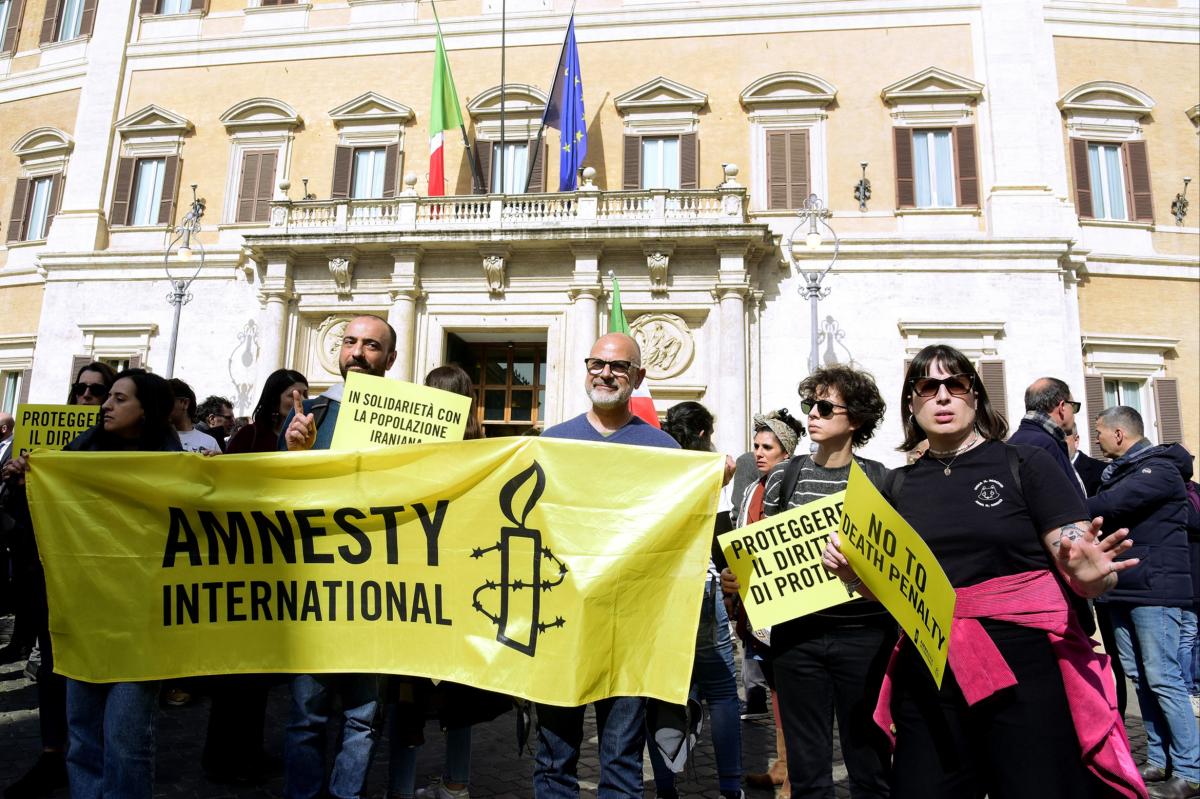
Amnesty International Betrays Founder’s Vision of Free Conscience

A descendant of Amnesty International cofounder Sean MacBride has condemned the organization for abandoning its principles after it labeled women's groups and rape crisis centers as threats to human rights.
Stefanos Banos
Stefanos Banos Staff Writer
AUGUST 22, 2026 AT 9:38 PM

Iseult White, whose grandfather Sean MacBride cofounded the global charity, says the organization he helped build would be unrecognizable today, according to Iseult White writing in New York Post.

On July 8, 2026, Amnesty International UK released a report called “A Growing Threat: The Anti-Rights Movement in the UK” that branded 117 organizations as dangers to human rights. Among those labeled “anti-rights” were a rape crisis center in Scotland, multiple women’s rights advocacy groups, and Christian organizations.

The backlash was immediate and fierce. Targeted organizations sent protest letters directly to Amnesty International UK’s CEO and Chair while publishing objections online. Within two days, the organization scrubbed the report from its website. On July 31, AIUK issued a public apology acknowledging the report failed to meet their standards.

White argues those standards have been compromised for years. She recalls growing up in a household where the family gathered around the kitchen table writing Christmas cards to prisoners of conscience and composing letters to the governments holding them. MacBride himself had been a political prisoner and established Amnesty as a permanent international movement defending freedom of opinion and religion.

From Evidence to Ideology

The organization once built its reputation on rigorous, case-by-case methodology—one prisoner, one file, one fact-checked case. That approach has been replaced by ideological activism, White contends.

In 2020, Amnesty International Ireland signed an open letter from Trans Equality Network Ireland demanding that media and politicians stop providing legitimate representation to people who believe biological sex is real and material in law.

White publicly challenged Colm O’Gorman, then CEO of Amnesty Ireland, over the stance. A national newspaper journalist interviewed her for a story but never published it. When White inquired why, she learned O’Gorman had refused to comment, making it difficult for the journalist to present both sides. She identifies this refusal to engage as a deliberate strategy to silence dissent, one also employed by the ACLU and Stonewall UK.

Rape Crisis Center Branded Anti-Rights

The absurdity of Amnesty’s recent positions became clear when the organization targeted Beira’s Place, a sexual assault support center, as anti-rights. The facility was founded and funded by author J.K. Rowling to provide women-only services for survivors of sexual abuse and rape.

Beira’s Place was created after The Edinburgh Rape Crisis Center failed to offer women-only spaces. That organization’s CEO at the time, a transgender woman named Mridul Wadhwa, had publicly stated that rape survivors seeking such spaces needed to reframe their trauma and be re-educated out of their bigotry.

White estimates roughly half of the 117 organizations Amnesty labeled as threats hold the position that biological sex is material in law and policy. These groups generally advocate for the right of lesbian, gay, and bisexual people to associate in single-sex spaces, the exclusion of males from women’s spaces, and the protection of women’s categories in sports. Some also raise concerns about evidence and safeguarding in youth gender medicine.

Defying Court Rulings

Even legal defeats have not prompted Amnesty to reconsider its positions. In 2025, the UK Supreme Court heard a case brought by For Women Scotland, which argued that the terms “man” and “woman” referred to biological sex and that these definitions mattered for legal equality protections.

Amnesty intervened against this argument. The Supreme Court ruled that Amnesty’s proposed definitions would render legal protections against sex and sexual orientation discrimination unworkable. Despite this judicial rebuke, Amnesty still included For Women Scotland among the anti-rights groups in its 2026 report.

White contrasts her grandfather’s disciplined universality, built on investigated facts rather than ideological assumptions, with the organization’s current trajectory. MacBride raised his family to believe freedom of expression was a fundamental safeguard of democracy—a principle the organization bearing his legacy now appears to oppose.

With information from New York Post

Share:
Stefanos Banos
Stefanos Banos

Stefanos Banos was born in Piraeus and is an editor at NewsFire.GR, specializing in political analysis and international relations. He graduated from the Department of Communication and Media at the University of Bremen in Germany, where he also completed his Master of Arts in Communication and Media Studies. Married to Zoi, he is a proud father of three boys.

Iseult White, whose grandfather Sean MacBride cofounded the global charity, says the organization he helped build would be unrecognizable today, according to Iseult White writing in New York Post.

On July 8, 2026, Amnesty International UK released a report called “A Growing Threat: The Anti-Rights Movement in the UK” that branded 117 organizations as dangers to human rights. Among those labeled “anti-rights” were a rape crisis center in Scotland, multiple women’s rights advocacy groups, and Christian organizations.

The backlash was immediate and fierce. Targeted organizations sent protest letters directly to Amnesty International UK’s CEO and Chair while publishing objections online. Within two days, the organization scrubbed the report from its website. On July 31, AIUK issued a public apology acknowledging the report failed to meet their standards.

White argues those standards have been compromised for years. She recalls growing up in a household where the family gathered around the kitchen table writing Christmas cards to prisoners of conscience and composing letters to the governments holding them. MacBride himself had been a political prisoner and established Amnesty as a permanent international movement defending freedom of opinion and religion.

From Evidence to Ideology

The organization once built its reputation on rigorous, case-by-case methodology—one prisoner, one file, one fact-checked case. That approach has been replaced by ideological activism, White contends.

In 2020, Amnesty International Ireland signed an open letter from Trans Equality Network Ireland demanding that media and politicians stop providing legitimate representation to people who believe biological sex is real and material in law.

White publicly challenged Colm O’Gorman, then CEO of Amnesty Ireland, over the stance. A national newspaper journalist interviewed her for a story but never published it. When White inquired why, she learned O’Gorman had refused to comment, making it difficult for the journalist to present both sides. She identifies this refusal to engage as a deliberate strategy to silence dissent, one also employed by the ACLU and Stonewall UK.

Rape Crisis Center Branded Anti-Rights

The absurdity of Amnesty’s recent positions became clear when the organization targeted Beira’s Place, a sexual assault support center, as anti-rights. The facility was founded and funded by author J.K. Rowling to provide women-only services for survivors of sexual abuse and rape.

Beira’s Place was created after The Edinburgh Rape Crisis Center failed to offer women-only spaces. That organization’s CEO at the time, a transgender woman named Mridul Wadhwa, had publicly stated that rape survivors seeking such spaces needed to reframe their trauma and be re-educated out of their bigotry.

White estimates roughly half of the 117 organizations Amnesty labeled as threats hold the position that biological sex is material in law and policy. These groups generally advocate for the right of lesbian, gay, and bisexual people to associate in single-sex spaces, the exclusion of males from women’s spaces, and the protection of women’s categories in sports. Some also raise concerns about evidence and safeguarding in youth gender medicine.

Defying Court Rulings

Even legal defeats have not prompted Amnesty to reconsider its positions. In 2025, the UK Supreme Court heard a case brought by For Women Scotland, which argued that the terms “man” and “woman” referred to biological sex and that these definitions mattered for legal equality protections.

Amnesty intervened against this argument. The Supreme Court ruled that Amnesty’s proposed definitions would render legal protections against sex and sexual orientation discrimination unworkable. Despite this judicial rebuke, Amnesty still included For Women Scotland among the anti-rights groups in its 2026 report.

White contrasts her grandfather’s disciplined universality, built on investigated facts rather than ideological assumptions, with the organization’s current trajectory. MacBride raised his family to believe freedom of expression was a fundamental safeguard of democracy—a principle the organization bearing his legacy now appears to oppose.

With information from New York Post

