Necessary Cookies

Required for the site to function. Cannot be disabled.

Analytics Cookies

Help us understand how visitors interact with our site (Google Analytics via GTM).

Marketing Cookies

Used to track visitors and deliver personalised advertisements.

We use cookies to enhance your browsing experience and analyse site traffic. By clicking Accept All, you consent to our use of cookies. Privacy Policy
NewsFire Global
Home News Europe World Christianity Culture Wars Opinion Video
Information
About Us Authors Advertising Terms & Conditions Privacy Policy Contact
R2B Media
R2B NEWSFIRE.GR PAPAFOTIS.GR THRACTION HELLENIC CONSERVATIVES RIGHT2THEBONE YT
News Europe

Merkel Told Defense Giant “We Don’t Really Need You”: CEO

Rheinmetall CEO Armin Papperger accused former German Chancellor Angela Merkel of sidelining the domestic arms industry in favor of relying on American military power.

Dimitris Papafotis
Dimitris Papafotis Editor in Chief
JULY 3, 2026 AT 8:35 PM
Photo: brusselssignal.eu

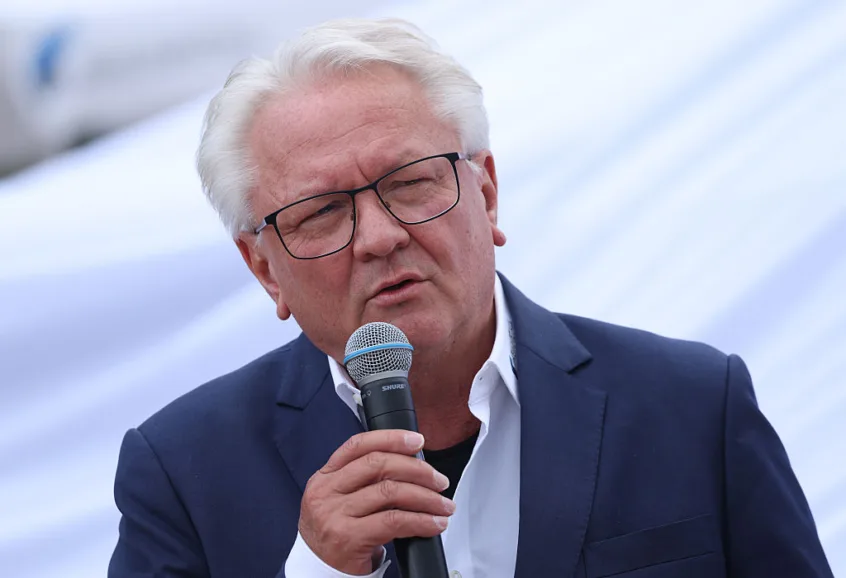
Armin Papperger, CEO of Rheinmetall, delivered the stinging rebuke at the Welt Security Summit on July 2, according to Brussels Signal. He recounted how Merkel had told the defence sector: “We don’t really need you, if there is a problem we call the Americans.”

Papperger described how before Russia’s full-scale invasion of Ukraine in 2022, there was no appetite for weapons systems in Germany itself. Companies like Rheinmetall were pushed into what he called a “dirty corner” simply for exporting arms.

The Rheinmetall boss said that German defence firms were unwanted on home soil during the Merkel era, which lasted from 2005 to 2021 under the Christian Democratic Union (CDU).

His remarks underscore the dramatic reversal in German defence policy since the 2022 Zeitenwende, or “turning point”, declared by then-chancellor Olaf Scholz of the Social Democratic Party (SPD). That policy shift unlocked a €100 billion special fund for the Bundeswehr, Germany’s armed forces, along with subsequent spending packages.

The rearmament drive has transformed Rheinmetall’s fortunes. The company’s share price has soared over 1,000 per cent since 2022, and its order book has swelled with contracts to supply artillery systems, ammunition and other equipment to both Ukraine and the German military.

Criticism of European Defence Fragmentation

At the same summit, Papperger urged faster procurement processes and more predictable planning commitments from government. He complained that many contracts remained framework agreements rather than firm orders.

He also took aim at the fragmentation of Europe’s defence industry, telling attendees that consolidation was failing because every nation wanted its own production facilities.

On a more positive note, Papperger claimed Germany had now surpassed the United States in conventional munitions production. He said Rheinmetall had increased its artillery shell output from 70,000 to one million rounds per year.

Merkel’s Legacy Under Scrutiny

Merkel’s 16-year chancellorship prioritised disarmament, strict export controls and reliance on NATO allies, especially Washington, for collective security. Critics argue this approach left the Bundeswehr chronically under-equipped and the domestic defence sector undervalued.

German defence spending averaged roughly 1.2 per cent of gross domestic product over the past decade. The country only reached NATO’s 2 per cent spending target in 2024 for the first time since 1991, according to alliance figures.

Rheinmetall now stands as the primary beneficiary of Germany’s post-2022 rearmament effort, cementing its position as a central pillar of European defence industrial capacity.

With information from Brussels Signal

Share:
Dimitris Papafotis
Dimitris Papafotis

Dimitris Papafotis is the editor-in-chief of NewsFire.GR. He was born and raised in Athens. He studied at the Journalism Workshop (1991-1993). He currently lives in Pyrgos, Ilia, where he has been active in radio and various newspapers, while also maintaining his personal blog, Papafotis.gr.

Photo: brusselssignal.eu

Armin Papperger, CEO of Rheinmetall, delivered the stinging rebuke at the Welt Security Summit on July 2, according to Brussels Signal. He recounted how Merkel had told the defence sector: “We don’t really need you, if there is a problem we call the Americans.”

Papperger described how before Russia’s full-scale invasion of Ukraine in 2022, there was no appetite for weapons systems in Germany itself. Companies like Rheinmetall were pushed into what he called a “dirty corner” simply for exporting arms.

The Rheinmetall boss said that German defence firms were unwanted on home soil during the Merkel era, which lasted from 2005 to 2021 under the Christian Democratic Union (CDU).

His remarks underscore the dramatic reversal in German defence policy since the 2022 Zeitenwende, or “turning point”, declared by then-chancellor Olaf Scholz of the Social Democratic Party (SPD). That policy shift unlocked a €100 billion special fund for the Bundeswehr, Germany’s armed forces, along with subsequent spending packages.

The rearmament drive has transformed Rheinmetall’s fortunes. The company’s share price has soared over 1,000 per cent since 2022, and its order book has swelled with contracts to supply artillery systems, ammunition and other equipment to both Ukraine and the German military.

Criticism of European Defence Fragmentation

At the same summit, Papperger urged faster procurement processes and more predictable planning commitments from government. He complained that many contracts remained framework agreements rather than firm orders.

He also took aim at the fragmentation of Europe’s defence industry, telling attendees that consolidation was failing because every nation wanted its own production facilities.

On a more positive note, Papperger claimed Germany had now surpassed the United States in conventional munitions production. He said Rheinmetall had increased its artillery shell output from 70,000 to one million rounds per year.

Merkel’s Legacy Under Scrutiny

Merkel’s 16-year chancellorship prioritised disarmament, strict export controls and reliance on NATO allies, especially Washington, for collective security. Critics argue this approach left the Bundeswehr chronically under-equipped and the domestic defence sector undervalued.

German defence spending averaged roughly 1.2 per cent of gross domestic product over the past decade. The country only reached NATO’s 2 per cent spending target in 2024 for the first time since 1991, according to alliance figures.

Rheinmetall now stands as the primary beneficiary of Germany’s post-2022 rearmament effort, cementing its position as a central pillar of European defence industrial capacity.

With information from Brussels Signal