When Biodiversity Becomes a Religion: Tatiana Giraud
A prominent French biologist is under fire for allegedly promoting alarmist views on biodiversity and agriculture that critics say misrepresent science as ideology.
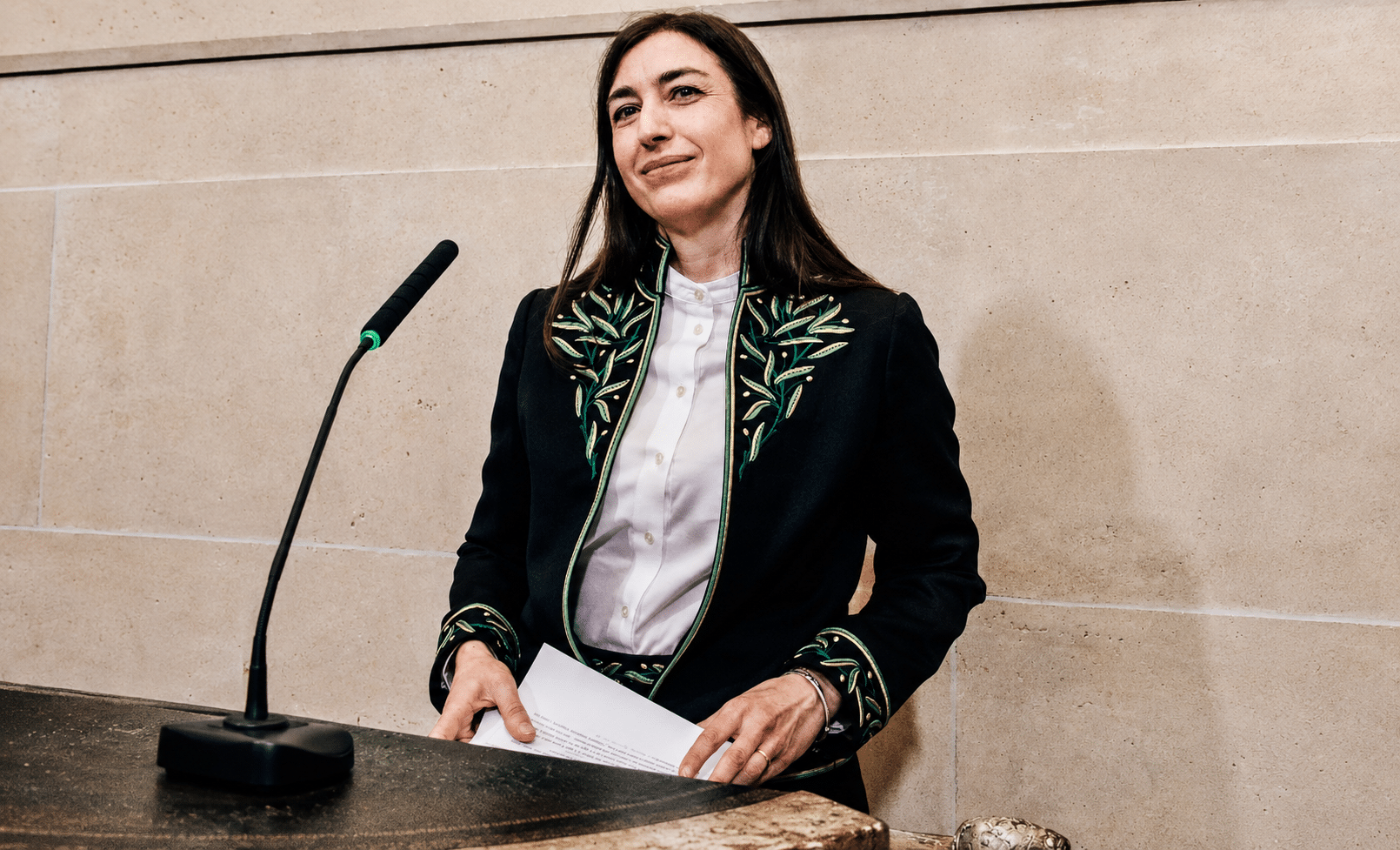

Tatiana Giraud, a research director at France’s National Centre for Scientific Research (CNRS), member of the Academy of Sciences, and recognized specialist in fungal evolution, has established herself in recent years as one of the most prominent scientific voices on biodiversity issues, according to Causeur. A frequent media guest and author of popular science works, Giraud argues that declining biodiversity represents one of the greatest threats facing humanity.
Yet her public discourse extends far beyond scientific observation, carrying with it highly contestable assumptions about biodiversity and humanity’s environmental impact. During a May 24, 2026 appearance on French television network LCI, Giraud endorsed without reservation a statement by controversial figure Pierre Rabhi suggesting that food has become so toxic that people should wish each other “good luck” rather than “bon appétit” before meals.
She then escalated the claim further, stating that humanity is essentially the only species on Earth that poisons its own food to prevent other species from eating it, and then consumes that poisoned food anyway. The statement raises serious questions about how a respected researcher could overlook the fact that humanity has never been better fed or healthier, largely thanks to the agricultural advances she condemns.
Biodiversity as Sacred Doctrine
At the foundation of this catastrophist vision lies what Causeur describes as an almost religious approach to biodiversity. Giraud’s rhetoric tends to transform biodiversity into an absolute value that must be preserved at any cost. Yet biodiversity simply refers to the diversity of living organisms, which naturally varies across locations and time periods.
While human societies certainly require a certain level of biological diversity to flourish, not all biodiversity is equally desirable. Few people wish to have lice in their hair, bedbugs in their beds, or rats in their homes. There is therefore no imperative to preserve biodiversity as some sacred and untouchable entity, but rather to seek the balance that ensures optimal human welfare.
Exaggerated Language of Collapse
Swept up in her sacralization of biodiversity, Giraud interprets any decrease as a risk or harbinger of catastrophe. In her media appearances, she rarely speaks of biodiversity “decline” or “decrease,” but primarily of the “collapse” of living systems. This word choice suggests a generalized and abrupt disappearance of life itself.
Yet the scientific studies regularly invoked by Giraud describe neither a generalized disappearance of life nor an integral collapse of ecosystems. Even when these studies document significant decreases in biodiversity, they often emphasize that such changes occur within contrasting dynamics: some species regress while others progress, certain populations decline while others reconstitute themselves.
In the literal sense, we are not witnessing a collapse of biodiversity—meaning a total disappearance of life’s diversity. Rather, we observe the disappearance of certain species and especially the drastic decline of some animal populations. But these decreases, however significant, do not result in the disappearance of life itself.
Nature’s Adaptive Capacity
Cascade effects can certainly occur when one species disappears, potentially weakening others that depended on it. But these processes eventually stabilize. Other organisms occupy vacant ecological niches, new interactions emerge, and ecosystems reorganize themselves. The history of life on Earth is punctuated by such transformations.
Even the great mass extinctions of the past never led to a generalized collapse of life, but rather to profound recompositions of ecosystems, often followed by rapid diversification of new species. Speaking today of a “biodiversity collapse” maintains the misleading idea of a living world crumbling like a house of cards, when nature actually functions primarily through permanent dynamics of adaptation and renewal.
Giraud nevertheless prefers to promote fear by frequently resorting to the airplane rivet analogy—the simplistic notion that an aircraft can lose a few rivets without consequence, but eventually reaches a critical threshold where loss becomes catastrophic. This framing reveals more about ideological commitments than scientific rigor, representing what Causeur characterizes as an intellectual drift unfortunately widespread in certain scientific circles.
The episode underscores growing concerns about how environmental advocacy, even when promoted by credentialed scientists, can cross the line from legitimate conservation concerns into unsubstantiated alarmism that distorts both scientific evidence and the remarkable achievements of modern agriculture in feeding an unprecedented global population.
With information from Causeur