Necessary Cookies

Required for the site to function. Cannot be disabled.

Analytics Cookies

Help us understand how visitors interact with our site (Google Analytics via GTM).

Marketing Cookies

Used to track visitors and deliver personalised advertisements.

We use cookies to enhance your browsing experience and analyse site traffic. By clicking Accept All, you consent to our use of cookies. Privacy Policy
NewsFire Global
Home News Europe World Christianity Culture Wars Opinion Video
Information
About Us Authors Advertising Terms & Conditions Privacy Policy Contact
R2B Media
R2B NEWSFIRE.GR PAPAFOTIS.GR THRACTION HELLENIC CONSERVATIVES RIGHT2THEBONE YT
News World

Andy Burnham blasted after being hailed as Labour’s first female PM

Andy Burnham faces backlash after his campaign sources claimed he would govern as Labour's first female Prime Minister due to his policy priorities and female-heavy advisory team.
Stefanos Banos
Stefanos Banos Staff Writer
JUNE 25, 2026 AT 7:49 PM

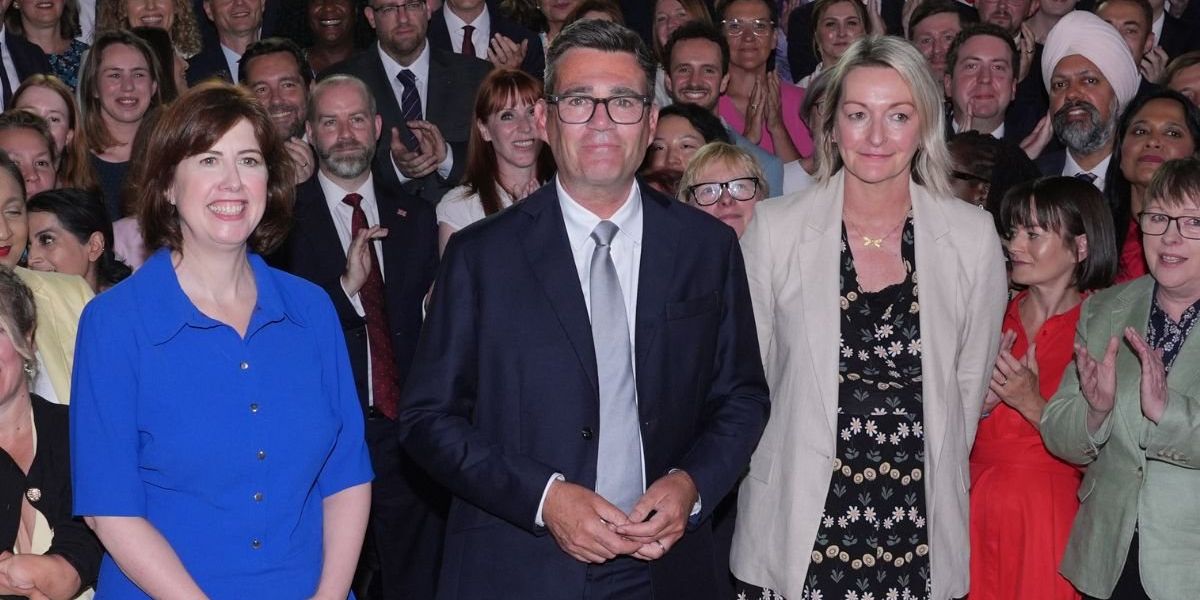
The newly elected MP for Makerfield, who is poised to become Britain’s next Prime Minister following Sir Keir Starmer’s resignation on Monday, faced an immediate backlash over the controversial characterization from allies within his leadership campaign.

Andy Burnham previously ran unsuccessful bids for Labour leadership in both 2010 and 2015, facing off against female candidates in those contests. He now stands as the only declared contender to replace Starmer, with insiders suggesting he is angling for a coronation rather than a competitive race.

The controversy erupted after a source close to Burnham’s campaign told The Spectator that the former Greater Manchester Mayor would govern as Labour’s first female Prime Minister due to his policy priorities and female-heavy advisory team.

According to the source, Labour has long desired a female leader who could champion what they termed a distinctly female agenda focused on health, education, family finances, safer streets, social care, and online child safety. The source contrasted this with Conservative female leaders who face pressure to demonstrate toughness on traditionally male policy areas.

The remarks triggered an immediate political storm, particularly given that Labour elected a record 190 female MPs to the House of Commons at the 2024 General Election.

Several prominent female Labour figures had been identified as potential leadership challengers, including Foreign Secretary Yvette Cooper, Home Secretary Shabana Mahmood, and former Deputy Prime Minister Angela Rayner. None have formally entered the race, though all three had been considered strong contenders for the top position.

Critics across the political spectrum seized on the comments as emblematic of Labour’s confused stance on fundamental questions of sex and gender. Conservative commentators noted the irony of Burnham being hailed as a female Prime Minister while his party has struggled to articulate a clear position on what defines a woman.

The controversy threatens to overshadow what had been shaping up as a smooth transition for Burnham, who polls suggest enjoys significant support among Labour members and the broader electorate.

The backlash highlights the ongoing tensions within progressive politics over gender identity and representation, issues that have proven politically treacherous for Labour in recent years.

Burnham’s campaign has not formally commented on the characterization by supporters, though sources indicate he remains confident of securing the leadership without facing a contested election.

With information from GB News

Share:
Stefanos Banos
Stefanos Banos

Stefanos Banos was born in Piraeus and is an editor at NewsFire.GR, specializing in political analysis and international relations. He graduated from the Department of Communication and Media at the University of Bremen in Germany, where he also completed his Master of Arts in Communication and Media Studies. Married to Zoi, he is a proud father of three boys.

The newly elected MP for Makerfield, who is poised to become Britain’s next Prime Minister following Sir Keir Starmer’s resignation on Monday, faced an immediate backlash over the controversial characterization from allies within his leadership campaign.

Andy Burnham previously ran unsuccessful bids for Labour leadership in both 2010 and 2015, facing off against female candidates in those contests. He now stands as the only declared contender to replace Starmer, with insiders suggesting he is angling for a coronation rather than a competitive race.

The controversy erupted after a source close to Burnham’s campaign told The Spectator that the former Greater Manchester Mayor would govern as Labour’s first female Prime Minister due to his policy priorities and female-heavy advisory team.

According to the source, Labour has long desired a female leader who could champion what they termed a distinctly female agenda focused on health, education, family finances, safer streets, social care, and online child safety. The source contrasted this with Conservative female leaders who face pressure to demonstrate toughness on traditionally male policy areas.

The remarks triggered an immediate political storm, particularly given that Labour elected a record 190 female MPs to the House of Commons at the 2024 General Election.

Several prominent female Labour figures had been identified as potential leadership challengers, including Foreign Secretary Yvette Cooper, Home Secretary Shabana Mahmood, and former Deputy Prime Minister Angela Rayner. None have formally entered the race, though all three had been considered strong contenders for the top position.

Critics across the political spectrum seized on the comments as emblematic of Labour’s confused stance on fundamental questions of sex and gender. Conservative commentators noted the irony of Burnham being hailed as a female Prime Minister while his party has struggled to articulate a clear position on what defines a woman.

The controversy threatens to overshadow what had been shaping up as a smooth transition for Burnham, who polls suggest enjoys significant support among Labour members and the broader electorate.

The backlash highlights the ongoing tensions within progressive politics over gender identity and representation, issues that have proven politically treacherous for Labour in recent years.

Burnham’s campaign has not formally commented on the characterization by supporters, though sources indicate he remains confident of securing the leadership without facing a contested election.

With information from GB News

