Necessary Cookies

Required for the site to function. Cannot be disabled.

Analytics Cookies

Help us understand how visitors interact with our site (Google Analytics via GTM).

Marketing Cookies

Used to track visitors and deliver personalised advertisements.

We use cookies to enhance your browsing experience and analyse site traffic. By clicking Accept All, you consent to our use of cookies. Privacy Policy
NewsFire Global
Home News Europe World Christianity Culture Wars Opinion Video
Information
About Us Authors Advertising Terms & Conditions Privacy Policy Contact
R2B Media
R2B NEWSFIRE.GR PAPAFOTIS.GR THRACTION HELLENIC CONSERVATIVES RIGHT2THEBONE YT
News Christianity

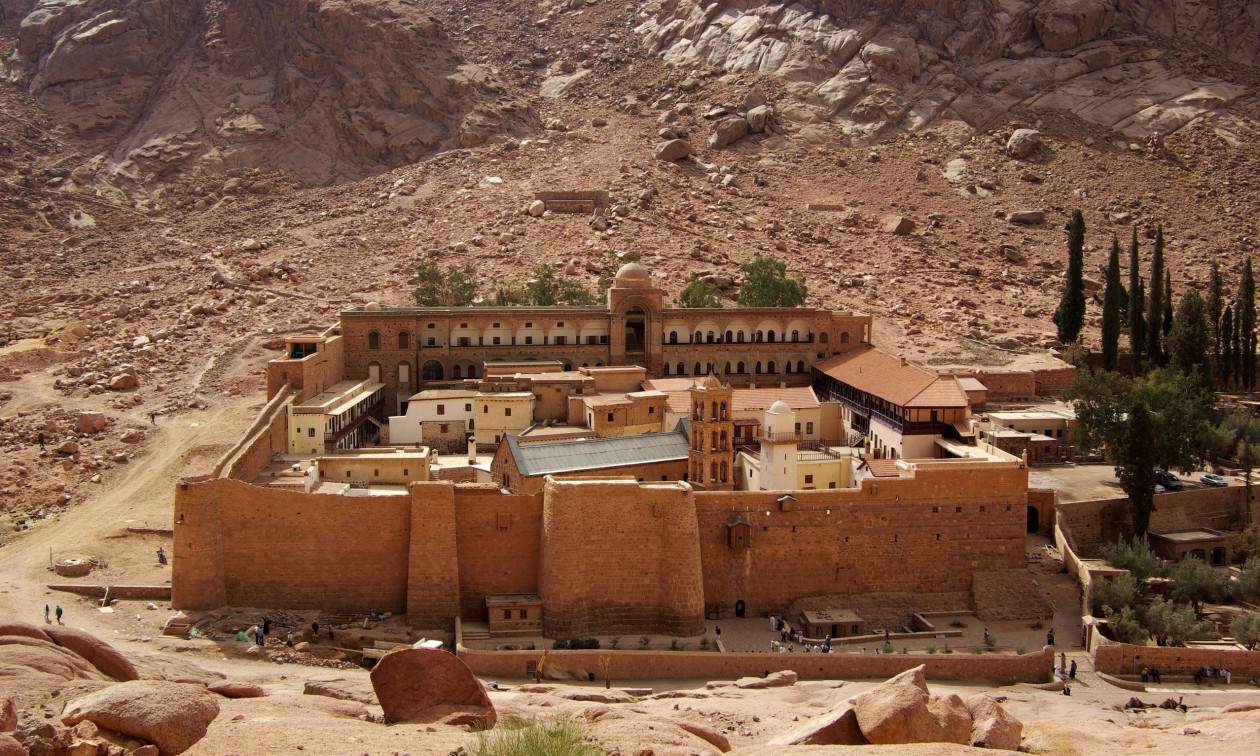
St. Catherine’s Monastery: Great danger one year after dramatic events

Egypt's proposed agreement would require the Monastery of Saint Catherine to cede ownership of properties held for 15 centuries while the new Archbishop remains unrecognized by Egyptian authorities.

Dimitris Papafotis
Dimitris Papafotis Editor in Chief
JUNE 24, 2026 AT 1:00 PM

More than a year after the dramatic events and approximately seven months since the enthronement of the new Archbishop, the issue of the Monastery of Saint Catherine of Sinai remains a complex crisis with diplomatic, ecclesiastical, legal, and national dimensions, according to Newsbomb.

The unpublished agreement and its content

Since August 2025, the Greek Foreign Minister has been in possession of a draft agreement that emerged from discussions with his Egyptian counterpart. However, this agreement has not been made public, a fact that raises serious questions about its content. The government repeatedly states that “the brotherhood has the final say,” avoiding any reference to the details of the agreement.

According to information that circles within the Monastery revealed to Newsbomb, the proposed agreement requires the Monastery to accept that ownership of the properties it has held for 15 centuries — including the central Monastery building which has been designated an archaeological site — now belongs to Egypt.

At the same time, there is no provision for recognition of ownership of the relics, icons, or the Monastery’s library.

The government emphasizes that the “safeguarding of the Greek Orthodox character” of the Monastery has been achieved — an issue that was never disputed by Egypt and does not constitute the real stake. The contentious issue remains ownership of the properties, not the religious character.

Escalation of Egyptian claims

Egypt has proceeded to escalate its claims, demanding more properties beyond the initial 70. It is exploiting the internal crisis of the brotherhood and leveraging the non-recognition of the new Archbishop to impose an agreement favorable to Egyptian interests.

The puzzle of the new Archbishop’s recognition

The new Archbishop of Sinai, Pharan and Raitho and Abbot of the Holy Monastery of Saint Catherine of Mount Sinai, Symeon, has not been recognized by the Egyptian state. Consequently, he is unable to sign any agreement. His election constitutes an administrative puzzle both in Egypt and in Greece.

While the Greek state recognizes him ecclesiastically and politically, his administrative acts lack legitimacy without Egyptian recognition.

Legitimacy and deep division

The current Council of the Monastery has not been elected by a General Assembly, and is composed of the three members who had led the rebellion against former Archbishop Damianos. It co-signs documents with the unrecognized Archbishop and, consequently, lacks legitimacy. The brotherhood of the Monastery is still “cut” in two even today:

The group at the Monastery

Six to seven monks reside within the Monastery, divided into two subgroups. Their common denominator is opposition to former Archbishop Damianos. They had led the ecclesiastical rebellion and have not withdrawn their lawsuits against the former Archbishop and the other expelled monks.

While they control the Monastery, their position vis-à-vis Egypt is weak. Egypt does not grant visas for new monks, leading the Monastery to physical decline and possible “museumification.”

The exiled monks

Eight to nine monks have been expelled from the Monastery and are in Greece. The lawsuits against them remain active, they are not permitted to return, and they constitute nearly half the brotherhood.

Significantly, they have not been informed of the agreement, despite the Foreign Ministry’s statements that “the agreement has come to their knowledge and the monks have the final say.”

Legitimization

The failure to inform former Archbishop Damianos and the other expelled monks creates a serious legitimization problem. If Damianos, who served as Archbishop of Sinai for 52 years, does not approve the agreement, its legitimization is called into question.

Damianos is a regulatory factor, as the current Archbishop of Sinai, Symeon, was elected with the votes of his group. The non-recognition of the Archbishop by Egypt constitutes a negotiating card, which may demand further concessions in exchange for his recognition.

The consequences for Greece

The crisis at the Monastery of Saint Catherine may cause significant political repercussions in Greece, affecting Greek-Egyptian relations and the government’s electoral dynamics.

The uncontrolled consequences of the last two years — both regarding court decisions concerning property and the internal division of the brotherhood, closely linked to Greece-Egypt negotiations — call into question the historical entity of the Monastery.

Source of information: Newsbomb

Share:
Dimitris Papafotis
Dimitris Papafotis

Dimitris Papafotis is the editor-in-chief of NewsFire.GR. He was born and raised in Athens. He studied at the Journalism Workshop (1991-1993). He currently lives in Pyrgos, Ilia, where he has been active in radio and various newspapers, while also maintaining his personal blog, Papafotis.gr.

More than a year after the dramatic events and approximately seven months since the enthronement of the new Archbishop, the issue of the Monastery of Saint Catherine of Sinai remains a complex crisis with diplomatic, ecclesiastical, legal, and national dimensions, according to Newsbomb.

The unpublished agreement and its content

Since August 2025, the Greek Foreign Minister has been in possession of a draft agreement that emerged from discussions with his Egyptian counterpart. However, this agreement has not been made public, a fact that raises serious questions about its content. The government repeatedly states that “the brotherhood has the final say,” avoiding any reference to the details of the agreement.

According to information that circles within the Monastery revealed to Newsbomb, the proposed agreement requires the Monastery to accept that ownership of the properties it has held for 15 centuries — including the central Monastery building which has been designated an archaeological site — now belongs to Egypt.

At the same time, there is no provision for recognition of ownership of the relics, icons, or the Monastery’s library.

The government emphasizes that the “safeguarding of the Greek Orthodox character” of the Monastery has been achieved — an issue that was never disputed by Egypt and does not constitute the real stake. The contentious issue remains ownership of the properties, not the religious character.

Escalation of Egyptian claims

Egypt has proceeded to escalate its claims, demanding more properties beyond the initial 70. It is exploiting the internal crisis of the brotherhood and leveraging the non-recognition of the new Archbishop to impose an agreement favorable to Egyptian interests.

The puzzle of the new Archbishop’s recognition

The new Archbishop of Sinai, Pharan and Raitho and Abbot of the Holy Monastery of Saint Catherine of Mount Sinai, Symeon, has not been recognized by the Egyptian state. Consequently, he is unable to sign any agreement. His election constitutes an administrative puzzle both in Egypt and in Greece.

While the Greek state recognizes him ecclesiastically and politically, his administrative acts lack legitimacy without Egyptian recognition.

Legitimacy and deep division

The current Council of the Monastery has not been elected by a General Assembly, and is composed of the three members who had led the rebellion against former Archbishop Damianos. It co-signs documents with the unrecognized Archbishop and, consequently, lacks legitimacy. The brotherhood of the Monastery is still “cut” in two even today:

The group at the Monastery

Six to seven monks reside within the Monastery, divided into two subgroups. Their common denominator is opposition to former Archbishop Damianos. They had led the ecclesiastical rebellion and have not withdrawn their lawsuits against the former Archbishop and the other expelled monks.

While they control the Monastery, their position vis-à-vis Egypt is weak. Egypt does not grant visas for new monks, leading the Monastery to physical decline and possible “museumification.”

The exiled monks

Eight to nine monks have been expelled from the Monastery and are in Greece. The lawsuits against them remain active, they are not permitted to return, and they constitute nearly half the brotherhood.

Significantly, they have not been informed of the agreement, despite the Foreign Ministry’s statements that “the agreement has come to their knowledge and the monks have the final say.”

Legitimization

The failure to inform former Archbishop Damianos and the other expelled monks creates a serious legitimization problem. If Damianos, who served as Archbishop of Sinai for 52 years, does not approve the agreement, its legitimization is called into question.

Damianos is a regulatory factor, as the current Archbishop of Sinai, Symeon, was elected with the votes of his group. The non-recognition of the Archbishop by Egypt constitutes a negotiating card, which may demand further concessions in exchange for his recognition.

The consequences for Greece

The crisis at the Monastery of Saint Catherine may cause significant political repercussions in Greece, affecting Greek-Egyptian relations and the government’s electoral dynamics.

The uncontrolled consequences of the last two years — both regarding court decisions concerning property and the internal division of the brotherhood, closely linked to Greece-Egypt negotiations — call into question the historical entity of the Monastery.

Source of information: Newsbomb

