Necessary Cookies

Required for the site to function. Cannot be disabled.

Analytics Cookies

Help us understand how visitors interact with our site (Google Analytics via GTM).

Marketing Cookies

Used to track visitors and deliver personalised advertisements.

We use cookies to enhance your browsing experience and analyse site traffic. By clicking Accept All, you consent to our use of cookies. Privacy Policy
NewsFire Global
Home News Europe World Christianity Culture Wars Opinion
Information
About Us Authors Advertising Terms & Conditions Privacy Policy Contact
R2B Media
R2B NEWSFIRE.GR PAPAFOTIS.GR THRACTION HELLENIC CONSERVATIVES RIGHT2THEBONE YT
Opinion Culture Wars

Tribute: Jeffrey Epstein’s Abyss – A Modern Marquis de Sade?

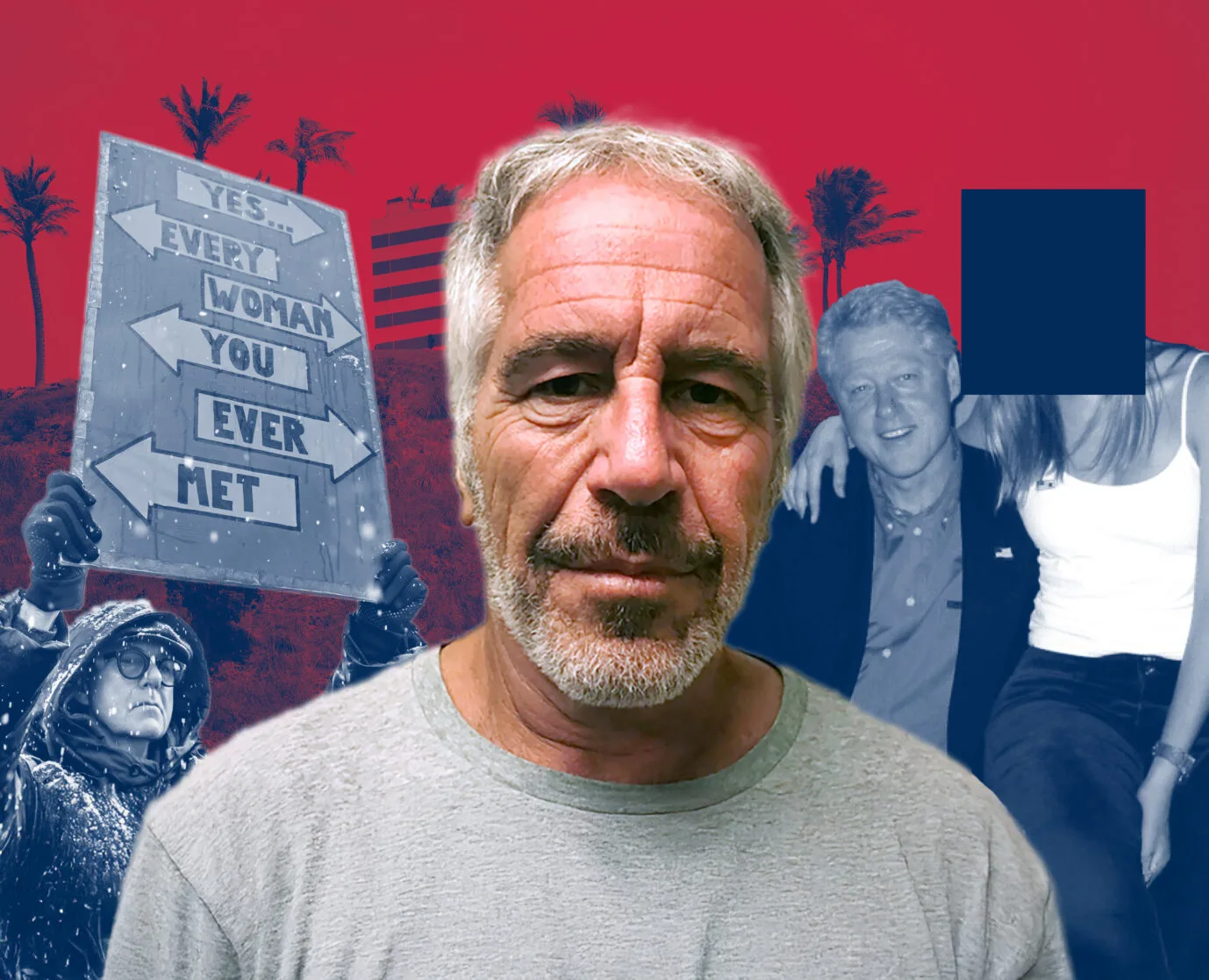
The Epstein files expose not just elite corruption but a deeper cultural decay, revealing how power cloaked in philanthropy masks systemic abuse and the elite’s craving to evade accountability.

Newsroom
Newsroom Staff Writer
FEBRUARY 11, 2026 AT 9:49 PM Updated: May 18, 2026 5:08 PM

The Epstein files have become a symbol of the corruption of the American elite. However, they reveal a much deeper problem with American culture that is often overlooked.

  • By Elliot Neaman

Three years before Jeffrey Epstein first came under investigation in Palm Beach for sexual crimes, a journalist from Vanity Fair magazine made a telling discovery. The profile, prophetically titled “The Talented Mr. Epstein”, describes in detail his nine-story Manhattan mansion, outfitted with black 18th-century Portuguese cabinets and an almost three-meter-long black Steinway concert grand piano of the “D” type. In Epstein’s office on the top floor, the author found a copy of the French libertine (free-thinker) Marquis de Sade’s Justine.

Epstein presented this as a clear strategic element of staging and simultaneously as a sly advertisement. The heroine of the novel is a twelve-year-old girl who sets out on a journey to France to learn virtue—but instead falls victim to sexual exploitation and abuse by monks, a wealthy gentleman, and other “sadistic” tormentors, all men.

Today, few think about de Sade’s writings—such as Justine or The 120 Days of Sodom—and more about his reputation as a purveyor of a private theater of violence, where privileged men could live out forbidden fantasies under the guise of philosophy and refined taste. Among other things, he wrote about domination and submission of women. Although de Sade’s work was considered immoral, even contemporary feminists like Angela Carter saw him as a radical critic of sexual and social power relations in revolutionary France—despite the violent and pornographic nature of his writings.
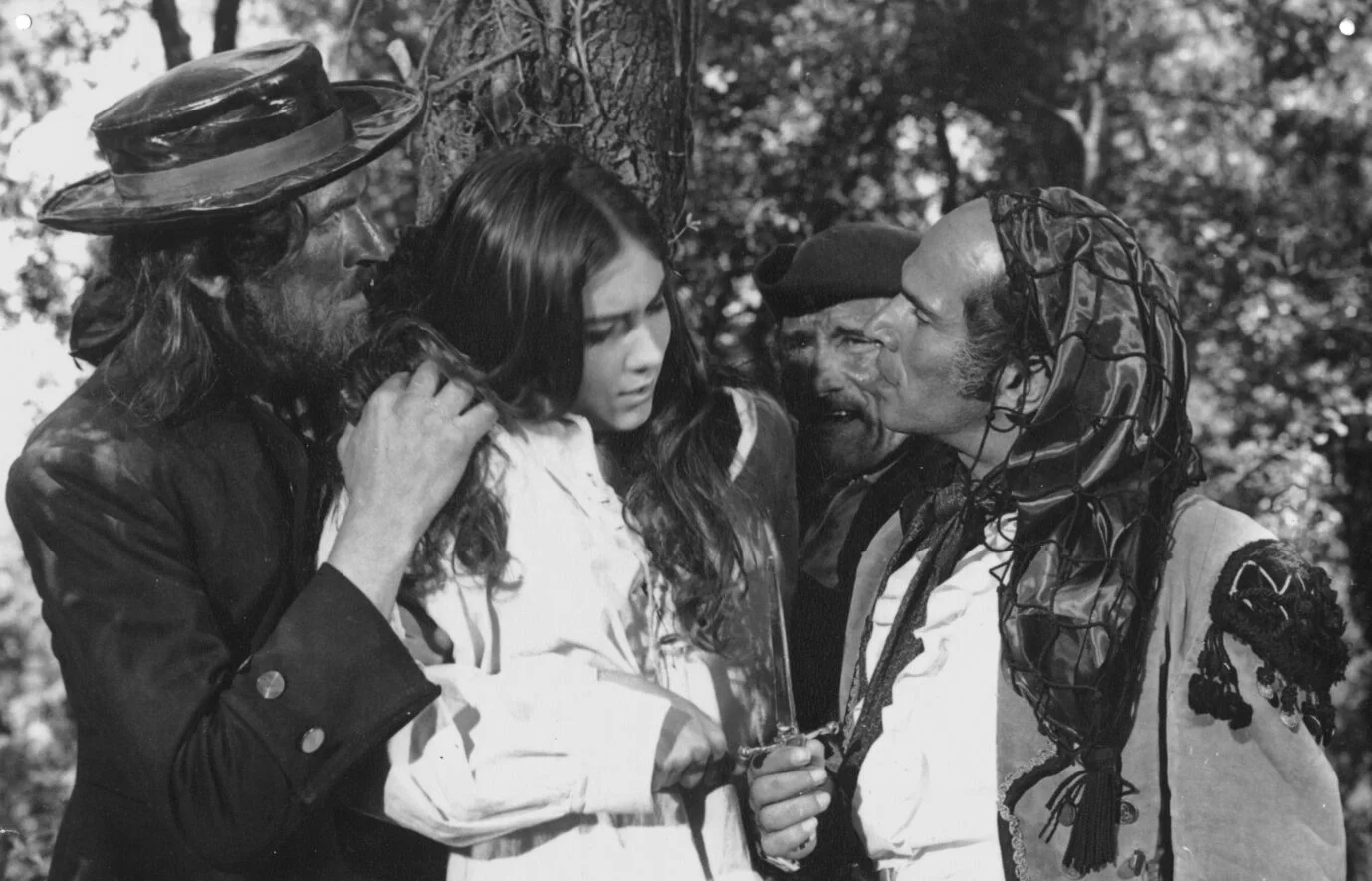
A 1969 film adaptation of the novel Justine starring Romina Power. | Photo: picture alliance / COLLECTION CHRISTOPHEL - © Etablissement Sargon

According to Carter, he was a “moral pornographer” who analyzed gender power relations through obscenity. For de Sade, the new Republic was just as oppressive as the “Ancien Régime.” And the tension between these perspectives provides a key to understanding Jeffrey Epstein’s legacy.

Epstein was not content with ordinary trophies

His recently published files—more than three million pages of documents, 2,000 films, 180,000 images, including emails, photos, and correspondence—constitute a horrifying catalog of pseudo-flattery, violence, and misogyny.

However, far more interesting than Epstein’s corruption is the striking desire of the turn-of-the-century elites revealed by the data for a hidden refuge where they can cancel the rules they publicly pretend to follow. While the old libertines in late 18th-century Paris had castles, salons, and forbidden bestsellers, the American plutocracy had at its disposal a foundation in the Virgin Islands, the aforementioned Manhattan mansion, a private jet, a small private island, and many other properties.

Epstein’s reputation was not based on his wealth or lust, as these traits were attributed to the rich and famous since the rise of celebrity mania in mass culture. Instead, Epstein was not satisfied with the usual trophies of the up-and-coming—bigger planes, sleeker yachts, coveted works of art.

With the “VI Foundation,” he bought trust

His approach was clearly more strategic: He founded a small, flexible foundation and presented himself as a person with scientific and humanitarian interests. He used this persona to entice a semi-secret alliance of intellectuals, donors, and celebrities. Because a foundation offers much more than expensive “toys”—it offers influence.

Epstein’s main charitable vehicle, the “J. Epstein VI Foundation”, was established in 2000, where “VI” stands for the English name of the Virgin Islands. The foundation—as well as many of his businesses—was registered in the same U.S. overseas territory as his then-private island, Little Saint James. On the board sat Cécile de Jong, the wife of the then-governor of the Virgin Islands. A detail that shows exactly how money and proximity to power can provide legal and moral shields.

Officially, the foundation was supposed to promote “cutting-edge research and education”. In reality, it was both Epstein’s checkbook and business card: It promised donations to elite universities and research centers amounting to tens of millions. The best known was nine million dollars to Harvard, including 6.5 million for the Program for Evolutionary Dynamics (PED). Although only partially completed, it was enough to place Epstein’s name at the center of the initiative and secure him a consultant role on university committees.

With this—and further gifts, some transferred through other channels or anonymously—Epstein promoted a network of scientists. This included theoretical physicists, geneticists, robotics experts, and artificial intelligence (AI) researchers, as the “VI Foundation” also funded AI development, neuroscience, and futuristic robots worldwide. Smaller, relatively insignificant donations were added for charitable purposes in the Virgin Islands themselves, such as a nerve clinic, youth promotion, and even animal protection associations. These served to build trust in the overseas territory, whose legislation it depended on, while his most significant donations conferred prestige on the East Coast and beyond.

Epstein provided visibility and access to networks

Of course, those benefiting from Epstein’s money usually did not participate in his crimes—at least there is no evidence of that. However, the image of a serious, generous philanthropic agenda bought Epstein a place in the collective consciousness of the elite. Anyone invited to his mansion was in a space resembling a parody of a party celebrating the release of the famous New York Review of Books. Nobel laureates exchanged jokes with hedge fund managers, movie stars sat next to high-ranking politicians, tech founders, spiritual gurus, literary publishers, and occasionally former prime ministers were added.

The currency was visibility and access to networks—and recent published correspondence shows the clearly businesslike nature of this ecosystem. It includes everything one would expect from a donor network: requests for gala seats, business ideas for new cinemas, speculation about Saudi arms deals and quantum computers. This is burdened with the additional chill of Epstein’s infamy and the closeness of his circle.

Some asked him for money, others laundered it and introduced him to further people. In return, they gained access to Epstein’s digital calendar, his planes, his islands, and his image as a creator who rarely contradicted others’ wishes. From afar, the whole thing looked less like a villain’s hideout from James Bond movies and more like a Madame Geoffrin (one of the leading female figures of the French Enlightenment) of the 21st century.

Even in old France, duplicity was widespread among the elite

The comparison with France of their time—mid-18th century—does not seem superficial at all. The heirs of the Sun King, namely the court of Louis XV and his grandson, were notorious for their duplicity. Publicly, the Catholic Church and royal authority demanded strict adherence to their rules. Privately, however, aristocrats dependent on their favor created a parallel world full of mistresses, prostitution, and secret societies, where the taboos they pretended to uphold by day were loudly broken by night.
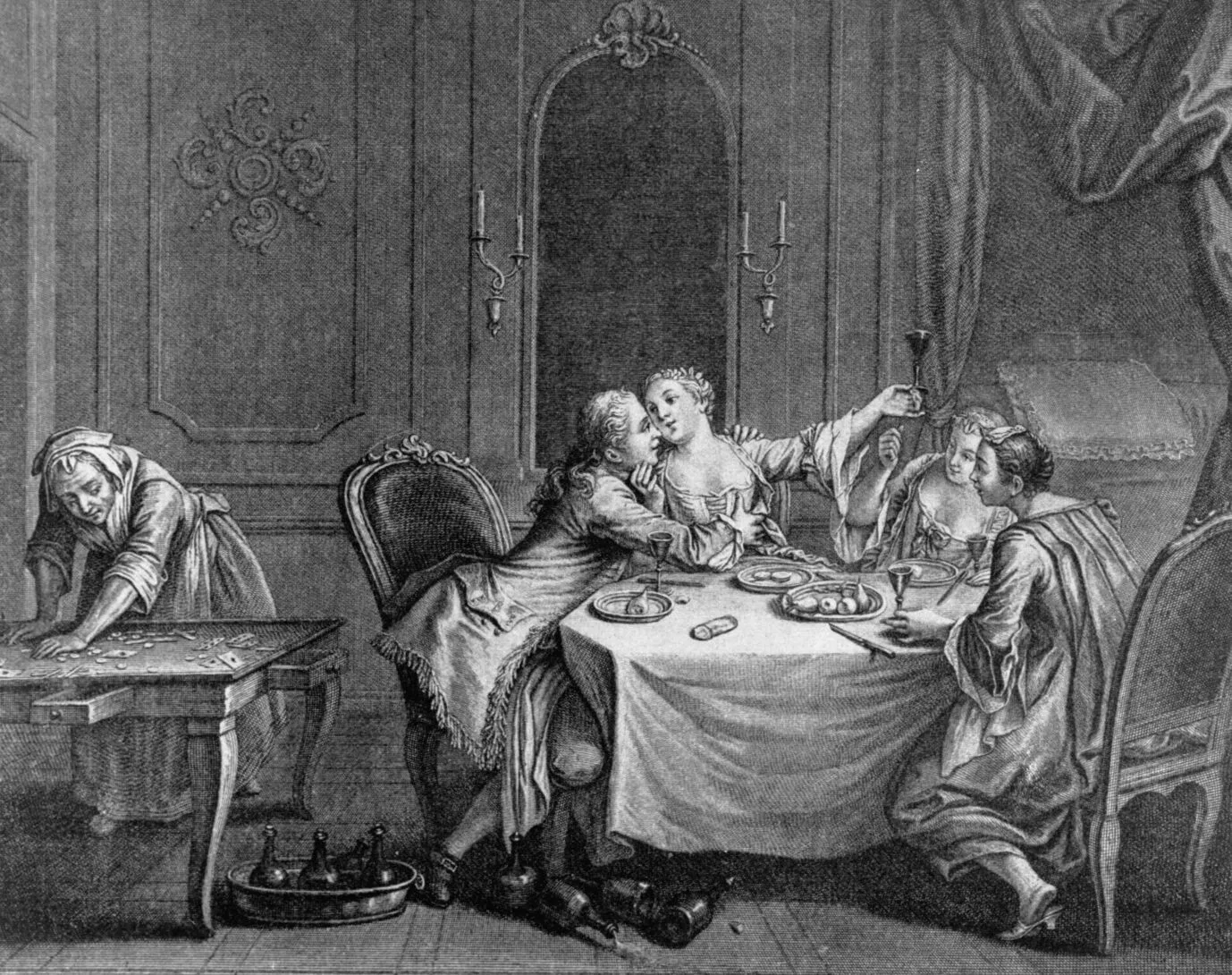
An engraving depicting a Parisian brothel around 1740. | Photo: picture alliance / akg-images

The libertines of that era produced literary apologies and praises for their lifestyle on a mass scale. De Sade, imprisoned in the Bastille and later in asylums for his extreme pornography, made sin metaphysical. If God is dead, then power and pleasure are the only real currencies. His aristocratic characters, bored with ordinary evils, demanded increasingly refined cruelties to satisfy their lust. The charm was not in simple sex but rather in the sensation of liberation from ordinary rules—proof of their own class and power.

Anyone familiar with libertine culture from the inside understood that the church’s sermons and bourgeois insistence on decency were mere theater. The real life of the ruling class was played out in secret.

“God is a construct, but sweet girls are real”

From Epstein’s relationships and life, one can infer that he knew the history—or at least instinctively sensed it—and that he liked to see himself in this tradition. His three-volume album for his fiftieth birthday, compiled by Ghislaine Maxwell, contains vulgar and malicious jokes from dozens of celebrities. Also, from the emails and guest lists of his parties documented in the files, emerges a collection of crude jokes as well as open fantasies about “girls”. They also incidentally recorded who owned which yacht, villa, or art collection.

The Wall Street Journal compared this image to The Bonfire of the Vanities by Tom Wolfe, a 1987 novel that critiques the corruption of New York’s modern elites and up-and-comers. The fact that this seems “noble” compared to the elites mentioned in the files refers less to the criminal element and more to the tone: self-satisfaction, moral emptiness, the sense that nothing beyond acquiring status matters.

This mixture of chatter and lust appears in an email from the well-known alternative doctor Deepak Chopra to Epstein. “God is a construct, but sweet girls are real,” he writes. A juvenile but revealing phrase. The mindfulness guru easily twisted metaphysics to flirt with a sexual criminal. This is not an isolated case: according to the newer files, Chopra was in contact with Epstein from 2016 to 2019. During this time, he discussed public figures and Epstein’s dinners with people like Woody Allen.

Many such emails, including his own, contain nothing more than poor judgment and bad taste. However, they reveal a deeper knowledge—that every era has its own preachers of morality and virtue who seek to cancel their own rules.

Many from the upper class felt constrained

What is typically American about Epstein, however, is the exact moment in history when he built his sphere of influence. The 1990s and 2000s marked the rise of a culture initially called “political correctness”, therapeutically guided, influenced by the excesses of personnel departments in large companies. In the early 1990s, public attention focused on sexual harassment allegations in the workplace against current Supreme Court Justice Clarence Thomas. Thus, the issue entered public consciousness. Universities built entire administrative mechanisms to enforce restrictive rules of conduct and speech, companies hired “diversity trainers” and required employees to attend “awareness seminars”.

The impeachment of Bill Clinton focused mainly on sex and lies about sex. The so-called family values became a mantra of Republican election campaigns as well as a defensive stance of the Democrats. Public life was permeated by strict sexual morality and a language of trauma, vulnerability, and new moralizing. Strange as it may seem today, George W. Bush was elected partly to restore “honor and dignity” to the White House after the Clinton era.

At the same time, with the rise of digital media, pornography moved from the newsstand to the web browser. The Playboy Mansion, Hugh Hefner’s estate, paved the way for adult webcams. Cable television gave space to shows and humor that would have been unthinkable in earlier times. America’s libido did not disappear but was simply pushed out of the official space, squeezed into heavily commercialized, legally safe sectors and wrapped in ostentatious shame.

Generations of lawyers, economists, academics, and media workers who grew up in the 1970s and 1980s felt constrained. Raised amid the growing anthem of the era of “Sex, Drugs, and Rock ’n’ Roll”, they now lived in a world of unwanted taboos, a mixture of progressivism and “neo-Victorian” morality à la 19th-century England. And this, without having their own world where they could break free.

Europe cultivates a different approach to the sexual lives of its elites

Herein lies the key to Epstein’s appealnot just sex and luxury, but a free space where powerful men (and some powerful women) could shed the oppressive suits of modern Anglo-American culture. His planes and island functioned as inviolate spaces. Donor meetings, “scientific seminars,” “dinners of three” were only an antechamber to the palace, the back rooms of which were accessible only to a few “lucky” ones. For them, breaking taboos was not a mistake but the essence.

Notably, many who found it difficult to justify themselves for the new documents are not classic villains. These are people whose image depends on a certain seriousness: wellness influencers, corporate lawyers, philanthropists among tech giants, global leaders. Their correspondence with the close criminal makes visible the gap between public image and private desires.

While the American elites turned to Epstein in search of “external” libertinism, their European counterparts often incorporated similar structures into their political culture. France has long treated the private lives of heads of state as purely personal matters. For example, François Mitterrand maintained a secret second family during his presidency. When his illegitimate daughter appeared at his funeral, much of the national press shrugged. The motorcycle rides of François Hollande with his actress mistress were considered tabloid material but did not discredit him in the eyes of the majority.

The “Bunga Bunga” parties of Italian Prime Minister Silvio Berlusconi with showgirls, young ladies, and crude jokes became a national spectacle. His brazenness was even considered part of his populist appeal, an early model for Donald Trump.

Epstein’s network was an American variation of old elite free spaces

Of course, Europe was neither free from sexual scandals nor were its elites more merciful to the weak. Among other things, investigations into sexual abuse in Catholic institutions in Ireland, Germany, and other countries, the “Grooming Gangs” scandal in Britain, and the Gisèle Pellicciotti case in France revealed long-standing patterns of sexual exploitation. In some cases, investigations led to commissions of inquiry, official apologies, and collective efforts at processing.

Keir Starmer: A social democratic leader in the swamp of scandals

In a way, European politicians are held to higher standards than in the U.S. Thus, the British ambassador there, Peter Mandelson, was dismissed. Prince Andrew came under renewed pressure after new files were published. There is a certain irony in the fact that the number of scandals, sexual and otherwise, under Trump almost dulls Americans’ sensitivity.

Prince Andrew on the front page of the Sunday Telegraph, February 1, 2026. | Photo: picture alliance / Photoshot

The decisive difference does not lie in better behavior by European elites, but in the fact that they traditionally drew lines in different places. Mutual tolerance of infidelity, long-term relationships, even relationships with younger partners were usually matters for the families involved and the tabloid press, not prosecutors and personnel departments. America, by contrast, rhetorically distinguishes little between private misdemeanors and public suitability. Anyone not named Donald Trump can be chased from leadership positions in business or politics over a consensual relationship.

This transatlantic gap is no longer as open and large as it once was. France’s response to the “Me Too” movement was initially ambivalent but left visible marks there—as in Spain, Britain, Sweden, and elsewhere. However, the United States remains clearly more puritanical in its public sexual morality than large parts of Western Europe. This puritanism degenerates into public moralistic politics and private bypasses, including nights under the motto “What happens in Vegas stays in Vegas”, anonymous luxury prostitutes, VIP clubs, private yachts, and, for a small subgroup of the super-rich, a figure like Epstein.

In this sense, Epstein’s operation is remarkably “transatlantic”, an Anglo-American version of the old French and Italian structures, in which power provides space for misdemeanors and scandals are swept under the rug of the private sphere until no one can ignore them anymore.

The American donor class is a caste of its own

What really distinguishes Epstein from the classic libertine is his method. His model, the Marquis de Sade, was an aristocrat with hereditary power. Epstein, by contrast, was an upstart from the provincial middle class. He initially worked as a teacher, later as a trader and asset manager. Gradually, he rose through the lower and middle ranks of the financial world. His key to entering the world of the super-rich was the facade of philanthropy, the very thing that defined American supremacy in the 20th century.

In German, there has long been a word for social climbers and con men like Epstein—“Hochstapler” (which in Greek would be translated as “scoundrels”). This fits what the director of the Tiffany & Co. jewelry chain and longtime friend of the “philanthropist,” Baroness Rosa Monckton, observed about him:

You think you know him. Then you peel back a layer of his onion, and underneath you find something else extraordinary. He never shows his cards. He’s a classic iceberg: What you see is not what you get.

The American donor class is a caste of its own. It did not arise solely from wealth but from participation in specific rituals such as charity galas, naming rights, advisory committees, and campaigns—a world with its own currencies and hierarchies. Anyone with millions can be a “nobody” in Davos—at best a marginal figure in Aspen. But someone who donates only $10,000 to a foundation can sit on a board alongside real heavyweights. This world moves fast.

Epstein did not hesitate to use his information about the powerful as leverage. Part of his fortune may be due to blackmail. The newer files contain evidence that he threatened his benefactors such as billionaire Les Wexner. He even wrote, before adding threateningly that he had no intention to “reveal any confidences”:

I owe you a lot, just as you honestly owe me.

Philanthropy came with access to information

Epstein exploited all his advantages, sexual and otherwise. The “VI Foundation” and related entities helped him enter the elite club without competing with the biggest donors. He focused on a specific niche, namely scientific fields at the intersection of mathematics, AI, and genetics. This attracted the attention of a small but symbolically powerful group: Nobel laureate researchers, Ivy League university presidents, lab directors at MIT in Boston, intellectuals, and journalists in their circles.

Jeffrey Epstein and Harvard law professor Alan Dershowitz. | Photo: picture alliance / ZUMAPRESS.com - Epstein Estate/House Oversight

Some indeed needed his money, others wallowed in the flattery of a man who presented himself as both a polymath and an investor. A man who philosophized about string theory in the afternoon and could discuss campaign strategies at night. He had coveted, partly non-public information. Then there were wellness influencers and tech company founders who used him as a means to legitimize their own ambitions.

This eventually led to connections in higher political spheres. Epstein could broker access to heads of state and government for those who needed it. Although there is no evidence he was paid by the CIA or Mossad, many tantalizing hints suggest he worked as an informant for various intelligence agencies, as he had the kind of contacts and information agents seek.

Many dealing with him sought mediation and donations

Newer copies of emails confirm the asymmetry of relationships between Epstein and the powerful. AI researchers thanked him for his support and encouragement. Media workers and lobbyists involved him in discussions about Trump, Saudi money, and Saudi arms deals, seeing him as a node in a larger power network.

Epstein himself built connections with the Saudi court and was in dealings with Crown Prince Mohammed bin Salman and people close to him. Invitations to award ceremonies and festivals as well as campaigns to place him at the right table or next to the right director or movie star were also included.

Many of those dealing with him did not ask for an invitation to his island or permission to use his massage table. They sought mediation, donations, and generally opportunities to be close to someone they suspected had influence. For them, Epstein’s perversions were not decisive—in some cases even a reputational risk to be minimized or at worst ignored. But for others, these perversions were the real attraction.

The inner circle remained loyal to Epstein even after his conviction

Power rarely comes alone. It is usually accompanied by sentimentality, violence, generosity, boredom, and a Nietzschean ambition to feel superhuman, unbound by rules.

The Epstein files, though incomplete and heavily censored, often make this painfully visible. The messages are full of adolescent mockery of “girls”, but also human trafficking slang filled with codes like “Pizza,” “Grapefruit Juice,” “Chanel,” or “Snow White”. The files reveal evaluations of women’s bodies in language that reduces human beings to anatomy and availability. According to the vocabulary of a popular wellness influencer caught up in the case, it was “just a joke”. For others, it was “locker room gossip,” as a Trump advisor once downplayed his own crude remarks.

The expression is supposed to assure that the boys were just doing boy things and that words did not lead to actions. But the exact opposite happened with Epstein. The “locker rooms” had real locks, behind which proven victims existed. Their reports of coercion, manipulation, and violence were documented in court proceedings and investigative reports. The latest UN report on global human trafficking emphasizes that sexual trafficking is increasing worldwide. Epstein’s machinations were therefore not an exception but an extreme link in a much broader system of exploitation.

The new material provides a further correlation that made this connection so attractive to parts of the elite. It reflects a spectrum of attitudes: from submission through vague curiosity and indifference to pure opportunism. Appearing in the Epstein files does not necessarily imply crime, as many names appear only in one email or in messages Epstein sent to himself. But beyond random contacts, there is a closer inner circle: People who met him, defended him, or even did business with him long after his 2008 conviction for procuring minors for prostitution.

Elon Musk denies connection to Epstein

Some, like Woody Allen, were men already targeted by the culture war. The director was accused in the early 1990s of sexually abusing his adopted daughter. He always denied the allegation and was never criminally prosecuted for it. However, he became a symbol of a whole era’s failure to take children’s testimonies seriously. Two decades later, he was avoided by studios and festivals. Today he makes his films exclusively in Europe. For such public figures, Epstein’s ongoing hospitality was both a risk and a perverse refuge, a fallen out-of-favor man providing comfort and contacts to another.

Others, like former Harvard president and former U.S. Treasury Secretary Larry Summers, came with impressive credentials and left with heavily damaged reputations. His appearances in the new emails—warm, funny, almost overly polite—are an example of the elite’s myopia, which believes that proximity to a known sexual criminal can be treated as a purely private gaffe rather than a public scandal. After the correspondence was revealed, Summers expressed regret and withdrew from some high offices. But the damage to his moral credibility as well as Harvard’s had already been done.

Then there are tech billionaires and philanthropists who admitted that their meetings with Epstein after his conviction were terrible mistakes. Among them is Bill Gates, who according to his own statement wanted to talk to Epstein about philanthropy, which was a mistake. Reid Hoffman, co-founder of LinkedIn, also apologized for facilitating or participating in meetings with Epstein.
Elon Musk continues to deny allegations of connections to Epstein. This despite a recently published email in which he asked:

When is the wildest party on your island?

According to Musk, this is a “distraction” that can be “misinterpreted” by critics seeking to tarnish his name.

Bill Gates and an unknown woman at Jeffrey Epstein’s residence. | Photo: picture alliance / ZUMAPRESS.com - Epstein Estate/House Oversight

For younger generations, the case proves the system’s corrupt nature

For some of these men, Epstein’s dark charisma lay as much in the promise of influence as in the sexual theater around him. He could arrange discussions, inspire investments, promote favorite projects, and create an environment where the usual pressures of business publicity and institutional prestige disappeared. Yet, it is hard to avoid the feeling that at least part of his appeal lay precisely in his willingness to go where no one else dared. He stood out as a bold figure in a world of timid titans.

It is no coincidence that the newer documents were published now. They fall in an era many call a “gilded age” comparable to the Industrial Revolution. An era where the gap between the richest of the rich and the rest can hardly be ignored anymore. An era where a Donald Trump can win the highest office in the country, despite—or perhaps precisely because—he bragged about grabbing women by their genitals and dismissed multiple allegations of sexual misconduct.

At the same time, public culture experienced the rise and fall of the “Me Too” movement, the largest public confrontation with sexual abuse and harassment in modern American history. While this movement is often dismissed by the political right as whining “angry feminists” and an example of cancel culture, the Epstein files have a rather bipartisan, even ideologically transcendent appeal.

Reactions on social media have an almost revolutionary tone, resembling a digital occupation of fortress walls. For many younger Americans—Generation Z, younger Millennials, underemployed and overindebted—the Epstein network confirms a suspicion that has evolved into cynicism. It says that the rich and powerful live by different rules. The dance of lawyers, wellness gurus, academics, and plutocrats around a sexual criminal appears from the outside as proof of a corrupt system: the rich and powerful never face accountability for their misdeeds. As a consequence, so-called populism rises on both left and right.

Focusing on names distracts from the essential

It is no small thing that the political system has so far given only a partial response to this. Epstein is dead, his associate Ghislaine Maxwell is imprisoned. Political processes have led to compromises and some degree of accountability. However, there is no independent commission to evaluate the files, nor a formal process of processing and reconciliation, nor a binding promise to bring before a public court those who requested visits to the island. The blackouts and gaps in the files fuel conspiracy theories and simultaneously reflect the reality that the judicial system is not designed to solve every moral question.

This gap between public outrage and institutional response is itself part of this story. Democratic Representative in the House, Ro Khanna, who succeeded in releasing the Epstein files, called on Congress to summon every person who emailed Epstein about visiting his island. According to him, the American people are disappointed that “the rich and powerful experience a different kind of justice”. Epstein has thus become a symbol of the impunity of “those up there”.

Given this, it is tempting to focus exclusively on the list of names and their individual sins. Who was at the dinner? Who flew there when? Who wrote “sweet girls are real”? The files invite a real treasure hunt. The dark entertainment lies in watching the fall of the intellectual class. However, as with previous waves of scandals, from Watergate to “Me Too,” there is a risk that obsession with this will obscure the conditions that gave rise to this fall.

Justice often remains incomplete

Epstein’s operation thrived because he exploited at least four structural features of modern elite culture. First, the system of philanthropy explained at the beginning of this article, which provides access and moral gloss to financial transactions. The donor class is literally begged to see donations as “the” path to virtue. Although foundations know the shadowy nature of their benefactors, they accept the deal and gloss it over by saying the money is at least used for good causes. Epstein did not invent this structure but only exploited it.

The second feature is the moralistic-repressive discourse on sexuality. The typically American mix of religiosity, persecution mania, and media outrage makes open discussion of gender, power, and desires difficult. This pressure does not eliminate inappropriate behavior but drives it underground. Some who play language police in meeting rooms by day seek opportunities at night to say and do what they cannot in the light of day and under the watchful eye of public opinion.

Third, there is a global economic sector of human trafficking and sexual exploitation, where young women and girls become commodities. Epstein’s operation exploited the general vulnerability of marginalized, wandering, migrant, and poor minors. According to UN estimates, there will always be someone like Epstein unless systemic changes are made.

The fourth and final feature is the elite culture of impunity, which protects its reputation through a mechanism of PR firms, lawyers, and institutional allies. The names in the Epstein files are a cross-section of this ecosystem: people who usually can assume they will avoid the worst consequences of their actions. When justice is restored, it often remains incomplete, depersonalized, or comes too late. This is shown by settlements without admissions of guilt, resignations without transparent reasons, and apologies in the passive voice.

Macho culture lives on and thrives

What the contrast between the Epstein scandal and, for example, investigations into the “Grooming Gangs” in Britain and the Pellicciotti case in France may show is perhaps the fact that some societies under sufficient pressure can address systemic failure and not just an accumulation of isolated cases. They commission reports, revise laws, and can at least claim to pursue national appeasement.

Whether the U.S. will ever fully reckon with the culture that made an Epstein and his accomplices possible remains open. Because the underlying structures remain untouched in many respects. The philanthropy complex still offers the rich a path to “soft” influence and reputation restoration, even though those responsible for ensuring transparency have become somewhat more cautious. Global sexual trafficking remains profitable; only the email channels used by “old men” like Epstein have been replaced by encrypted apps and the Darknet. Who knows what new methods of exploitation rapid AI development will allow.

Meanwhile, the cultural pendulum swings back and forth. Thus, “Me Too” not only triggered reforms but also backlash. A powerful online world of men, known as the “Manosphere”, offers young men a range of misogynistic instructions that would not be out of place in de Sade’s work, but without his elegant appearance. Macho culture still lives and thrives in finance, technology, and politics, only its perception from outside has adapted and focused on specific target groups.

Without a cultural shift, there will always be an Epstein

As with all cases of moral panic, there is a risk that the Epstein case will be limited to the eponymous monster. He may remain in memory as a curious exception, whose biography can easily be isolated from the rest. Nothing could be further from the truth: In many respects, he embodied broader patterns of male arrogance, class privilege, the temptation of secrecy, and abuse of philanthropy.

The Marquis de Sade’s pocketbook from his office was, intentionally or not, both a secret confession and a sleight-of-hand trick at the same time. Like de Sade, Epstein was a libertine who confused his own lusts with a kind of higher philosophy and, due to the long-standing immunity he enjoyed, convinced himself of the greater significance of his actions. But while de Sade belonged to an “Ancien Régime” that fell victim to the wrath of the masses, Epstein belonged to a new regime that still has to face its own revolution.

With the Epstein files, the question is no longer who else sat on his plane or which guru wrote another disgusting email. But whether a culture that has outsourced its conscience to personnel politics and its moral imagination to social networks can find a deeper and more honest way of dealing with sexuality, power, and greed for money. A way that neither demonizes desire nor strengthens the powerful in their belief that they are above the law.

But as long as this does not happen, there will always be another island, another jet, another man with a foundation and a list of names, offering the next generation of elites tempting objects of desire. Only this time not so covertly.

Source: Junge Freiheit

Share:
Newsroom
Newsroom

NewsFire.GR is a website created with the hope that the media will rediscover their true identity, which is none other than informing the public about the real stakes of our times. Journalism and political analysis must hold power accountable, not serve it.

The Epstein files have become a symbol of the corruption of the American elite. However, they reveal a much deeper problem with American culture that is often overlooked.

Three years before Jeffrey Epstein first came under investigation in Palm Beach for sexual crimes, a journalist from Vanity Fair magazine made a telling discovery. The profile, prophetically titled “The Talented Mr. Epstein”, describes in detail his nine-story Manhattan mansion, outfitted with black 18th-century Portuguese cabinets and an almost three-meter-long black Steinway concert grand piano of the “D” type. In Epstein’s office on the top floor, the author found a copy of the French libertine (free-thinker) Marquis de Sade’s Justine.

Epstein presented this as a clear strategic element of staging and simultaneously as a sly advertisement. The heroine of the novel is a twelve-year-old girl who sets out on a journey to France to learn virtue—but instead falls victim to sexual exploitation and abuse by monks, a wealthy gentleman, and other “sadistic” tormentors, all men.

Today, few think about de Sade’s writings—such as Justine or The 120 Days of Sodom—and more about his reputation as a purveyor of a private theater of violence, where privileged men could live out forbidden fantasies under the guise of philosophy and refined taste. Among other things, he wrote about domination and submission of women. Although de Sade’s work was considered immoral, even contemporary feminists like Angela Carter saw him as a radical critic of sexual and social power relations in revolutionary France—despite the violent and pornographic nature of his writings.

A 1969 film adaptation of the novel Justine starring Romina Power. | Photo: picture alliance / COLLECTION CHRISTOPHEL - © Etablissement Sargon

According to Carter, he was a “moral pornographer” who analyzed gender power relations through obscenity. For de Sade, the new Republic was just as oppressive as the “Ancien Régime.” And the tension between these perspectives provides a key to understanding Jeffrey Epstein’s legacy.

Epstein was not content with ordinary trophies

His recently published files—more than three million pages of documents, 2,000 films, 180,000 images, including emails, photos, and correspondence—constitute a horrifying catalog of pseudo-flattery, violence, and misogyny.

However, far more interesting than Epstein’s corruption is the striking desire of the turn-of-the-century elites revealed by the data for a hidden refuge where they can cancel the rules they publicly pretend to follow. While the old libertines in late 18th-century Paris had castles, salons, and forbidden bestsellers, the American plutocracy had at its disposal a foundation in the Virgin Islands, the aforementioned Manhattan mansion, a private jet, a small private island, and many other properties.

Epstein’s reputation was not based on his wealth or lust, as these traits were attributed to the rich and famous since the rise of celebrity mania in mass culture. Instead, Epstein was not satisfied with the usual trophies of the up-and-coming—bigger planes, sleeker yachts, coveted works of art.

With the “VI Foundation,” he bought trust

His approach was clearly more strategic: He founded a small, flexible foundation and presented himself as a person with scientific and humanitarian interests. He used this persona to entice a semi-secret alliance of intellectuals, donors, and celebrities. Because a foundation offers much more than expensive “toys”—it offers influence.

Epstein’s main charitable vehicle, the “J. Epstein VI Foundation”, was established in 2000, where “VI” stands for the English name of the Virgin Islands. The foundation—as well as many of his businesses—was registered in the same U.S. overseas territory as his then-private island, Little Saint James. On the board sat Cécile de Jong, the wife of the then-governor of the Virgin Islands. A detail that shows exactly how money and proximity to power can provide legal and moral shields.

Officially, the foundation was supposed to promote “cutting-edge research and education”. In reality, it was both Epstein’s checkbook and business card: It promised donations to elite universities and research centers amounting to tens of millions. The best known was nine million dollars to Harvard, including 6.5 million for the Program for Evolutionary Dynamics (PED). Although only partially completed, it was enough to place Epstein’s name at the center of the initiative and secure him a consultant role on university committees.

With this—and further gifts, some transferred through other channels or anonymously—Epstein promoted a network of scientists. This included theoretical physicists, geneticists, robotics experts, and artificial intelligence (AI) researchers, as the “VI Foundation” also funded AI development, neuroscience, and futuristic robots worldwide. Smaller, relatively insignificant donations were added for charitable purposes in the Virgin Islands themselves, such as a nerve clinic, youth promotion, and even animal protection associations. These served to build trust in the overseas territory, whose legislation it depended on, while his most significant donations conferred prestige on the East Coast and beyond.

Epstein provided visibility and access to networks

Of course, those benefiting from Epstein’s money usually did not participate in his crimes—at least there is no evidence of that. However, the image of a serious, generous philanthropic agenda bought Epstein a place in the collective consciousness of the elite. Anyone invited to his mansion was in a space resembling a parody of a party celebrating the release of the famous New York Review of Books. Nobel laureates exchanged jokes with hedge fund managers, movie stars sat next to high-ranking politicians, tech founders, spiritual gurus, literary publishers, and occasionally former prime ministers were added.

The currency was visibility and access to networks—and recent published correspondence shows the clearly businesslike nature of this ecosystem. It includes everything one would expect from a donor network: requests for gala seats, business ideas for new cinemas, speculation about Saudi arms deals and quantum computers. This is burdened with the additional chill of Epstein’s infamy and the closeness of his circle.

Some asked him for money, others laundered it and introduced him to further people. In return, they gained access to Epstein’s digital calendar, his planes, his islands, and his image as a creator who rarely contradicted others’ wishes. From afar, the whole thing looked less like a villain’s hideout from James Bond movies and more like a Madame Geoffrin (one of the leading female figures of the French Enlightenment) of the 21st century.

Even in old France, duplicity was widespread among the elite

The comparison with France of their time—mid-18th century—does not seem superficial at all. The heirs of the Sun King, namely the court of Louis XV and his grandson, were notorious for their duplicity. Publicly, the Catholic Church and royal authority demanded strict adherence to their rules. Privately, however, aristocrats dependent on their favor created a parallel world full of mistresses, prostitution, and secret societies, where the taboos they pretended to uphold by day were loudly broken by night.

An engraving depicting a Parisian brothel around 1740. | Photo: picture alliance / akg-images

The libertines of that era produced literary apologies and praises for their lifestyle on a mass scale. De Sade, imprisoned in the Bastille and later in asylums for his extreme pornography, made sin metaphysical. If God is dead, then power and pleasure are the only real currencies. His aristocratic characters, bored with ordinary evils, demanded increasingly refined cruelties to satisfy their lust. The charm was not in simple sex but rather in the sensation of liberation from ordinary rules—proof of their own class and power.

Anyone familiar with libertine culture from the inside understood that the church’s sermons and bourgeois insistence on decency were mere theater. The real life of the ruling class was played out in secret.

“God is a construct, but sweet girls are real”

From Epstein’s relationships and life, one can infer that he knew the history—or at least instinctively sensed it—and that he liked to see himself in this tradition. His three-volume album for his fiftieth birthday, compiled by Ghislaine Maxwell, contains vulgar and malicious jokes from dozens of celebrities. Also, from the emails and guest lists of his parties documented in the files, emerges a collection of crude jokes as well as open fantasies about “girls”. They also incidentally recorded who owned which yacht, villa, or art collection.

The Wall Street Journal compared this image to The Bonfire of the Vanities by Tom Wolfe, a 1987 novel that critiques the corruption of New York’s modern elites and up-and-comers. The fact that this seems “noble” compared to the elites mentioned in the files refers less to the criminal element and more to the tone: self-satisfaction, moral emptiness, the sense that nothing beyond acquiring status matters.

This mixture of chatter and lust appears in an email from the well-known alternative doctor Deepak Chopra to Epstein. “God is a construct, but sweet girls are real,” he writes. A juvenile but revealing phrase. The mindfulness guru easily twisted metaphysics to flirt with a sexual criminal. This is not an isolated case: according to the newer files, Chopra was in contact with Epstein from 2016 to 2019. During this time, he discussed public figures and Epstein’s dinners with people like Woody Allen.

Many such emails, including his own, contain nothing more than poor judgment and bad taste. However, they reveal a deeper knowledge—that every era has its own preachers of morality and virtue who seek to cancel their own rules.

Many from the upper class felt constrained

What is typically American about Epstein, however, is the exact moment in history when he built his sphere of influence. The 1990s and 2000s marked the rise of a culture initially called “political correctness”, therapeutically guided, influenced by the excesses of personnel departments in large companies. In the early 1990s, public attention focused on sexual harassment allegations in the workplace against current Supreme Court Justice Clarence Thomas. Thus, the issue entered public consciousness. Universities built entire administrative mechanisms to enforce restrictive rules of conduct and speech, companies hired “diversity trainers” and required employees to attend “awareness seminars”.

Same playbook going back decades.

Clarence Thomas was attacked in the same way during his 1991 confirmation

He responds to Anita Hill’s allegations against him. “This is a circus; it’s a national disgrace. And from my standpoint, as a black American, as far as I’m concerned,… pic.twitter.com/vnCNLuB7QB

— floridanow1 (@floridanow1) November 21, 2024

The impeachment of Bill Clinton focused mainly on sex and lies about sex. The so-called family values became a mantra of Republican election campaigns as well as a defensive stance of the Democrats. Public life was permeated by strict sexual morality and a language of trauma, vulnerability, and new moralizing. Strange as it may seem today, George W. Bush was elected partly to restore “honor and dignity” to the White House after the Clinton era.

At the same time, with the rise of digital media, pornography moved from the newsstand to the web browser. The Playboy Mansion, Hugh Hefner’s estate, paved the way for adult webcams. Cable television gave space to shows and humor that would have been unthinkable in earlier times. America’s libido did not disappear but was simply pushed out of the official space, squeezed into heavily commercialized, legally safe sectors and wrapped in ostentatious shame.

Generations of lawyers, economists, academics, and media workers who grew up in the 1970s and 1980s felt constrained. Raised amid the growing anthem of the era of “Sex, Drugs, and Rock ’n’ Roll”, they now lived in a world of unwanted taboos, a mixture of progressivism and “neo-Victorian” morality à la 19th-century England. And this, without having their own world where they could break free.

Europe cultivates a different approach to the sexual lives of its elites

Herein lies the key to Epstein’s appealnot just sex and luxury, but a free space where powerful men (and some powerful women) could shed the oppressive suits of modern Anglo-American culture. His planes and island functioned as inviolate spaces. Donor meetings, “scientific seminars,” “dinners of three” were only an antechamber to the palace, the back rooms of which were accessible only to a few “lucky” ones. For them, breaking taboos was not a mistake but the essence.

Notably, many who found it difficult to justify themselves for the new documents are not classic villains. These are people whose image depends on a certain seriousness: wellness influencers, corporate lawyers, philanthropists among tech giants, global leaders. Their correspondence with the close criminal makes visible the gap between public image and private desires.

While the American elites turned to Epstein in search of “external” libertinism, their European counterparts often incorporated similar structures into their political culture. France has long treated the private lives of heads of state as purely personal matters. For example, François Mitterrand maintained a secret second family during his presidency. When his illegitimate daughter appeared at his funeral, much of the national press shrugged. The motorcycle rides of François Hollande with his actress mistress were considered tabloid material but did not discredit him in the eyes of the majority.

The “Bunga Bunga” parties of Italian Prime Minister Silvio Berlusconi with showgirls, young ladies, and crude jokes became a national spectacle. His brazenness was even considered part of his populist appeal, an early model for Donald Trump.

Epstein’s network was an American variation of old elite free spaces

Of course, Europe was neither free from sexual scandals nor were its elites more merciful to the weak. Among other things, investigations into sexual abuse in Catholic institutions in Ireland, Germany, and other countries, the “Grooming Gangs” scandal in Britain, and the Gisèle Pellicciotti case in France revealed long-standing patterns of sexual exploitation. In some cases, investigations led to commissions of inquiry, official apologies, and collective efforts at processing.

Keir Starmer: A social democratic leader in the swamp of scandals

In a way, European politicians are held to higher standards than in the U.S. Thus, the British ambassador there, Peter Mandelson, was dismissed. Prince Andrew came under renewed pressure after new files were published. There is a certain irony in the fact that the number of scandals, sexual and otherwise, under Trump almost dulls Americans’ sensitivity.

Prince Andrew on the front page of the Sunday Telegraph, February 1, 2026. | Photo: picture alliance / Photoshot

The decisive difference does not lie in better behavior by European elites, but in the fact that they traditionally drew lines in different places. Mutual tolerance of infidelity, long-term relationships, even relationships with younger partners were usually matters for the families involved and the tabloid press, not prosecutors and personnel departments. America, by contrast, rhetorically distinguishes little between private misdemeanors and public suitability. Anyone not named Donald Trump can be chased from leadership positions in business or politics over a consensual relationship.

This transatlantic gap is no longer as open and large as it once was. France’s response to the “Me Too” movement was initially ambivalent but left visible marks there—as in Spain, Britain, Sweden, and elsewhere. However, the United States remains clearly more puritanical in its public sexual morality than large parts of Western Europe. This puritanism degenerates into public moralistic politics and private bypasses, including nights under the motto “What happens in Vegas stays in Vegas”, anonymous luxury prostitutes, VIP clubs, private yachts, and, for a small subgroup of the super-rich, a figure like Epstein.

In this sense, Epstein’s operation is remarkably “transatlantic”, an Anglo-American version of the old French and Italian structures, in which power provides space for misdemeanors and scandals are swept under the rug of the private sphere until no one can ignore them anymore.

The American donor class is a caste of its own

What really distinguishes Epstein from the classic libertine is his method. His model, the Marquis de Sade, was an aristocrat with hereditary power. Epstein, by contrast, was an upstart from the provincial middle class. He initially worked as a teacher, later as a trader and asset manager. Gradually, he rose through the lower and middle ranks of the financial world. His key to entering the world of the super-rich was the facade of philanthropy, the very thing that defined American supremacy in the 20th century.

In German, there has long been a word for social climbers and con men like Epstein—“Hochstapler” (which in Greek would be translated as “scoundrels”). This fits what the director of the Tiffany & Co. jewelry chain and longtime friend of the “philanthropist,” Baroness Rosa Monckton, observed about him:

You think you know him. Then you peel back a layer of his onion, and underneath you find something else extraordinary. He never shows his cards. He’s a classic iceberg: What you see is not what you get.

The American donor class is a caste of its own. It did not arise solely from wealth but from participation in specific rituals such as charity galas, naming rights, advisory committees, and campaigns—a world with its own currencies and hierarchies. Anyone with millions can be a “nobody” in Davos—at best a marginal figure in Aspen. But someone who donates only $10,000 to a foundation can sit on a board alongside real heavyweights. This world moves fast.

Epstein did not hesitate to use his information about the powerful as leverage. Part of his fortune may be due to blackmail. The newer files contain evidence that he threatened his benefactors such as billionaire Les Wexner. He even wrote, before adding threateningly that he had no intention to “reveal any confidences”:

I owe you a lot, just as you honestly owe me.

Philanthropy came with access to information

Epstein exploited all his advantages, sexual and otherwise. The “VI Foundation” and related entities helped him enter the elite club without competing with the biggest donors. He focused on a specific niche, namely scientific fields at the intersection of mathematics, AI, and genetics. This attracted the attention of a small but symbolically powerful group: Nobel laureate researchers, Ivy League university presidents, lab directors at MIT in Boston, intellectuals, and journalists in their circles.

Jeffrey Epstein and Harvard law professor Alan Dershowitz. | Photo: picture alliance / ZUMAPRESS.com - Epstein Estate/House Oversight

Some indeed needed his money, others wallowed in the flattery of a man who presented himself as both a polymath and an investor. A man who philosophized about string theory in the afternoon and could discuss campaign strategies at night. He had coveted, partly non-public information. Then there were wellness influencers and tech company founders who used him as a means to legitimize their own ambitions.

This eventually led to connections in higher political spheres. Epstein could broker access to heads of state and government for those who needed it. Although there is no evidence he was paid by the CIA or Mossad, many tantalizing hints suggest he worked as an informant for various intelligence agencies, as he had the kind of contacts and information agents seek.

Many dealing with him sought mediation and donations

Newer copies of emails confirm the asymmetry of relationships between Epstein and the powerful. AI researchers thanked him for his support and encouragement. Media workers and lobbyists involved him in discussions about Trump, Saudi money, and Saudi arms deals, seeing him as a node in a larger power network.

Epstein himself built connections with the Saudi court and was in dealings with Crown Prince Mohammed bin Salman and people close to him. Invitations to award ceremonies and festivals as well as campaigns to place him at the right table or next to the right director or movie star were also included.

Many of those dealing with him did not ask for an invitation to his island or permission to use his massage table. They sought mediation, donations, and generally opportunities to be close to someone they suspected had influence. For them, Epstein’s perversions were not decisive—in some cases even a reputational risk to be minimized or at worst ignored. But for others, these perversions were the real attraction.

The inner circle remained loyal to Epstein even after his conviction

Power rarely comes alone. It is usually accompanied by sentimentality, violence, generosity, boredom, and a Nietzschean ambition to feel superhuman, unbound by rules.

The Epstein files, though incomplete and heavily censored, often make this painfully visible. The messages are full of adolescent mockery of “girls”, but also human trafficking slang filled with codes like “Pizza,” “Grapefruit Juice,” “Chanel,” or “Snow White”. The files reveal evaluations of women’s bodies in language that reduces human beings to anatomy and availability. According to the vocabulary of a popular wellness influencer caught up in the case, it was “just a joke”. For others, it was “locker room gossip,” as a Trump advisor once downplayed his own crude remarks.

The expression is supposed to assure that the boys were just doing boy things and that words did not lead to actions. But the exact opposite happened with Epstein. The “locker rooms” had real locks, behind which proven victims existed. Their reports of coercion, manipulation, and violence were documented in court proceedings and investigative reports. The latest UN report on global human trafficking emphasizes that sexual trafficking is increasing worldwide. Epstein’s machinations were therefore not an exception but an extreme link in a much broader system of exploitation.

The new material provides a further correlation that made this connection so attractive to parts of the elite. It reflects a spectrum of attitudes: from submission through vague curiosity and indifference to pure opportunism. Appearing in the Epstein files does not necessarily imply crime, as many names appear only in one email or in messages Epstein sent to himself. But beyond random contacts, there is a closer inner circle: People who met him, defended him, or even did business with him long after his 2008 conviction for procuring minors for prostitution.

Elon Musk denies connection to Epstein

Some, like Woody Allen, were men already targeted by the culture war. The director was accused in the early 1990s of sexually abusing his adopted daughter. He always denied the allegation and was never criminally prosecuted for it. However, he became a symbol of a whole era’s failure to take children’s testimonies seriously. Two decades later, he was avoided by studios and festivals. Today he makes his films exclusively in Europe. For such public figures, Epstein’s ongoing hospitality was both a risk and a perverse refuge, a fallen out-of-favor man providing comfort and contacts to another.

Others, like former Harvard president and former U.S. Treasury Secretary Larry Summers, came with impressive credentials and left with heavily damaged reputations. His appearances in the new emails—warm, funny, almost overly polite—are an example of the elite’s myopia, which believes that proximity to a known sexual criminal can be treated as a purely private gaffe rather than a public scandal. After the correspondence was revealed, Summers expressed regret and withdrew from some high offices. But the damage to his moral credibility as well as Harvard’s had already been done.

Then there are tech billionaires and philanthropists who admitted that their meetings with Epstein after his conviction were terrible mistakes. Among them is Bill Gates, who according to his own statement wanted to talk to Epstein about philanthropy, which was a mistake. Reid Hoffman, co-founder of LinkedIn, also apologized for facilitating or participating in meetings with Epstein.
Elon Musk continues to deny allegations of connections to Epstein. This despite a recently published email in which he asked:

When is the wildest party on your island?

According to Musk, this is a “distraction” that can be “misinterpreted” by critics seeking to tarnish his name.

Bill Gates and an unknown woman at Jeffrey Epstein’s residence. | Photo: picture alliance / ZUMAPRESS.com - Epstein Estate/House Oversight

For younger generations, the case proves the system’s corrupt nature

For some of these men, Epstein’s dark charisma lay as much in the promise of influence as in the sexual theater around him. He could arrange discussions, inspire investments, promote favorite projects, and create an environment where the usual pressures of business publicity and institutional prestige disappeared. Yet, it is hard to avoid the feeling that at least part of his appeal lay precisely in his willingness to go where no one else dared. He stood out as a bold figure in a world of timid titans.

It is no coincidence that the newer documents were published now. They fall in an era many call a “gilded age” comparable to the Industrial Revolution. An era where the gap between the richest of the rich and the rest can hardly be ignored anymore. An era where a Donald Trump can win the highest office in the country, despite—or perhaps precisely because—he bragged about grabbing women by their genitals and dismissed multiple allegations of sexual misconduct.

At the same time, public culture experienced the rise and fall of the “Me Too” movement, the largest public confrontation with sexual abuse and harassment in modern American history. While this movement is often dismissed by the political right as whining “angry feminists” and an example of cancel culture, the Epstein files have a rather bipartisan, even ideologically transcendent appeal.

Reactions on social media have an almost revolutionary tone, resembling a digital occupation of fortress walls. For many younger Americans—Generation Z, younger Millennials, underemployed and overindebted—the Epstein network confirms a suspicion that has evolved into cynicism. It says that the rich and powerful live by different rules. The dance of lawyers, wellness gurus, academics, and plutocrats around a sexual criminal appears from the outside as proof of a corrupt system: the rich and powerful never face accountability for their misdeeds. As a consequence, so-called populism rises on both left and right.

Focusing on names distracts from the essential

It is no small thing that the political system has so far given only a partial response to this. Epstein is dead, his associate Ghislaine Maxwell is imprisoned. Political processes have led to compromises and some degree of accountability. However, there is no independent commission to evaluate the files, nor a formal process of processing and reconciliation, nor a binding promise to bring before a public court those who requested visits to the island. The blackouts and gaps in the files fuel conspiracy theories and simultaneously reflect the reality that the judicial system is not designed to solve every moral question.

This gap between public outrage and institutional response is itself part of this story. Democratic Representative in the House, Ro Khanna, who succeeded in releasing the Epstein files, called on Congress to summon every person who emailed Epstein about visiting his island. According to him, the American people are disappointed that “the rich and powerful experience a different kind of justice”. Epstein has thus become a symbol of the impunity of “those up there”.

Given this, it is tempting to focus exclusively on the list of names and their individual sins. Who was at the dinner? Who flew there when? Who wrote “sweet girls are real”? The files invite a real treasure hunt. The dark entertainment lies in watching the fall of the intellectual class. However, as with previous waves of scandals, from Watergate to “Me Too,” there is a risk that obsession with this will obscure the conditions that gave rise to this fall.

Justice often remains incomplete

Epstein’s operation thrived because he exploited at least four structural features of modern elite culture. First, the system of philanthropy explained at the beginning of this article, which provides access and moral gloss to financial transactions. The donor class is literally begged to see donations as “the” path to virtue. Although foundations know the shadowy nature of their benefactors, they accept the deal and gloss it over by saying the money is at least used for good causes. Epstein did not invent this structure but only exploited it.

The second feature is the moralistic-repressive discourse on sexuality. The typically American mix of religiosity, persecution mania, and media outrage makes open discussion of gender, power, and desires difficult. This pressure does not eliminate inappropriate behavior but drives it underground. Some who play language police in meeting rooms by day seek opportunities at night to say and do what they cannot in the light of day and under the watchful eye of public opinion.

Third, there is a global economic sector of human trafficking and sexual exploitation, where young women and girls become commodities. Epstein’s operation exploited the general vulnerability of marginalized, wandering, migrant, and poor minors. According to UN estimates, there will always be someone like Epstein unless systemic changes are made.

The fourth and final feature is the elite culture of impunity, which protects its reputation through a mechanism of PR firms, lawyers, and institutional allies. The names in the Epstein files are a cross-section of this ecosystem: people who usually can assume they will avoid the worst consequences of their actions. When justice is restored, it often remains incomplete, depersonalized, or comes too late. This is shown by settlements without admissions of guilt, resignations without transparent reasons, and apologies in the passive voice.

Macho culture lives on and thrives

What the contrast between the Epstein scandal and, for example, investigations into the “Grooming Gangs” in Britain and the Pellicciotti case in France may show is perhaps the fact that some societies under sufficient pressure can address systemic failure and not just an accumulation of isolated cases. They commission reports, revise laws, and can at least claim to pursue national appeasement.

Whether the U.S. will ever fully reckon with the culture that made an Epstein and his accomplices possible remains open. Because the underlying structures remain untouched in many respects. The philanthropy complex still offers the rich a path to “soft” influence and reputation restoration, even though those responsible for ensuring transparency have become somewhat more cautious. Global sexual trafficking remains profitable; only the email channels used by “old men” like Epstein have been replaced by encrypted apps and the Darknet. Who knows what new methods of exploitation rapid AI development will allow.

Meanwhile, the cultural pendulum swings back and forth. Thus, “Me Too” not only triggered reforms but also backlash. A powerful online world of men, known as the “Manosphere”, offers young men a range of misogynistic instructions that would not be out of place in de Sade’s work, but without his elegant appearance. Macho culture still lives and thrives in finance, technology, and politics, only its perception from outside has adapted and focused on specific target groups.

Without a cultural shift, there will always be an Epstein

As with all cases of moral panic, there is a risk that the Epstein case will be limited to the eponymous monster. He may remain in memory as a curious exception, whose biography can easily be isolated from the rest. Nothing could be further from the truth: In many respects, he embodied broader patterns of male arrogance, class privilege, the temptation of secrecy, and abuse of philanthropy.

The Marquis de Sade’s pocketbook from his office was, intentionally or not, both a secret confession and a sleight-of-hand trick at the same time. Like de Sade, Epstein was a libertine who confused his own lusts with a kind of higher philosophy and, due to the long-standing immunity he enjoyed, convinced himself of the greater significance of his actions. But while de Sade belonged to an “Ancien Régime” that fell victim to the wrath of the masses, Epstein belonged to a new regime that still has to face its own revolution.

With the Epstein files, the question is no longer who else sat on his plane or which guru wrote another disgusting email. But whether a culture that has outsourced its conscience to personnel politics and its moral imagination to social networks can find a deeper and more honest way of dealing with sexuality, power, and greed for money. A way that neither demonizes desire nor strengthens the powerful in their belief that they are above the law.

But as long as this does not happen, there will always be another island, another jet, another man with a foundation and a list of names, offering the next generation of elites tempting objects of desire. Only this time not so covertly.

Source: Junge Freiheit