
Christopher Dawson on Europe’s Christian Roots: A Classic Work
British Catholic historian Christopher Dawson's work on Christianity's role in shaping European civilization gains renewed attention as conservatives debate cultural identity and heritage.
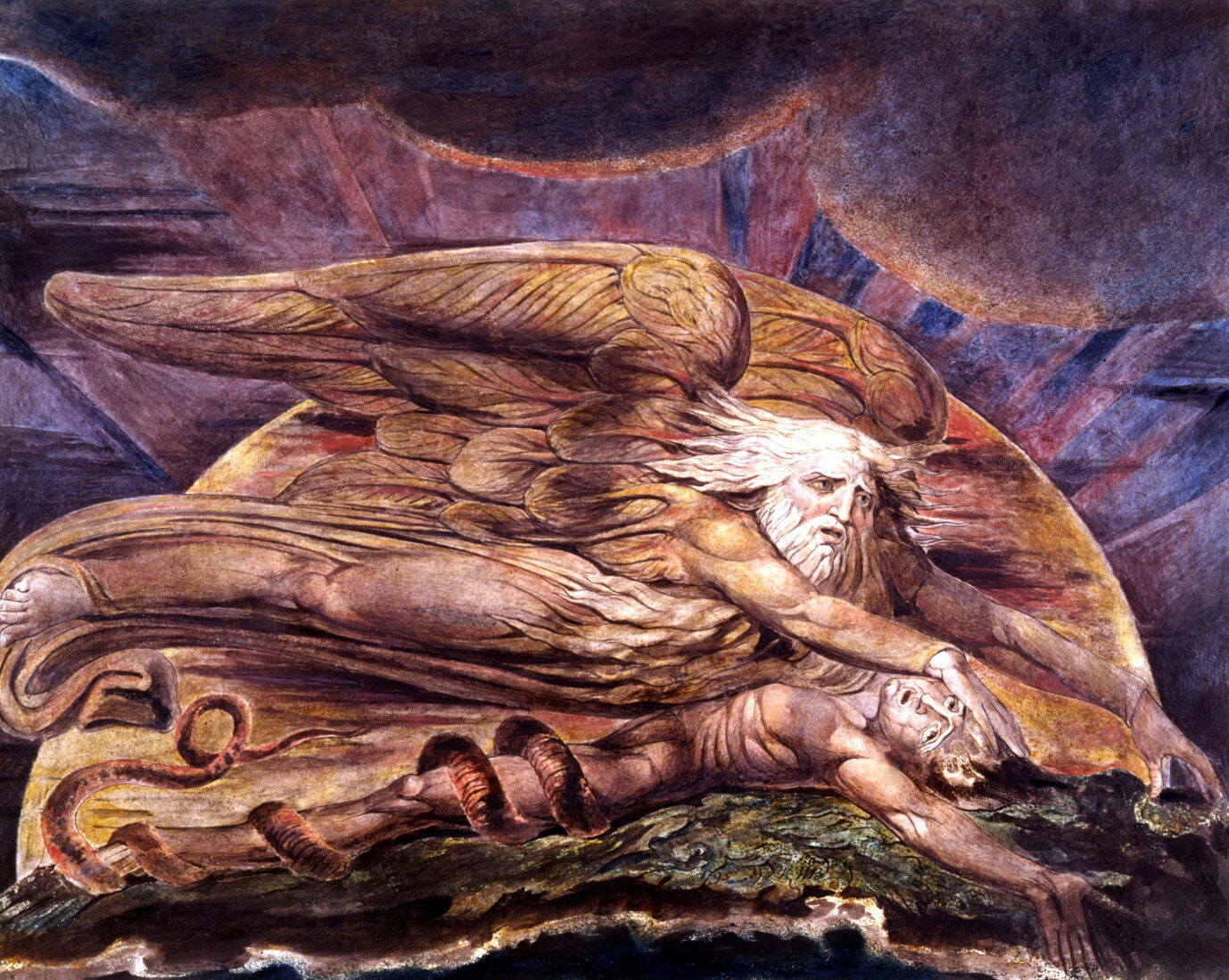

Christopher Dawson (1889–1970), a scholar who taught at Liverpool, Edinburgh, and Harvard universities, dedicated his career to analyzing the complex relationship between religion and civilization. According to Junge Freiheit, his insights remain highly relevant to contemporary debates about what Christian cultural heritage actually means in practice.
The historian, who counted C.S. Lewis and Arnold Toynbee among his close associates, argued that Europe’s strength derived from the productive tension between regional and national identities and the Christian promise of salvation. Dawson presented this thesis at the prestigious Gifford Lectures in Scotland.
In a key passage from his lecture manuscript on religion and culture, now available in a new German translation, Dawson outlined what set Western Europe apart from other civilizations. He observed that only in Western Europe was the totality of culture shaped by successive spiritual movements, with each century bringing changes in the balance of cultural elements and new spiritual forces that generated fresh ideas, institutions, and social transformation.
The Failed Experiment of Total Control
Dawson identified only one historical attempt in the West to establish a unified, all-encompassing sacred order comparable to Byzantine or Oriental cultures: the Carolingian Empire. This realm conceived of itself as the society of all Christians under an anointed king, controlling every detail of life and spirit through decrees and oversight, down to church choirs and monastic orders.
Yet this proved to be a brief and unsuccessful episode, standing in sharp contrast to the general development of the West and its cultural achievements. Many of those achievements came from independent actors outside the empire, including Alcuin from England, John Scottus Eriugena from Ireland, and Theodulf from Spain.
The Church as Europe’s Only Unifying Force
Apart from this singular case, Dawson noted, Western history produced not a single all-encompassing institution except the Christian Church that functioned as an effective principle of social unity. Even during the Middle Ages, however, the religious unity of the Church never resulted in a theocracy like those in the Orient, as Junge Freiheit reports.
The Church embodied a dualism of spiritual and temporal power that created internal tension within Western societies. This tension served as a fertile source of change and criticism, distinguishing the West from Eastern civilizations.
The absence of a comprehensive organization and single cultural source in European history did not, until the previous century, diminish the spiritual continuity that prevailed in the Western tradition. Behind the constantly changing facade of Western culture lay a living faith that gave the continent a sense of unity despite conflicts and divisions throughout its history.
Secular Movements With Religious Roots
Dawson argued that the connection between this faith and historical movements in old Europe often proves difficult to discern, since these movements typically presented themselves as rejections of any common spiritual foundation. Closer examination, however, reveals that such connections genuinely exist.
The dynamism of Western religion becomes nowhere clearer than in the indirect and unconscious influence it exerted on social and intellectual movements that explicitly understood themselves as secular. While examples abound in the history of modern revolutionary or reformist endeavors, Dawson considered the most interesting and important evidence to be found in the rise of science, which held paramount significance for the history of the modern world.
He noted that only someone like physicist Pierre Duhem, who was simultaneously a scientist, historian, and philosopher, could have fully uncovered this connection. Even Duhem did not live long enough to complete the task he had set for himself.
Religion and Culture in Simple Form
Dawson proposed to examine the earlier phases of Western development to determine the extent to which religious factors conditioned the formation of Western culture. At this stage of European history, the relationship between religion and culture presented itself in its simplest form.
No historian disputes that the adoption of Christianity among the peoples of the West had a profound effect on their cultures, as Junge Freiheit notes. Nevertheless, this great spiritual revolution left the material foundations of Western life untouched.
A deep chasm remained between the semi-barbaric society of Merovingian Gaul and Anglo-Saxon Britain on one side, and the fully developed religious culture of the Christian Empire on the other. This divide separated the spirit of men like Augustine and Boethius from warrior chieftains like Clovis and Chilperic, who determined the West’s future trajectory.
The Defining Dualism
The rise of Western culture was shaped by this stark dualism of two cultures, two traditions, two spiritual worlds: the warrior society of barbarian kingdoms with their cult of heroes on one side, and the Christian intellectual tradition on the other.
For conservatives seeking to understand and defend Christian cultural heritage today, Dawson’s work offers a framework that acknowledges both the centrality of Christianity to European civilization and the creative tensions that prevented the West from ossifying into static theocracy. His analysis suggests that European identity has always been characterized by dynamic engagement between faith and secular forces, rather than rigid uniformity.
With information from Junge Freiheit





